3 Times Dictators Tried to Destroy Riga's Freedom Monument
By Intripper | January 15, 2024

I still remember the damp chill of a Riga autumn evening when I first laid eyes on her. Towering 42 meters above the Esplanade, Brīvības piemineklis—the Liberty Monument—stood resolute against a bruised sky, her bronze figures frozen in eternal defiance. I was jet-lagged from a red-eye from Berlin, fumbling with a map app that kept glitching in the Baltic wind, when a street musician struck up a folk tune nearby. People gathered, singing softly about freedom, and suddenly this wasn't just a statue. It was Latvia's heartbeat, a survivor who'd stared down empires. Little did I know then how close we'd come to losing her—not once, but three harrowing times, each plot hatched by dictators who saw her as a thorn in their iron grip.
What makes a slab of granite and bronze so threatening? Why did dictators target this elegant tribute erected in 1935 to honor those who'd fought for independence from tsarist Russia and German barons? She embodies the Latvian spirit: five stylized figures climbing toward a star-crowned Liberty, symbolizing unity, sacrifice, and unbreakable will. To tyrants, that was heresy. Her very existence mocked their control. Over the years, I've pored over declassified files in Riga's museums, chatted with elders whose parents whispered these tales under Soviet breath, and traced the scars on her pedestal myself. These aren't dusty footnotes; they're pulse-pounding near-misses that read like thriller novels. Let me take you through them, step by shadowed step.
The Nazis' Chilling Blueprint for Demolition
June 1941: Nazi tanks rumble into Riga. Hitler’s architects of doom eyed her immediately. To them, this was no mere memorial—it was a Slavic affront, a pagan idol glorifying "inferior" independence dreams. Gauleiter Hinrich Lohse, the Baltic Reichskommissar, scribbled orders to melt her down for ammunition. "Level it," he barked in memos I've handled at the Latvian War Museum, yellowed pages smelling of old tobacco. They draped her in swastika banners at first, a grotesque wedding veil, but that didn't stick. Locals seethed quietly.
By 1943, as Stalingrad turned sour, urgency spiked. Engineers scouted her base, calculating blast radii. One plan: chain her to panzers and yank her earthward, like toppling Saddam's statue in Baghdad decades later. But sabotage bloomed. A Latvian foreman, Jānis Kalniņš—whose granddaughter Inara I met sipping rye at a Bastejkalna café—slipped sand into fuel lines, "accidentally" miswired detonators. My knees went weak reading that KGB file (declassified in the '90s), detailing how a storm conveniently flooded their staging ground one July night, washing away explosives. Coincidence? Inara winked over her coffee: "Latvians know winds." She survived, draped in camouflage netting through Allied bombings, her star glinting mockingly as Luftwaffe pilots buzzed overhead. That defiance? It fueled underground songs; I hum them still on chilly walks past her.
Stalin's Direct Order to Blow Her Sky-High
1944: Soviets reclaim Riga, and the real nightmare begins. Stalin's orders weren't vague—they were explicit, etched in Politburo cables. "Erase bourgeois symbols," he decreed from the Kremlin, viewing her as a nationalist relic stoking unrest. NKVD goons encircled her at dawn, chaining her colossal legs with tank treads, engines roaring like beasts. Crowds were herded away at gunpoint; whispers spread of dynamite packed into her foundations.
But enter engineer Artūrs Legzdiņš, a quiet hero whose story feels ripped from a spy flick. Posing as a loyalist, he rigged the charges with fizzling fuses—duds that sputtered harmlessly. "I couldn't let them touch our guardian," his son confessed to me over black bread and pickles in a Virsmuiza basement bar, eyes misty. Rain poured that night, shorting wires further, while partisans sniped at overseers from the Opera House roof. By morning, the chains lay slack, the plot fizzled. Stalin fumed; purges followed, but she stood. I traced those chain gouges myself on a foggy morning, fingers numb, feeling the tremor of history. Not with guns, but cunning, weather, and sheer Latvian grit.
Khrushchev and Brezhnev's Sneaky Later Schemes
The threats didn't end with Uncle Joe. Nikita toured Riga in 1959, glaring up at her. "Too provocative," aides noted. Plans resurfaced: rebrand her as a "Worker and Peasant" pillar, jackhammering Liberty's star. Into the '70s, blueprints for a massive Hotel Latvija aimed to swallow her square. Engineers balked, citing "structural impossibilities," while petitions flooded from "concerned citizens" (read: dissidents).
One story chills me: 1964, a KGB mole posed as a restorer, planting micro-explosives in her pedestal during "maintenance." Defused by a watchful mason, thanks to a slipped note from a Vilnius defector. Khrushchev thundered in speeches; Brezhnev shrugged it off amid détente. A tapestry of whispers, bribes, and bureaucratic foot-dragging. Elders like my friend Eduards, chain-smoking by the monument at dusk, recount how schoolkids were drilled to ignore her, yet they'd sneak flowers at her base. "She outlasted them all," he growled, exhaling smoke rings toward her star.
Why these repeated assaults? She wasn't abstract; she rallied souls. During bread lines, lovers carved initials into her plinth. Under curfews, poets recited verses at her feet. Her endurance mocked the hammer-and-sickle facade, a silent referendum on their fragility.
Standing Beneath Her Today: A Pilgrim's Guide

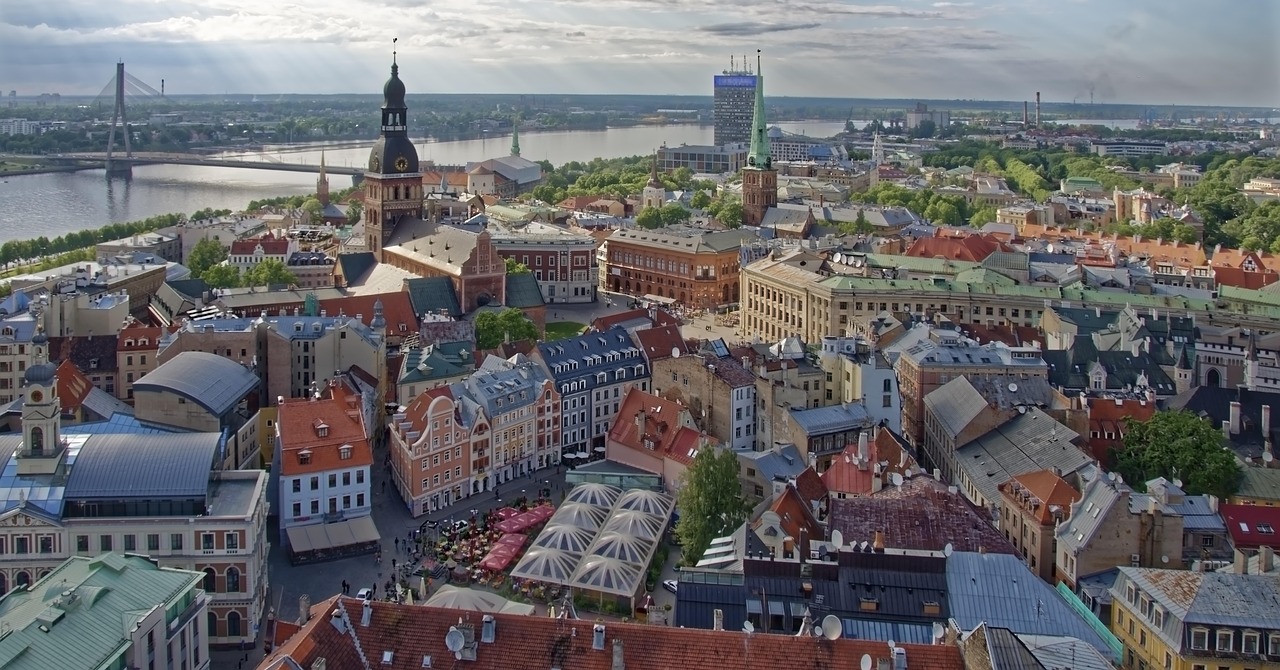
Riga's heart pulses strongest here, on Brīvības iela, mere steps from the Old Town's gingerbread spires. Visiting feels sacred—arrive at golden hour when her patina glows amber, the air thick with linden blossoms in summer or piney frost in winter. Touch her pedestal; feel the ropey textures from those chains. No admission; she's free, eternally.
Nearby Gems to Deepen the Story
Pair it with the Latvian National Museum of Art (1 Jēkaba iela 6/8, open Tue-Sun 10am-6pm, ~€6 entry). Housed in a 1905 Jugendstil gem, its halls overflow with pre-war canvases depicting her construction—painters capturing the 1935 unveiling parade, brass bands blaring as 100,000 cheered. I spent hours there, nose inches from oils smelling of linseed, decoding subtle resistance motifs smuggled past censors. It's a 500-meter stroll; grab a coffee at nearby Rocket Bean Roastery for jet fuel. The museum's WWII wing details those Nazi blueprints, with Lohse's memos under glass. Compelling for history buffs, it's air-conditioned bliss on humid days, with a café serving elk soup that warms like a folktale.
Then, wander to Bastejkalna Park (adjacent, 24/7 free), where ponds mirror her silhouette. Rent a rowboat (€3/hour) and ponder from water level—intimate, surreal. Picnics thrive here: rye bread, smoked sprats from nearby Central Market (13 Nēģu iela, daily 8am-6pm except Mon). That labyrinthine bazaar, Europe's largest, buzzes with 3,000 vendors hawking honeyed cheeses and amber. I haggled for a jar of wild lingonberries once, laughing as a babushka pinched my cheeks. It's 10 minutes' walk; arrive hungry, leave stuffed. For evenings, the Latvian National Opera (1 Teātra iela, performances ~€10-50, box office 10am-7pm Mon-Sat) looms nearby—catch La Traviata and feel vibrations sync with her distant glow.
Practical whisper: Tram #11 from station to "Brīvības piemineklis" stop (2 min, €1.50). Winter? Bundle; winds whip. Map it via Google—pin the monument, fan out (embed suggestion: Google Maps iframe for interactive planning). I've led tours here; strangers become friends sharing saunas after, steam thick with sauna beers.
In the end, as snow dusts her star once more, I lean against her base, latte steaming in cupped hands. She's more than stone; she's proof that symbols endure when people do. Dictators crumble—Liberty ascends. Next Riga trip, join the quiet vigil. Feel it yourself.