Complete Guide to Málaga's Holy Week & Semana Santa 2026
I still remember my first Semana Santa in Málaga like it was yesterday—the air thick with the sharp tang of burning incense, nazarenos gliding past in their blood-red robes like ghosts from another century, and that haunting saeta piercing the night from a high balcony. It was 2012, and I'd stumbled into the city on a whim, backpack slung over one shoulder, no clue what I was in for. By the end of Palm Sunday, I was hooked, elbows-deep in the crowd, heart pounding to the rhythm of those massive wooden thrones swaying under their own impossible weight. Málaga's Holy Week isn't just a religious observance; it's the city's soul laid bare, a chaotic symphony of faith, art, and raw emotion that turns the streets into a living theater. Fast-forward over a decade, and I've returned every few years, each time uncovering new layers. Now, as we eye 2026, with Easter falling neatly from March 29 to April 5, I'm here to guide you through it all—not as some detached list-pusher, but as someone who's sweated through the throngs and savored the quiet aftermath.
Málaga Semana Santa 2026 Dates and Schedule
Let's start with the basics: the Málaga Semana Santa 2026 dates and schedule. Holy Week kicks off on Palm Sunday, March 29, with the traditional palm processions, and builds to a fever pitch through Maundy Thursday, April 2, and Good Friday, April 3. Easter Sunday, April 5, wraps it up with quieter, triumphant vibes. The full lineup features over 40 brotherhoods (cofradías), each with one or two pasos—those towering, elaborately carved platforms carrying life-sized sculptures of Christ or the Virgin Mary. Schedules are posted by the Consejo General de Cofradías de Semana Santa de Málaga months in advance, usually finalized by late 2025. Expect early morning starts (madrugadas) around 1 a.m. on key nights, daytime floats rumbling from 11 a.m., and evening ones from 7 p.m. Check the official app or website (semanasantamalaga.com) for the precise hora de salida (departure times) and hora de entrada (return times), as weather or crowds can nudge things by 30 minutes or more. Pro tip from my years chasing them: arrive an hour early for prime spots, and pack earplugs if you're sensitive—the brass bands don't quit.
Málaga Semana Santa 2026 Brotherhoods and Thrones
Diving deeper into the Málaga Semana Santa 2026 brotherhoods and thrones, these aren't your average parade floats. Each cofradía crafts pasos that are feats of engineering and artistry, often weighing 5 tons and carried by 200-300 costaleros (barefoot bearers) sweating rivers under the wood. Take La Pollinica, one of the oldest, founded in 1594. Their throne of Jesus entering Jerusalem is a riot of palms and flowers, departing from the Iglesia de San Lázaro at Calle San Lázaro, 2 (open daily 10 a.m.-1 p.m. and 5-8 p.m. during Holy Week; free entry, though donations appreciated). I've stood mesmerized as it sways out that narrow door, the costaleros' grunts echoing like a primal chant. Then there's the Virgen de la Esperanza, the "Gitana" queen of Málaga, from the Cofradía de la Esperanza. Her paso is a blaze of gold and white mantilla, departing the Iglesia de San Julián at Calle San Julián, 6 (visits from 9 a.m.-2 p.m. and 4-8 p.m.; €2 suggested). The throne's sheer opulence—crystal tears on her silver crown, embroidered velvet—makes you gasp. La Legión's Cristo de la Buena Muerte on Good Friday is another standout; their military escort marches with rifles reversed, a spine-tingling tradition born from the Spanish Civil War era. From the Real Santuario de la Victoria at Paseo de Sancha, 22 (open 8:30 a.m.-2 p.m. and 4-8 p.m.; masses at 8 p.m.), it feels like history marching. Spend at least an hour here pre-procession; the church's baroque interior, with its soaring dome and frescoes of the Virgin's apparition, sets the mood perfectly. I once lingered so long I nearly missed the salida, cursing my own sentimentality as I dashed out.
Best Processions to Watch in Málaga Holy Week 2026
Speaking of must-sees, the best processions to watch in Málaga Holy Week 2026? I'd put my money on five that capture the spectrum. Dawn Thursday's Virgen de los Dolores from Mena—intimate, poignant, departing Iglesia de Santo Domingo at Plaza Fray Alonso de Santo Tomás, 5 (open 9 a.m.-1 p.m. and 5-9 p.m.; climb the bell tower for €3 if open). Her sorrowful gaze under a purple canopy hits different in the misty morning light. Maundy Thursday's El Cautivo, Málaga's most beloved Christ figure, from the Basílica de la Esperanza at Calle Armengual de la Mota, 12 (daily 7:30 a.m.-2 p.m. and 4:30-9 p.m.; free, candlelit vigils mesmerizing). The crowd's murmurs turn to cheers as he emerges. Good Friday's Legion procession, as mentioned, for its disciplined drama. The "madrugada" showdown on Thursday night between neighboring thrones—think El Rico leading to La Paloma—from various centro spots. And don't skip El Soler on Palm Sunday, a family favorite with kids scattering olive branches. Each one's a world unto itself; pick based on your vibe—solemn or spectacular.
Málaga Holy Week 2026 Procession Routes Map
Navigating it all? The Málaga Holy Week 2026 procession routes map is your lifeline. Most stick to the casco antiguo loop: from home church, through Calle Alameda Principal, past the cathedral, along Calle Granada to the Alcazaba, then back via Strachan and Carretería. Print the official map from the Consejo's site or use their interactive app—it color-codes brotherhoods and flags chokes like the tight Alameda bottleneck. I've gotten gloriously lost once, ending up in a side alley with just a handful of locals and a saeta singer who bought me a beer—pure magic, but not repeatable.
Top Viewpoints for Málaga Semana Santa Processions 2026
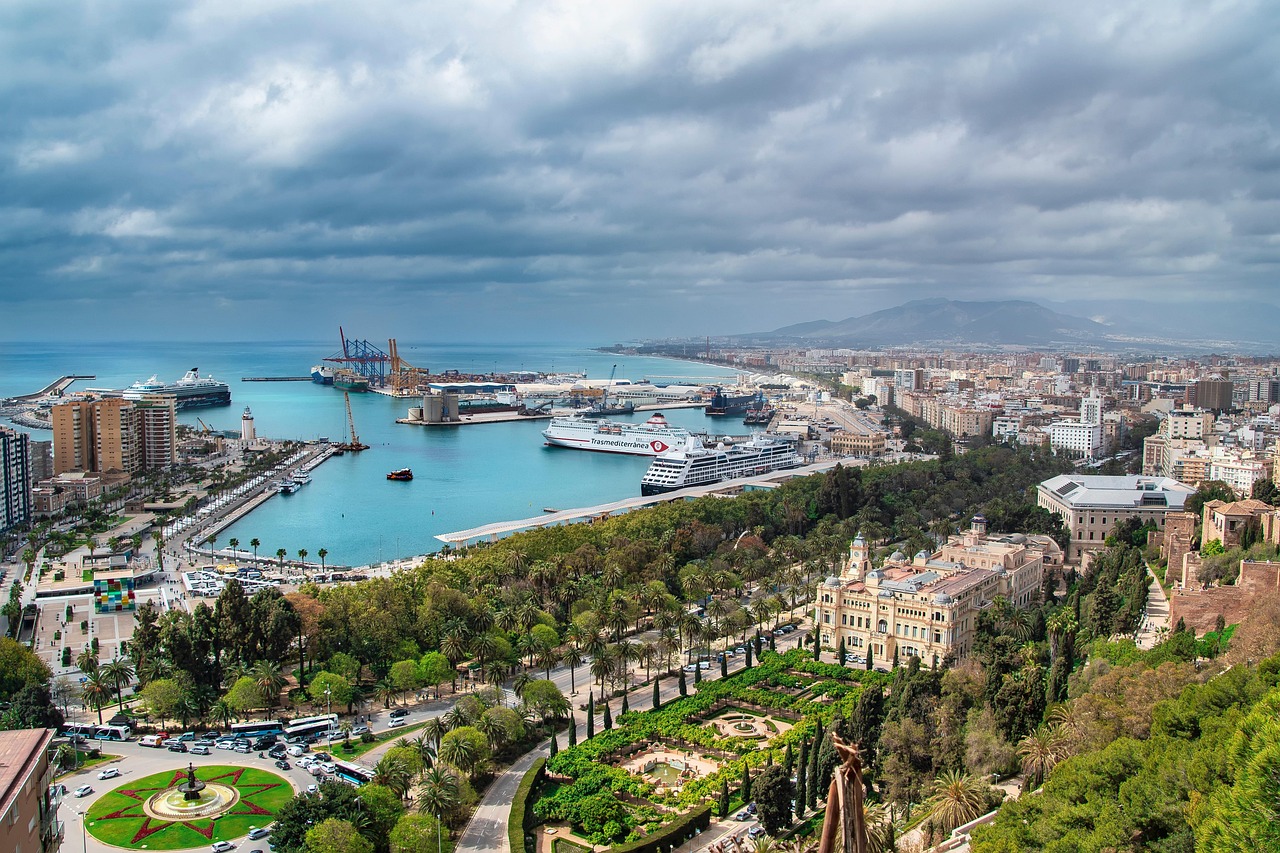
For the best views, hunt the top viewpoints for Málaga Semana Santa processions 2026. Plaza de la Constitución offers a wide panorama of converging routes, benches for weary legs, and nearby tapas at Casa Aranda (Calle Herrería del Rey, 3; churros con chocolate legendary). Up high, the Mirador de Gibralfaro (Camino Gibralfaro; cable car from Avenida Juan Sebastián Elcano 1, 10 a.m.-midnight, €3.50 roundtrip) overlooks the entire bay—thrones look like golden specks against the sea. My secret? Calle Santa María, behind the cathedral; narrow, balcony-lined, perfect for that intimate saeta drop. Or the Ayuntamiento balcony on Plaza de la Constitución—lottery for seats, but worth entering.
Where to Stay in Málaga for Semana Santa 2026
Hotels Booking Málaga Holy Week 2026 Near Cathedral
Planning your base? Where to stay in Málaga for Semana Santa 2026 means booking early—rooms vanish by January. Centro histórico is ideal for immersion. For hotels booking Málaga Holy Week 2026 near cathedral, the Gran Hotel Miramar (Paseo de Reding, 22; doubles from €300/night in peak, spa and sea views; open 24/7 reception) is a splurge, steps from Plaza del Obispo. I've crashed there post-madrugada, collapsing into Egyptian cotton bliss after chasing thrones till 6 a.m. Budget pick: Room Mate Valeria (Pasaje Rodríguez Acosta, 8; €150-250, rooftop pool; chic, central). Families love the Parador de Málaga Gibralfaro (Camino del Parador, s/n; €200+, castle-like with gardens; breakfast 7:30-11 a.m.), panoramic yet walkable downhill. Airbnb in Pedregalejo for beachy calm post-procession, but centro's buzz wins. Book via Booking.com with flexible cancels; prices spike 200%.
Family-Friendly Events Málaga Holy Week 2026
Got kids? Family friendly events Málaga Holy Week 2026 lean joyful. Palm Sunday's blessing of palms at Iglesia de San Pablo (Calle San Pablo, 50; 11 a.m. mass, crafts after), where wee ones wave branches like mini flags. The Pollinica procession welcomes families—kids often join as acólitos. Plaza Uncibay hosts free kids' workshops on throne-making (check local posters). Avoid late madrugadas; opt for daytime like El Soler. My niece, 8 at the time, squealed at the donkey in Pollinica—pure delight amid the solemnity.
Málaga Semana Santa 2026 Live Stream Schedule
Can't make it? The Málaga Semana Santa 2026 live stream schedule covers you. Brotherhoods like Esperanza and Cautivo stream on YouTube channels (search "Cofradía [name] directo") from salida onward, often with multi-cam. Official Consejo feed at semanasantamalaga.tv starts key nights at 11 p.m. I've watched from a rainy London flat, nearly smelling the incense through the screen—eerie but effective.
Traditions and Tips for First-Time Málaga Holy Week 2026
For first-timers, traditions and tips for first time Málaga Holy Week 2026: Respect rules—no touching thrones, silence during pasos. Dress comfy (flats, layers—nights chill), hydrate (fountain water's fine). Nazarenos hand out sweets; take one, smile. Eat light: espeto de sardinas stalls pop up, or montaditos from Bar El Pimpi (Calle Granada, 62; open till 2 a.m., €2 bites). Humorously, I once dropped my phone in the crush—backup everything. Saetas are spontaneous; hush and listen. Join a penitente if inclined (some welcome visitors). Post-procession, streets empty eerily; wander for that golden hush.
Wrapping this up, Málaga's Semana Santa 2026 promises to eclipse past years—rumors of restored thrones and bigger international crowds. Whether you're there in the flesh or streaming, it'll stir something deep. I've chased these processions across Spain, but Málaga's got that unpolished heart. Go, get lost, feel it. Your story starts March 29.