
The salty Atlantic wind has a particular way of speaking in Nazaré. It doesn’t just blow; it whips around the corners of the old town, carrying the scent of grilled sardines and damp limestone, a constant, briny reminder of the ocean’s immense power just beyond the sea walls. I remember my first time there. I was standing at the bottom of the immense cliff, the Praia da Nazaré stretching out to my left, the village of Pederneira climbing the rock face to my right. My neck ached from craning upward, trying to spot the summit where the whitewashed houses seemed to defy gravity.
I had a choice. I could do what the guidebooks vaguely suggested and "find the path up." This is a romantic notion, the idea of hiking through ancient, winding streets, discovering hidden chapels and laundry lines strung between buildings. And yes, there is a winding, cobbled road that snakes its way up the cliffside, a route known as the Escadas do Sargento. But on that particular afternoon, with the sun beating down and the top looking approximately a million miles away, the romantic in me was overruled by the pragmatist who wanted to save their knees and their time. I wanted the view, not the pilgrimage.
That’s when I saw it: a small, unassuming sign, a flash of yellow and red, pointing toward a doorway that looked more like a garage entrance than a portal to the heavens. The Elevador da Nazaré. The funicular. I had stumbled upon the town’s best-kept secret, a vertical shortcut that felt like discovering a hidden lever in a video game. It wasn’t a tourist trap; it was a genuine piece of local infrastructure, a steep, rumbling railway that has been whisking residents and savvy visitors up the 110-meter cliff face since 1906. This isn’t just a ride; it’s a time capsule, a thrill, and the single best way to unlock the breathtaking upper town of Nazaré. It is, without exaggeration, the secret cliff ride you absolutely must take for the best views of your life.
The Ground Level: Finding the Portal to the Sky
Before you can soar, you must find the launchpad. The Nazaré funicular is deceptively hidden. Tucked away on Rua Dr. José Sanches, a street that runs parallel to the main road along the beach (Estrada Nacional 114), its entrance is humble. It sits directly across from the main bus station and is just a short, two-minute walk from the bustling "Sitio" bus stop. If you’re driving, there’s paid street parking and a public car park (Parque de Estacionamento do Sitio) nearby, but navigating the narrow streets of the upper town is a challenge I prefer to leave to the locals.
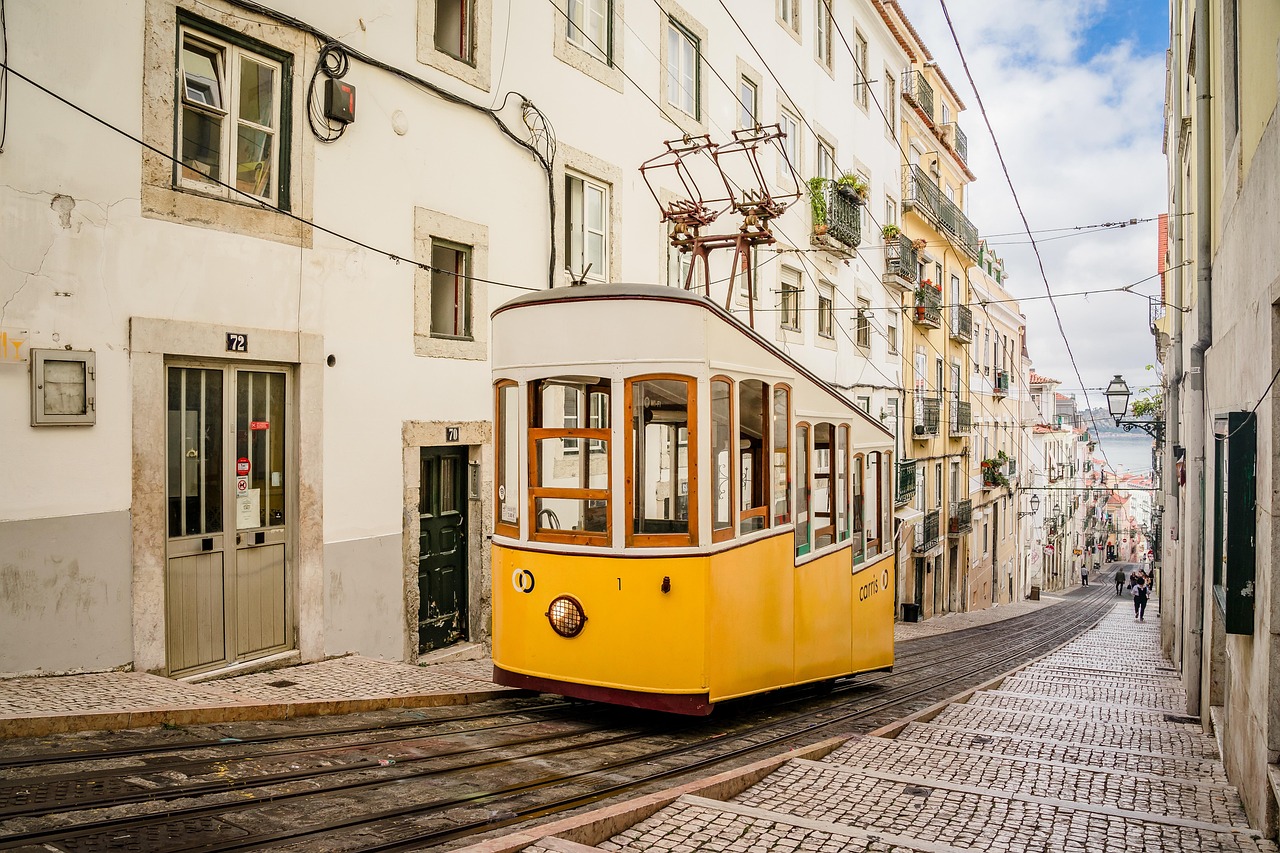
The station itself is a study in faded elegance. The tiles on the walls tell a story of mid-century modernism mixed with classic Portuguese design. You’ll see locals with grocery bags, tourists with cameras, and teenagers leaning against the turnstiles, all waiting for the same thing. There’s a palpable sense of anticipation, a quiet hum of the machinery deep within the cliff. You buy your ticket from a small window or a machine (more on that later), pass through the gate, and step onto the platform. The waiting car, painted a cheerful yellow, looks like something out of an old French film. It’s not sleek or high-tech; it’s charmingly analog, and that’s part of the magic.
The Ride Itself: A Two-Minute Masterpiece
The journey lasts, on average, two minutes and thirty seconds. But those 150 seconds are dense with sensation. As the doors slide shut with a gentle clunk, the operator gives a nod, and with a deep, resonant hum, the ascent begins. The funicular operates on a funicular railway system, meaning it uses a counterweight system: as one car goes up, the other comes down, sharing the energy. It feels incredibly solid, a smooth, inexorable pull upward.
The carriage has large windows, and you should position yourself at one of them. Initially, the view is of the station wall, then it opens up to a sliver of the town below. You rise past the tops of buildings, peering directly into the windows of the apartments stacked against the cliff. I once saw an elderly woman watering her geraniums, her cat sleeping on the windowsill, completely unbothered by the vertical transport rumbling past her home. It’s an intimate, voyeuristic glimpse into the daily life of Nazaré.
Then, the world falls away. The incline steepens dramatically, and the ground becomes a distant map. You are now suspended between the sky and the sea. To one side, you have the sprawling, golden crescent of the Praia da Nazaré, the waves of the main beach looking like tiny ripples. You can trace the curve of the coastline for miles, spotting the lighthouse at the far end and the fishing boats bobbing in the harbor. On the other side, the view opens up to the wilder, wind-whipped Praia do Norte—the beach famous for the colossal waves that break in winter. From this vantage point, you can appreciate the sheer scale of the geological fault line you are ascending. The rock face is a stratified tapestry of geological time, punctuated by resilient green shrubs.
The sensation is not one of speed, but of elevation. It’s a quiet, majestic lift. The only sounds are the whir of the motor, the occasional creak of the carriage, and the collective, soft gasps of passengers as the panorama unfolds. It’s a shared, unspoken moment of awe. You’re not just moving up; you’re being lifted into a new perspective. When the doors open at the top, it’s like stepping out onto a natural balcony, 110 meters above the Atlantic. The air is cooler, crisper. The sound of the town below is gone, replaced by the wind and the distant roar of the ocean.
The Summit: A World of Miracles and Miradouros
Emerging from the upper station, you are immediately in the heart of the Sitio, the historic and spiritual heart of Nazaré. The air feels different up here. The frenetic energy of the beachfront is replaced by a serene, village-like atmosphere. You are standing in the Largo da Nazaré, a wide square anchored by the Igreja de Nossa Senhora da Nazaré (the Church of Our Lady of Nazaré).
This church is the reason Nazaré exists at all. According to legend, in the year 714, a statue of the Virgin Mary was brought here by a monk fleeing the Moors. Centuries later, a knight named Dom Fuas Roupinho was hunting in the area when a stag he was pursuing transformed into a devil, leading him toward the cliff edge. In his terror, he cried out to the Virgin, and the statue miraculously saved him, leaving an imprint of her hand on the rock. The church was built to house the holy statue, and it became a major pilgrimage site.
But the true star, just steps away from the church, is the Miradouro do Suber (the Belvedere of the Cork Tree). This is the spot. This is the place where you will take the photo that makes your friends weep with jealousy. The viewpoint is a stone terrace that juts out over the cliff, offering an unobstructed, 180-degree view of the coastline. There is a solitary cork oak tree (the "suber" in Portuguese) growing right out of the rock, its gnarled branches framing the endless blue. Sitting on the bench beneath that tree, looking down at the Praia da Nazaré and the village below, is a soul-soothing experience. You can see the funicular track running down the cliff face, a thin line connecting the two worlds. This is the secret viewpoint the funicular grants you access to, a place that feels both epic and profoundly peaceful.
From here, you can also walk to the Farol da Nazaré (the Nazaré Lighthouse). It’s a short, pleasant walk along the cliff top. The lighthouse itself is a striking white tower, but its main attraction is the viewpoint beside it, which looks directly down onto the Praia do Norte. In winter, this is where you can witness the sheer, terrifying power of the waves that have earned Nazaré the title of the "biggest wave spot on the planet." Seeing the water from this vantage point, you understand the physics, the deep-water canyon that funnels the Atlantic’s energy into these monstrous swells. It’s a humbling sight.
Funicular vs. The Climb: A Pragmatist’s Perspective
So, why take the funicular? Why not walk? I’ve done both, and I’m here to tell you: take the funicular. The walk up via the Escadas do Sargente is, as I said, a winding road. It’s not a picturesque, flower-lined footpath; it’s a road for cars, which means you’re breathing exhaust and dodging traffic. It’s steep, it’s long, and it takes a good 20-30 minutes of sustained effort. By the time you get to the top, you’re sweaty and tired, not ready to explore.
The funicular costs a few euros for a round trip (as of my last visit, it was around €3.50 for a round trip, but check for current pricing). It’s an absolute bargain. Think of it this way: you are trading a strenuous, unscenic slog for a two-minute, air-conditioned, panoramic ascent that saves your energy for exploring the upper town. You can ride up, spend an hour or two soaking in the views, visiting the church, having a coffee, and then ride back down, feeling refreshed. The funicular is the key that unlocks the experience, rather than being the obstacle to it.
Booking, Tickets, and Savvy Traveler Tips
The Nazaré funicular is a public transport system, not a theme park ride. You generally don’t need to book tickets far in advance. You simply buy them at the station on the day of your visit. The ticket machines are user-friendly and have an English language option. They accept cash and credit/debit cards. Queues can form during the peak summer season (July and August) and on weekends, but they usually move fairly quickly.
The "Secret" Tip: The absolute best time to ride the funicular is about an hour before sunset. The afternoon sun will be hitting the cliff face, making the white buildings glow. Ride up, head straight to the Miradouro do Suber, and watch the sun dip into the Atlantic. The sky explodes in color, casting a golden and then fiery red light across the water. As you ride back down in the twilight, the lights of the town below will be twinkling like a fallen constellation. It’s a moment of pure, unadulterated magic.
Another tip: the funicular can be a bit breezy. If you’re visiting outside of summer, bring a light jacket. The temperature at the top is always a few degrees cooler.
The Nazaré Tapestry: Beyond the Funicular Ride
Your funicular adventure is the centerpiece, but Nazaré is a town rich with flavor and history that deserves exploration. The ride up gives you a bird's-eye view, but you need to get your feet on the ground to truly appreciate the town's texture.
After you’ve ridden up and marveled at the Miradouro do Suber, take time to wander the streets of the Sitio. You’ll find charming shops selling local crafts, particularly items made from cork, a major product of the region. You can find everything from cork coasters and placemats to intricate handbags and even shoes. It’s a souvenir that’s both sustainable and uniquely Portuguese.
Where to Eat: A Local’s Secret
For a truly local experience, duck into O Nazaré, a restaurant located on Rua Latino Coelho, just a short walk from the upper station. This place is the antithesis of a tourist-trap beach cafe. It’s where the locals eat. The decor is simple, the atmosphere is bustling, and the food is honest, hearty, and delicious. They serve incredible fish dishes, stews (like the traditional caldeirada), and steaks. It’s a place to sit down, order a glass of local wine, and eat the way Nazaré’s fishermen have for generations. The staff is warm and welcoming, and you’ll feel like you’ve been let in on a local secret.
Rua Latino Coelho 19, 2100-243 Nazaré, Portugal
Hours: Typically open for lunch and dinner, Wednesday to Monday (closed Tuesdays). Lunch 12:00 PM - 3:00 PM, Dinner 7:00 PM - 10:00 PM. Reservations recommended for dinner.
Exploring the Fort and the Beach
Another essential stop on the cliff top is the Forte de São Miguel Arcanjo, the fort that houses the lighthouse. While the lighthouse itself is a functional beacon, the fort has been converted into a fascinating cultural center. It houses the Museu do Mar e da Pesca (Museum of the Sea and Fishing), which tells the story of Nazaré’s deep connection to the ocean. You’ll see models of traditional fishing boats, exhibits on the local dialect, and the history of the giant waves. The real prize, however, is the terrace of the fort, which offers that jaw-dropping view of Praia do Norte.
Praceta Dr. José Sanches, 2100-243 Nazaré, Portugal
Hours: Generally 10:00 AM - 6:00 PM daily. Slightly shorter hours in the off-season.
Now, let’s talk about the lower town. Once you’ve had your fill of the upper cliffs, ride the funicular back down and cross the road to the beach. The Praia da Nazaré is vast and beautiful. In the summer, it’s a bustling scene of sunbathers and volleyball players. But its history is rooted in something more traditional. Look for the arribas, the traditional wooden supports used to dry the fishing nets, which are still a symbol of the town. You can also see the varinas, the traditional fishing boats with their striped sails.
For the ultimate beachfront dining experience, there is one name that stands out: Mar à Vista. Located right on the sand of Praia da Nazaré, this restaurant is an institution. It’s all about fresh seafood, served with a view of the waves crashing just meters away. The terrace is the place to be. Order the grilled fish (the dourada or robalo are fantastic), a bottle of chilled vinho verde, and let the sound of the ocean be your soundtrack. It’s the perfect way to end a day that began with a ride into the sky.
Av. Dr. José Sanches de Sá, 2100-245 Nazaré, Portugal
Hours: Open daily, usually 12:00 PM - 10:30 PM. Book a terrace table in summer.
The Soul of the Ride
The Nazaré funicular is more than just a way to get from point A to point B. It is a journey that encapsulates the duality of this remarkable place: the sleepy, traditional fishing village and the world-famous big wave mecca; the earthly bustle of the beach and the celestial serenity of the cliff. It’s a two-minute ride that takes you from one world to another, a mechanical miracle that offers a natural perspective.
In a world of over-hyped tourist attractions, the Nazaré funicular remains something of an honest-to-goodness gem. It’s practical, it’s historic, and it delivers on its promise of a view that will sear itself into your memory. It’s the kind of travel moment that feels both effortless and profound. You don’t have to earn the view with a sweaty climb; you are simply granted it, like a gift. And as you stand at the top, watching the sun melt into the Atlantic, you’ll understand that some secrets are too good to keep. This is one of them. This is the Nazaré funicular.