There is a specific kind of silence that only exists in places of overwhelming grandeur. It’s not the quiet of a library or a forest; it’s a heavy, vibrating silence, the kind that presses gently against your eardrums and makes you hyper-aware of your own breathing. I felt it for the first time on the train ride out of Lisbon, watching the Tagus River blur into the morning mist. I was heading to Mafra, a town that holds one of the most breathtaking, audacious, and frankly insane architectural projects ever conceived by a human monarch. The Mafra National Palace.
It’s 2026 now, and the world has changed a thousand times since the first stone of this colossal palace was laid in 1717, but the Palácio Nacional de Mafra remains. It stands as a testament to the Baroque era's appetite for excess, a monument to the power of the Portuguese Empire at its zenith, and, if you ask the local cats, a very nice place to nap in the sun.
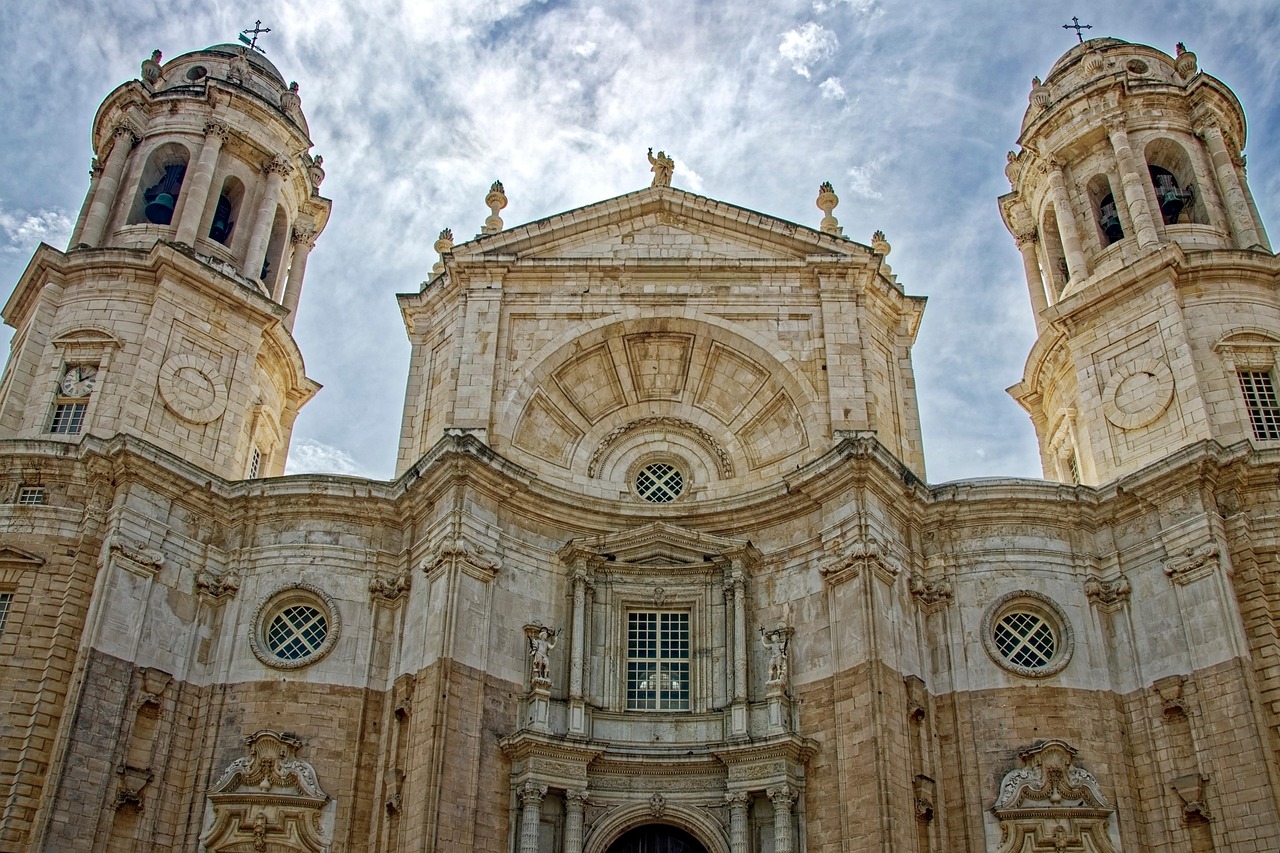
If you are planning a trip to Portugal this year, you might be tempted to stick to the well-trodden path: Lisbon’s trams, Porto’s wine cellars, the fairytale palaces of Sintra. And you should do those things. But if you want to understand the sheer scale of Portuguese history—the ambition, the wealth, the artistic genius—then you must make the pilgrimage to Mafra. It is a place that defies photography. No matter how wide your lens is, it cannot capture the vertigo you feel standing in the main courtyard, looking up at the twin bell towers that seem to scrape the sky.
But a trip to a palace this massive requires strategy. It’s not a casual drop-in; it’s an expedition. I’ve been back several times, and I’ve made every mistake in the book so you don’t have to. Here is everything you need to know to navigate the Palácio de Mafra in 2026, from securing tickets to finding the best pastries in town.
The Ghost of Vaticano: Why This Palace Exists
Before we talk logistics, you have to understand the soul of this place. King John V, the ruler who commissioned it, was a man with a problem. He had everything: gold from Brazil, diamonds from Africa, absolute power. But he had no heir. After years of trying, his wife, Queen Maria Anna of Austria, finally became pregnant. In his gratitude to God, the King made a vow: if he were blessed with a son, he would build a convent worthy of the Franciscan order.
He got his son (and a daughter, eventually), and he decided to pay up. But King John V didn't do things by halves. He didn't just want to build a convent; he wanted to build a rival to the great monasteries of Europe. He essentially hired the architect João Frederico Ludovice to design a Portuguese Versailles, but bigger, and with a basilica attached.
The result is a building that spans 40,000 square meters. It contains over 1,200 rooms. It has a library that houses 36,000 rare books, a hospital, a pharmacy, a monastery, and a basilica with six organs. It was built with Brazilian gold and the labor of thousands of workers. It is, in short, a fever dream in limestone.
When you walk through the Hall of Kings, lined with statues of the rulers of Portugal, you aren't just seeing a tourist attraction; you are walking through the ego of a monarch who wanted to prove that Portugal was the center of the universe. And for a brief, shining moment, it was.
The Quest for Tickets: Navigating Mafra National Palace in 2026
Let’s get down to brass tacks. You can’t just wander in. Because Mafra is a National Monument and a UNESCO World Heritage site (part of the "Cultural Landscape of Sintra"), the management has tightened up in recent years to preserve the delicate interiors.
In 2026, the ticketing system is a hybrid of old-school queuing and digital convenience, which can be confusing. Understanding the Mafra National Palace ticket prices 2026 and options is crucial for a smooth visit.
The Standard Ticket vs. The Guided Experience
You can buy a standard ticket, which allows you to wander the designated circuits (usually the King’s and Queen’s apartments, the monastery, and the infirmary). However, I strongly, vehemently, recommend booking the Mafra National Palace guided tour. Why? Because without a guide, the rooms are just rooms. You see the silk tapestries, the Chinese porcelain, the marble busts. But you don't hear about the King’s obsession with secrecy, the underground tunnels, or the fact that the monks used to race dogs in the cloisters.
The guided tours usually cover the Library (Biblioteca) and the Basilica, which are often restricted to general ticket holders during busy hours.
Ticket Prices in 2026
Prices are subject to change, but as of the 2026 projections, you can expect the following:
- General Admission (Circuit of the Palace): €12 for adults.
- Guided Tour (The "Grand Tour"): €18 - €20. This usually includes the Library and Basilica access.
- Reduced Ticket: Seniors 65+, Students under 25 with ID. Usually 50% off.
- Children under 12: Free.
How to Book Mafra National Palace 2026 Tickets
The official portal is managed by Parques de Sintra - Monte da Lua. In 2026, they have updated their system to allow bookings up to 60 days in advance. This is crucial for the summer months (June–September). If you show up at 10:00 AM on a Tuesday in July without a booking, you will likely be staring at a "Sold Out" sign or facing a three-hour wait.
Search for "Mafra National Palace 2026 tickets" and look for the official Parques de Sintra website. Avoid third-party resellers unless you are desperate; they often charge a premium of 30-40% and don't always guarantee entry to the restricted areas like the Library.
Insider Tip on Skip-the-Line: The "skip the line" feature is essentially the pre-booked time slot. When you book, you select a 30-minute window (e.g., 10:00–10:30). You must arrive within this window. If you are late, they may not honor your ticket. The queue for non-booked visitors is notoriously slow because the palace can only handle so many people at once to protect the heritage.
Getting There from Lisbon: The Road to Mafra
Mafra is located about 40km north of Lisbon. It’s close enough to be accessible, but far enough to feel like a distinct escape from the capital's frenetic energy. Here is the best way to get to Mafra National Palace from Lisbon in 2026.
Option 1: The Train (The Scenic Route)
From Lisbon’s Oriente Station or Entrecampos, you can take the CP (Comboios de Portugal) train toward Torres Vedras. Get off at the Mafra stop.
- Duration: Approximately 50 minutes to 1 hour.
- Cost: Around €4.50 - €6.00 one way.
- The Catch: The train station in Mafra is about 2.5 to 3 kilometers from the Palace. From the station, you have two choices: walk (about 35-40 minutes) through the town, which is pleasant but can be hot, or take a taxi/Uber which is readily available at the station drop-off.
Insider Tip: If you take the train, try to catch the 9:00 AM train from Lisbon. It gets you to Mafra around 9:50 AM, perfect for a 10:30 AM tour slot.
Option 2: The Bus (The Local’s Way)
The Scotturb bus 124 departs from the Campo Grande metro station in Lisbon and goes directly to Mafra.
- Duration: About 1 hour to 1 hour 15 minutes, depending on traffic.
- Cost: Roughly €5.00.
- The Catch: The bus drops you off near the main town square (Praça de D. João V), which is right by the Palace entrance. It is incredibly convenient.
Insider Tip: The bus can get crowded on weekends. Try to sit on the right side of the bus for views of the countryside and the Aqueduct of Mafra as you approach the town.
Option 3: Driving (The Flexible Way)
If you have a rental car, driving is easy. Take the A8 motorway towards Caldas da Rainha and exit at Mafra.
- Duration: 45 minutes from central Lisbon.
- Parking: There is a large paid parking lot right next to the Palace (usually marked "Parque de Estacionamento do Palácio"). It costs about €1.50 per hour.
Insider Tip: The parking lot fills up by 11:00 AM on weekends. Arrive early. Also, be warned that the roads in the historic center are narrow and cobbled; don’t try to drive into the town center unless you are very confident in your driving skills.
The Tour: What to See Inside Mafra National Palace
You have your tickets, you’ve arrived, and you’re standing in the massive central courtyard. The wind whips around the limestone columns. What now? Here is a guide on what to see inside the Mafra National Palace.
1. The Basilica and the Six Organs
The tour usually starts at the Basilica of Mafra, which separates the King’s wing from the Monks’ wing. It is an explosion of marble. The floor is a dizzying geometric pattern of grey and white. But the real stars are the six 18th-century organs. There is a legend that the organs were built by a German monk who was imprisoned by the King to ensure he couldn't build another set for anyone else. The sound of all six organs playing at once is supposed to be so loud it can shatter glass. Look up at the dome; the trompe-l'œil paintings create an illusion of infinite height.
2. The King’s Apartments
Walking through the King’s quarters is a lesson in 18th-century luxury. The walls are covered in azulejos (those iconic blue and white Portuguese tiles) depicting scenes of hunting and war. The beds are shockingly short; King John V was a tall man, yet he slept with his legs bent. Pay attention to the Chinese porcelain collection. King John V was a voracious collector, and the room filled with blue-and-white ware shows the extent of Portugal's trade with the East.
3. The Library (Biblioteca)
This is the crown jewel. You enter a long, elegant room lined with shelves of dark wood. The floor is made of rosewood and ebony arranged in intricate patterns. The collection includes books in Latin, Spanish, French, and Portuguese, covering theology, history, and medicine. It smells of vanilla and old paper. You aren't allowed to touch anything, obviously, but just standing there, surrounded by 36,000 volumes, you feel the weight of accumulated knowledge.
2026 Access Note: Access to the library is strictly controlled. Sometimes it is included in the general tour, sometimes it requires a specific "Library Supplement" ticket. Check your booking details carefully.
4. The Monks’ Wing and the Hospital
Crossing over to the Monks' wing, the atmosphere shifts. The gold leaf gives way to whitewashed walls. You’ll see the cells where the Franciscan monks lived. They are starkly simple, contrasting sharply with the opulence of the King’s side. Don't skip the Hospital and the Pharmacy. The Pharmacy display is fascinating, with its rows of ceramic jars labeled "Viper Wine" and "Dried Toad."
5. The Grand Staircase
The exit is usually via the Grand Staircase. It’s a double spiral staircase, meaning two people can walk up or down without ever seeing each other. It was designed so that the King and the Queen could go to the basilica for mass without crossing paths. It’s an architectural marvel and a metaphor for the complex, separate lives they led.
The "Secret" Tip: The Barracks of the National Guard
This is a tip I rarely see in standard guidebooks. Inside the palace complex, but separate from the royal tour, is the former Military Barracks of the National Guard. It’s often open to the public for free, or for a very small fee, and it’s included in some ticket variations. It’s a time capsule of military history. You see the old dormitories, the armory, and the parade ground.
Lunch: The Culinary Pilgrimage to Pastéis de Mafra
After two hours of walking on marble floors, you will be hungry. Mafra is famous for a specific culinary tradition: the Pastel de Mafra. While Belém has its famous custard tarts, Mafra has its own style. They are flakier, dusted with copious amounts of powdered sugar, and often have a slightly lemony undertone to the cream.
Where to go: Pastelaria Versailles
Address: Rua José Maria de Almeida, 2640-123 Mafra, Portugal
Hours: Typically opens at 7:30 AM and closes around 8:00 PM.
Why go here: It’s not just the pastry; it’s the ritual. You stand at the counter, order a coffee (bica) and a pastel de Mafra, and watch the locals come in for their daily sugar fix. It’s the heartbeat of the town.
If you want a sit-down meal, look for a "Prato do Dia" (Dish of the Day) at a local tasca. You’ll find hearty Portuguese staples like Bacalhau à Brás (shredded cod with potatoes and eggs) for a very reasonable price.
The Town: Exploring Beyond the Palace Walls
Don't just look at the palace and leave. Mafra has a distinct character. The town was built to serve the palace and its court, so the grid of streets radiates out from the royal center.
The Convento de Arrábida
A bit of a misnomer, but this is a large convent complex located about 1.5 km from the palace. It’s less crowded and offers a more peaceful, crumbling aesthetic. It’s currently being restored, but the courtyard is open. It’s a great place to decompress after the sensory overload of the main palace.
The Tapada de Mafra
This is the royal hunting grounds, now a protected park. It’s huge—over 1,000 hectares. You can hike, bike, or just walk. If you are traveling with kids, they have a small zoological park with deer and birds of prey.
Address: Estrada da Tapada, 2640-474 Mafra
Hours: Usually 9:00 AM to 6:00 PM (closed Mondays).
Why go: It’s the green lung of the area. If the limestone glare of the palace has tired your eyes, this is the antidote. You can see the aqueduct from the park trails.
The Aqueduct of Mafra
Speaking of the aqueduct, you can walk along parts of it. It’s a massive structure that brought water from the nearby hills to the palace. It’s a feat of engineering that blends into the landscape. Standing underneath one of the arches, looking up at the sky, you get a sense of the scale of the infrastructure required to keep a palace of 1,200 rooms functioning.
Practical Survival Guide for 2026
To make your trip seamless, keep these 2026-specific tips in mind:
- The Heat: Mafra is inland, and it gets hot. In July and August, the courtyard offers little shade. Bring water, a hat, and sunglasses. The interiors of the palace are cool, but the walk from the parking lot or the bus stop can be brutal.
- Footwear: Do not wear heels or flimsy sandals. The floors are uneven marble, the stairs are steep, and you will be walking for miles. Comfortable sneakers or sturdy walking shoes are mandatory.
- Photography: In 2026, the rules regarding flash photography have been strictly enforced to protect the tapestries and the library. Turn off your flash. Tripods are generally not allowed inside without a special permit. However, the courtyard is a photographer's dream. The best shot is from the far end of the courtyard, looking back at the twin towers with the sun hitting the limestone in the late afternoon.
- The Library Schedule: The Library is sometimes closed to the public for conservation reasons or special events. Always check the "Library Access" note on your ticket confirmation. If it’s closed, it’s a massive disappointment. Sometimes, special tickets are released only for Library access, sold in limited batches.
- Combine with Sintra? It’s tempting to try to do Mafra and Sintra in one day because they are relatively close. Don't. Sintra requires a full day on its own (Pena Palace, Quinta da Regaleira, Moorish Castle). Trying to rush Mafra will ruin the experience. Mafra deserves a half-day minimum.
The Evening Glow
If you can, stay in Mafra until the sun begins to set. The tourists thin out. The locals come out for their evening stroll (o passeio) in the square. The golden light hits the palace, turning the white limestone a warm, buttery color. The bell towers, which looked imposing and severe in the midday sun, take on a soft, romantic silhouette.
I remember sitting on a bench in the Praça de D. João V, eating my second (or third) pastel de Mafra, watching the bats begin to circle the basilica dome. I thought about King John V, and his desperate wish for a son, and the thousands of workers who carved this mountain of stone. He wanted a monument to his own glory, and he got it. But what remains, centuries later, is the sheer human wonder of it. It’s a place that reminds us that we are tiny, fleeting creatures, capable of building things that outlast us.
So, in 2026, when you are planning your Portuguese odyssey, look beyond the obvious. Book your ticket to Mafra. Walk the marble halls. Listen to the silence of the library. Eat the pastry. And let the grandeur wash over you. It’s a trip you won’t regret.