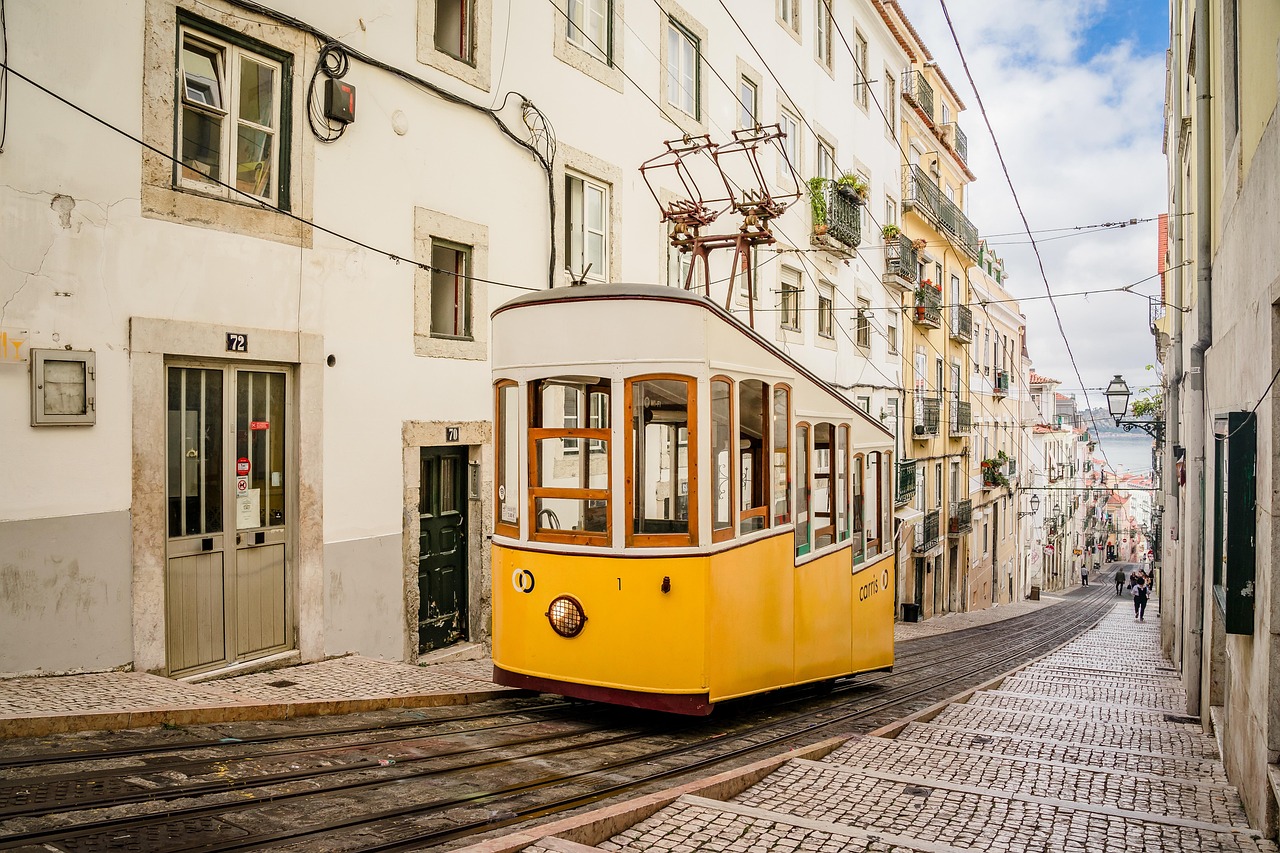
There’s a particular kind of magic to the Portuguese day trip, one that starts not with a frantic airport dash or the clatter of a train, but with the gentle rumble of a bus pulling away from a city curb. It’s a quiet promise: that the metropolis, with its seven hills and labyrinthine streets, can be exchanged, for a day, for the scent of pine and the weight of royal stone. My own love affair with Mafra began in exactly this way, a few years back on a misty October morning.
I had a hankering to see the Convento de Mafra, a building so vast and Baroque it’s often whispered about in the same reverent tones as the Escorial in Spain. I’d heard it was a “Portuguese Versailles,” and my writer’s curiosity was piqued. But I wanted the journey to feel like part of the story, not just a means to an end. So, I chose the bus. And in doing so, I discovered one of the most practical, affordable, and genuinely Portuguese ways to travel.
This isn’t just about getting from A to B. It’s a journey through the changing topography of the Lisbon District, a transition from the riverfront bustle to the quiet, wooded plains of the Ribatejo. It’s a story of timetables, tickets, and the kind of cheap travel tips that turn a simple trip into a savvy adventure. So, grab a seat—preferably one by the window—and let’s plan your journey from Lisbon to Mafra by bus.
The Prelude: Where to Begin Your Journey?
Before you can even think about Mafra, you need to know your starting point in Lisbon. The city’s bus network is a sprawling, efficient beast, and for this particular journey, your departure point is crucial. There are two main players in this game: the long-distance coach and the local-but-regional bus.
1. The Long-Distance Champion: Rede Expressos at Sete Rios
The long-distance champion is Rede Expressos. Their hub is the Sete Rios Bus Terminal (Terminal Rodoviário de Sete Rios). This is the grand central of Portuguese intercity bus travel. It’s a bustling, no-frills place attached to the Colombo Shopping Centre. My first journey to Mafra, I arrived here with a solid thirty minutes to spare, lured by the scent of freshly baked pastéis de nata from a kiosk, and watched the steady flow of travelers. It felt like the starting line of a thousand different adventures.
Sete Rios Bus Terminal (Terminal Rodoviário de Sete Rios)
- Address: Praça General Humberto Delgado, 1500-333 Lisboa, Portugal
- Hours: The terminal is open 24/7, but ticket offices and main services typically operate from 5:00 AM to 11:30 PM. The shopping centre is usually open 9:00 AM to 10:00 PM.
- Getting There: Easily reached via the Metro Blue Line to Jardim Zoológico station. Also served by CARRIS bus lines 713, 716, 726, 742, 746, and 756.
- My Experience & Details: This place is an ecosystem. The most important feature is the wall of departure boards. They’re digital, clear, and updated in real-time. You’ll find your bus company, destination (Mafra), time, and platform number (Balcão). There’s a small cafe, a newsstand, and clean restrooms. My top tip? If you have time, the shopping centre offers more substantial food options, but for the true Portuguese experience, grab a small bica (espresso) and a croissant from one of the kiosks and just people-watch.
2. The Local Option: Carris Metropolitana from Marquês de Pombal
The second, and for Mafra arguably more direct, option is the Carris Metropolitana. This is the new(ish) name for the amalgamated bus network that serves the Greater Lisbon area. For Mafra, you’ll be looking for the M30 route. This bus is a different beast entirely. It’s more of a local service, making more stops, but it offers the immense advantage of taking you from the heart of Lisbon right to the heart of Mafra. The best place to catch the M30 is from the Marquês de Pombal square. This is a major transport hub right in the city center. You’ll find the bus stop on Avenida da Liberdade, near the Hard Rock Cafe. It’s a much more pleasant place to wait than Sete Rios, surrounded by grand architecture and the city’s buzz.
Marquês de Pombal (for Carris Metropolitana M30)
- Address: Praça do Marquês de Pombal, 1250-108 Lisboa, Portugal (bus stops along Avenida da Liberdade).
- Hours: This is a public street stop. The M30 service typically runs from around 6:00 AM to 10:00 PM. Always check the specific timetable for your travel day.
- Getting There: Directly accessible via Metro (Yellow or Blue Lines) to Marquês de Pombal station.
- My Experience & Details: I once opted for the M30 on a whim, deciding I wanted to see the city unfold from the bus window. The bus is modern, with air conditioning. It’s a slower journey, but you see the neighborhoods change, from the high-end shopping of Avenida da Liberdade to the residential areas and then the open countryside. The bus can get crowded during rush hour. You tap your card or buy a ticket from the driver. It’s the local’s way.
The Two Routes: A Tale of Two Buses
So, you’ve chosen your starting point. Now, let’s talk about the journeys themselves, because they are quite different experiences. This is the core of your planning for the Lisbon to Mafra bus route.
Option 1: The Rede Expressos Express
This is the sleek, fast option. Rede Expressos is the premier long-distance bus company. Their coaches are comfortable, modern, and they get you there with minimal fuss. It’s a point-to-point service designed for efficiency.
- Timetable: Departures roughly every hour during the day. Expect the first bus around 7:00 AM and the last one around 9:00 PM. Check the Rede Expressos Lisbon to Mafra schedule online for the exact times.
- Journey Time: Typically 45-50 minutes.
- Ticket Price: Around €4.55 to €5.50 for a single ticket. A fixed price.
- How to Buy: At the Sete Rios counter, or more conveniently, via their website or mobile app for a digital ticket.
- My Experience: It’s a straight shot out of the city. The app is a lifesaver—buy your ticket, show your phone, and hop on. You’ll be pulling into Mafra before you’ve even finished the podcast episode you queued up.
Option 2: The Carris Metropolitana Odyssey
This is the scenic, immersive option. The M30 bus route is a journey through the fabric of the city and its suburbs. It’s the best answer for how to get to Mafra Palace from Lisbon by bus if you want a direct city-center pickup.
- Timetable: Frequent and steady. Expect a bus every 20-30 minutes for most of the day. This offers great flexibility. Check the Carris Metropolitana Mafra bus times on their website or app.
- Journey Time: 1 hour and 15 minutes to 1 hour and 30 minutes, depending on traffic.
- Ticket Price: Cheapest with a Viva card, around €2.50 - €3.00. This is the key to a cheap bus Lisbon to Mafra.
- How to Buy: With a rechargeable Lisboa Viva card, a single-use card from the driver, or in some cases, cash.
- My Experience: The journey is longer, but it’s a real cross-section of life in the Lisbon metropolitan area. Seeing the palace appear on the horizon from the bus window is a truly memorable moment.
Getting Down to the Nitty-Gritty: Tickets and Costs
Let’s break down the money part. You want to know the Lisbon to Mafra bus cost so you can budget accordingly.
- Rede Expressos: Expect to pay around €5.00. It’s a simple, all-inclusive fare. You buy a specific seat on a specific bus.
- Carris Metropolitana (M30): Cheaper with a Viva card, around €2.50-€3.00. More flexible, but the journey is longer.
For the absolute cheapest option, the M30 with a Viva card is the winner. But remember to factor in the value of your time. Is saving €2 worth an extra 30-40 minutes on the bus? For a day trip, time is precious.
Pro-Tips for the Savvy Traveler
- The Lisboa Viva Card is Non-Negotiable: If you plan to use public transport for more than a day, this card is essential. It will save you money on every single journey on the M30.
- The "Comboio + Autocarro" Hack: Sometimes, the best way isn't the most obvious. You can take the train from Lisbon's main stations (Oriente, Entrecampos, or Sete Rios) to Malveira or Cacém, and then catch a local bus to Mafra.
- Book Online for Rede Expressos: Booking your seat online via their app guarantees you a spot, especially on weekends.
- Travel Off-Peak: Avoid traveling on Friday or Sunday evenings. A Tuesday morning journey will be far more pleasant.
- Check the Official Websites: Timetables change. A quick check on the Rede Expressos or Carris Metropolitana websites will save you from any nasty surprises.
The Destination: Mafra Awaits
You’ve made it. You step off the bus, and the first thing you notice is the air. It feels cleaner, laced with the scent of pine from the nearby Tapada (the old royal hunting ground). You’re here for the Mafra Palace, and it will not disappoint. This is not just a palace; it’s a National Convent, a masterpiece of Baroque architecture, and a UNESCO World Heritage site. It was built by King João V as a grand statement of his power and piety, and it contains a breathtaking basilica, a magnificent library (home to thousands of ancient books and a colony of bats that protect them from insects), and opulent royal apartments.
But Mafra is more than its palace. After you’ve explored the grand halls, take a walk into the town. It has a lovely, relaxed atmosphere. Grab lunch at a local tasca. The regional specialty is leitão (suckling pig), and if you’re a meat-eater, it’s an unforgettable experience. For a more casual bite, find a café and order a bifana (a marinated pork steak sandwich) and a Sagres beer. And don’t forget the Tapada Nacional de Mafra, the vast walled forest that surrounds the palace complex, perfect for a post-lunch walk.
Final Thoughts
Traveling from Lisbon to Mafra by bus is more than just a logistical exercise. It’s a choice to slow down, to see the country at ground level, and to connect with the rhythm of daily life in Portugal. It’s a journey that costs less than a fancy coffee back home, yet it delivers you to one of the most spectacular royal complexes in Europe. Whether you choose the speed and comfort of the Rede Expressos coach from Sete Rios or the winding, local journey on the Carris Metropolitana M30, you are in for a treat. The bus is your chariot, the timetable is your guide, and Mafra is your reward. So, check the times, top up your Viva card, and get ready for an adventure. The road to Mafra is waiting.