The 48-Hour Lisbon Stopover: A 2-Day Love Letter to Portugal's Capital
The engine cuts out, or rather, the rumble of the fuselage gives way to a lighter, almost buoyant hum. You press your forehead against the cool plexiglass of the window, and there it is: a city of seven hills tumbling down to a silver sheet of water. The light here is different. It’s not the harsh, bleached glare of the Mediterranean south, nor the brooding gray of the north. It is a liquid gold, thick and warm, pouring over terracotta roofs and the faded pastel stucco that seems to peel back layers of history with every gust of wind.
You have 48 hours. Two days. A pocket of time in a city that demands weeks, months, years. A "stopover" usually feels like a punishment—a purgatory of plastic chairs and overpriced coffee in an airport lounge. But Lisbon has a way of turning a layover into a destination. It is a city built for the wanderer, the flâneur, the accidental tourist. The grid is a suggestion, not a rule. The streets are a labyrinth designed to be lost in.
This is not a checklist. It is an invitation. A 48-hour love letter to a city that steals your heart with a sly smile and the scent of grilling sardines.
The Arrival: Gravity and Gravity
You land at Humberto Delgado Airport (LIS), which sits alarmingly close to the city center. The metro is efficient, clean, and will drop you at the heart of the action, but for a true arrival, I suggest the taxi or Uber. The ride into the city is a descent into a topographical dream. You will feel the car shift gears, climbing and dipping, navigating streets that seem to defy Euclidean geometry.
Where you stay is crucial. You have no time for a commute. You need to be in the thick of it.
The Lisboeta’s Base Camp: Baixa, Chiado, or Alfama
For a 48-hour sprint, I recommend the Baixa or Chiado districts. These are the elegant, grid-like downtown areas, flattened by the 1755 earthquake and rebuilt with a grandeur that feels distinctly Roman. It’s central, walkable, and you are a stone's throw from the river.
- The B Guest House (Rua do Crucifixo, 74): Tucked away in the Baixa, this place is a sanctuary of minimalist design in a centuries-old building. The rooms are quiet, a rare commodity in a bustling city, and the staff treats you like a returning cousin.
- Hotel do Chiado (Rua do Carmo, 2): If you want to splurge slightly and feel like a celebrity from a bygone era, this is the spot. The rooftop bar offers a panoramic view of the city that feels like a private secret.
If you crave something grittier, darker, and steeped in fado, head to Alfama. It’s the oldest district, a survivor of the earthquake, a maze of narrow alleys (becos) and staircases. Staying here is romantic, but be warned: the cobblestones are unforgiving, and the hills are vertical.
- Solar do Castelo (Rua das Aranhas, 27): Built within the walls of the St. George’s Castle, this is pure luxury. It feels like stepping into a private manor in the 18th century. You can hear the peacocks in the castle gardens at dawn.
Solar do Castelo: A Historical Sanctuary
Address: Solar do Castelo, Rua das Aranhas, 27, 1100-045 Lisboa, Portugal
Check-in: Usually 3:00 PM | Check-out: 12:00 PM
Why it matters: Staying here isn't just about a bed; it's about waking up inside the history of the city's defense. It grounds you in the ancient soul of Lisbon before you even step out the door.
Day 1: The Golden Hour and the Echoes of Fado
Morning: The View from the Top
Sleep off the jet lag, or don't sleep at all. Rise early. The light in Lisbon before 9:00 AM is a photographer's dream—soft, directional, casting long shadows that accentuate the relief of the tiles. Head straight to Miradouro da Senhora do Monte.
There are many viewpoints in Lisbon (miradouros), but this is the highest one. It sits atop the Graça neighborhood. To get there, you can take the famous Elevador da Glória, a red funicular that zig-zags up the hill, or you can walk. I recommend the walk. It warms up the legs. From this vantage point, the city unfolds below you like a wrinkled map. You can see the Castelo de São Jorge perched on its ridge, the dome of Igreja de Santa Engrácia, and the massive 25 de Abril Bridge cutting across the Tagus, looking like a Golden Gate clone that’s lost its way.
Miradouro da Senhora do Monte
Address: Rua da Virgínia, 1100-343 Lisboa, Portugal
Hours: Open 24 hours
Why it matters: This isn't just a photo op; it's orientation. You need to see the geography—the river, the hills, the layout—to understand how this city breathes. It’s the prologue to your story.
Mid-Morning: The Science of Pastry
Walk down towards the Baixa. Your stomach is rumbling. You cannot leave Lisbon without eating a Pastel de Nata. And you cannot eat just any Pastel de Nata. You must go to Manteigaria.
Located in the Chiado district, just off the bustling shopping street Rua Garrett, this is a bakery with a glass wall separating you from the bakers. You can watch them fold the dough, layering butter and flour until it is impossibly thin (puff pastry takes time, patience, and muscle). The custard is torched to order.
Manteigaria: The Art of the Cream Tart
Address: Rua do Duque de Loulé 71, 1269-063 Lisboa, Portugal
Hours: Mon-Fri 8:00 AM - 8:00 PM, Sat 9:00 AM - 9:00 PM, Sun 9:00 AM - 8:00 PM
Why it matters: Texture is religion here. The crust should shatter, raining flakes onto your shirt (wear dark clothes). The custard should be hot, creamy, and just set. The contrast of hot filling and flaky crust is the physics of pleasure.
Afternoon: The Time-Out Market and the Water
Head south toward the river. You are heading to Cais do Sodré, the former red-light district that has cleaned up its act to become a hub of food and culture. The main attraction here is the Mercado da Ribeira, known to tourists as the Time Out Market.
Opened in 2014, this is a food hall curated by Time Out magazine, bringing together some of Lisbon’s best chefs under one roof. It’s chaotic, loud, and sensory overload. It is also the best place to sample the breadth of Portuguese cuisine in one go.
Mercado da Ribeira (Time Out Market)
Address: Avenida 24 de Julho, 1200-479 Lisboa, Portugal
Hours: Sun-Wed 10:00 AM - 12:00 AM, Thu-Sat 10:00 AM - 2:00 AM
Why it matters: For a stopover, this is efficiency. You can try the octopus salad from Marisqueira Azul, the legendary pork sandwich (Sandes de Porco Preto) from Casa da Portuguesa, and a glass of Alvarinho from the wine bar, all within ten feet of each other. It’s a culinary crash course.
After eating, walk it off along the Ribeira das Naus, the waterfront promenade that has reclaimed the riverfront for the people. Walk towards the Praça do Comércio, the massive arcaded square facing the river. It was the site of the royal palace before the earthquake leveled it. Today, it’s an open space where locals play football, tourists take selfies, and the statue of King José I reigns over it all, bronze and unbothered.
Evening: Alfama and the Sound of Sadness
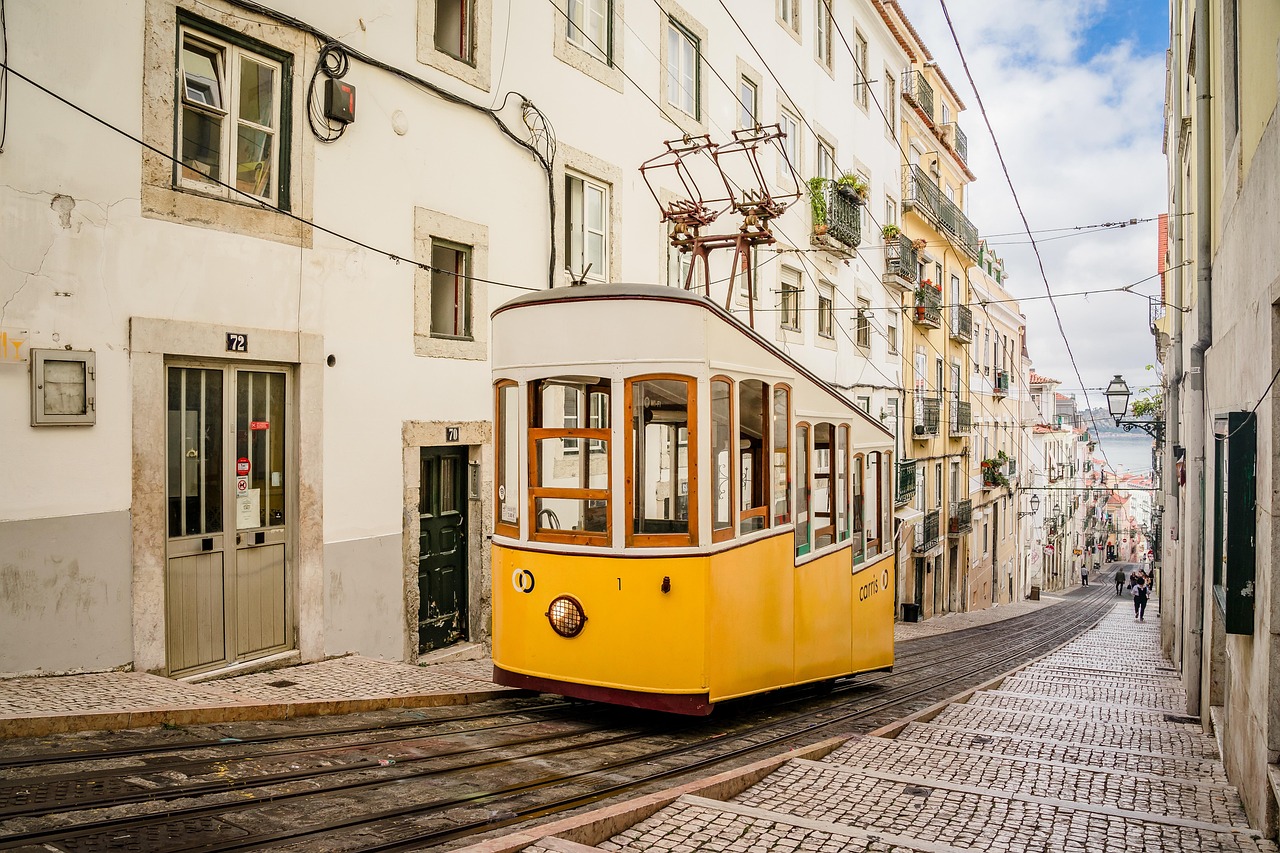
As the sun begins to dip, take a taxi or the number 28 tram (a rattling vintage box that is an attraction in itself) up into Alfama. The light turns amber. The narrow streets cool down. This is the time for Fado.
Fado is the soul of Portugal. It’s a style of music born in the 1820s, sung by a soloist (the fadista) accompanied by the guitarra portuguesa (a 12-string guitar) and a classical guitar. The lyrics speak of saudade—a deep, untranslatable sense of longing, of missing something or someone that may never return.
Avoid the "Fado shows" for tourists that serve set menus. You want a "Casa de Fado." I recommend Clube de Fado. It’s set in a historic building with a vaulted brick ceiling. The acoustics are intimate. You don’t just hear the music; you feel the vibration in your chest.
Clube de Fado
Address: Rua de São João da Praça, 94, 1100-521 Lisboa, Portugal
Hours: Dinner starts around 7:30 PM, Fado begins at 9:30 PM (Reservations essential)
Why it matters: This is not entertainment; it’s a ritual. The silence that falls over the room when the singer opens their mouth is profound. It is a shared vulnerability. You don’t need to understand the Portuguese lyrics to understand the pain and the beauty in the voice.
Day 2: Explorers, Monuments, and the Golden Rooster
Morning: The Belém Pilgrimage
You need coffee. Strong coffee. An Italiano (an espresso with a dash of milk) is the fuel. Then, head to the river. You are going to Belém.
Belém is the district where the Portuguese explorers set sail. It is a testament to the Age of Discovery, a celebration of a tiny country that once ruled the world. The easiest way to get there is the Tram 15E from Cais do Sodré. It’s crowded, so hold on tight.
Your first stop is the Mosteiro dos Jerónimos (Jerónimos Monastery). This is the pinnacle of Manueline architecture, a style of Portuguese late Gothic that is so intricate it looks like it was carved from lace. The cloisters are some of the most beautiful in the world—two stories of twisting columns and vaulted arches that frame the sky.
Mosteiro dos Jerónimos
Address: Praça do Império, 1400-206 Lisboa, Portugal
Hours: Tue-Sun 10:00 AM - 6:30 PM (Last entry 5:30 PM). Closed Mondays.
Why it matters: You cannot understand Portuguese pride without standing in the nave of this church. Vasco da Gama is buried here. So is Luís de Camões, the poet of the explorers. It is heavy with history. Buy tickets online to skip the line.
The Snack: The Pastry War
Right across the street from the monastery is Pastéis de Belém. This is the origin story. In 1837, monks began selling pastries to support the monastery. The recipe is a secret known only to the master bakers here. While Manteigaria is excellent, Pastéis de Belém is the legend.
Pastéis de Belém
Address: Rua de Belém 84-92, 1300-085 Lisboa, Portugal
Hours: Open daily 8:00 AM - 11:00 PM
Why it matters: It’s a rite of passage. The pastry here is slightly different—crisper, dusted only with cinnamon. The interior is a labyrinth of tiled rooms. Sit at a table, order a dozen (you will eat them all), and watch the city go by.
Mid-Day: The Tower and the River
Walk along the riverfront towards the Torre de Belém (Belém Tower). Built in the early 1500s, this fortress once guarded the entrance to the harbor. It’s a mix of Gothic and Moorish styles. It’s small, surprisingly small, but its location on the water is striking.
Torre de Belém
Address: Avenida da Índia, 1400-206 Lisboa, Portugal
Hours: Tue-Sun 10:00 AM - 6:30 PM (Last entry 5:30 PM). Closed Mondays.
Why it matters: It’s the postcard image of Lisbon. You can climb the turret and look out over the water, imagining the tall ships returning from India laden with spices. It’s a bit of a tourist crush, so snap your photo, admire the view, and keep moving.
Afternoon: The Hidden Garden and the Art
Head back towards the city center, but stop at the Estrela Basilica. It’s a bit off the beaten path, but the neighborhood is lovely. From there, walk uphill to the Jardim do Torel. This is a small, somewhat hidden park that offers a unique view of the city. It’s quiet, filled with trees, and has a distinct local vibe.
But for the afternoon, I suggest a change of pace. Head to the Calouste Gulbenkian Museum. This isn't just a museum; it's a sanctuary. The collection spans from ancient Egypt to the 20th century, but the real draw is the modern wing and the gardens. The museum was founded by an oil tycoon who wanted a space for art to be viewed in peace.
Calouste Gulbenkian Museum
Address: Avenida de Berna 45A, 1067-001 Lisboa, Portugal
Hours: Tue-Sun 10:00 AM - 6:00 PM (Closed Mondays)
Why it matters: The gardens are a masterclass in landscape architecture. There are ponds, streams, and a distinct lack of noise. It’s the perfect antidote to the sensory overload of the previous 36 hours. It allows you to breathe.
The Late Afternoon: The Bairro Alto Vibe
As evening approaches, head up the hill to Bairro Alto. During the day, this neighborhood is sleepy, a grid of narrow streets lined with pastel houses. As the sun sets, it transforms. It feels like a switch is flipped. Doors open, music spills out onto the street, and people spill out of bars with plastic cups in hand.
This is the drinking heart of Lisbon. It’s not fancy. It’s loud, boisterous, and fun. Walk down Rua da Atalaia, the main artery.
If you want a specific recommendation, go to Pavilhão Chinês. It’s a bar that looks like a museum case exploded. The walls are lined with thousands of toys, figurines, and memorabilia. The owner, a former antique dealer, curates the chaos.
Pavilhão Chinês
Address: Rua do Diário de Notícias 90, 1200-140 Lisboa, Portugal
Hours: Typically opens around 7:00 PM and stays open late.
Why it matters: It’s weird, it’s wonderful, and it’s a conversation starter. Order a gin and tonic (they are famous for them) and just soak in the eccentricity. The energy in Bairro Alto is infectious.
Dinner: The Sardine Experience
You cannot leave without eating grilled sardines. If it is summer (June to September), this is the season. They are fatty and rich. Go to a churrasqueira (grill house). Churrasqueira das Cortes in the Santos neighborhood is excellent, but for a stopover, look for any place with a charcoal grill and a line of locals.
If you aren't into sardines, try A Cevicheria in Príncipe Real. It’s a tiny spot famous for the giant octopus hanging from the ceiling. The ceviche is fresh, spicy, and modern.
A Cevicheria
Address: Rua Dom Pedro V 56, 1200-144 Lisboa, Portugal
Hours: Tue-Sun 12:00 PM - 3:00 PM, 6:00 PM - 11:00 PM (Closed Mondays)
Why it matters: Lisbon is a coastal city. Its cuisine is defined by the ocean. Whether it’s the rustic sardines or the fusion ceviche, you are tasting the water. It’s a reminder that this city’s pulse is tied to the tide.
The Logistics of the Sprint
Getting Around:
Walk. You must walk. Lisbon is a city of stairs and cobblestones (calçada portuguesa). Wear your most comfortable shoes. Seriously. Your feet will hurt, but that’s how you know you’re doing it right.
For longer distances, the metro is clean and safe. The Viva Viagem card is essential. You can load it with money (Zapping) for cheaper fares.
Uber and Bolt are cheap and plentiful.
The Tram 28 is a tourist trap, but it’s a fun one. Ride it early in the morning to avoid the crowds.
Money:
Portugal uses the Euro. Credit cards are accepted almost everywhere, even for small purchases. However, always carry some cash (20-50 Euros) for small cafes, trams, or tipping.
Tipping:
It’s not mandatory, but it’s appreciated. In restaurants, if the service was good, round up the bill or leave 5-10%. In taxis, rounding up is standard.
The "Must-Do" vs. The "Should-Do":
On a 48-hour trip, you will be tempted to do everything. You cannot. You must choose.
- Must Do: Walk the streets, eat a Pastel de Nata, see the view from a miradouro, hear Fado or the sound of the city at night.
- Should Do: Visit the Gulbenkian, go inside the Jerónimos Monastery, swim in the river (if you're brave).
- Skip: The queues for the Tower of Belém if they are massive (admire from the outside), the interior of the Sé Cathedral (it’s austere), and the "tourist trap" restaurants with pictures of food on the menu.
The Final Hour
As your 48 hours wind down, on your final morning, before you head to the airport, go get one last coffee. Sit at a kiosk in the Praça do Rossio. Watch the trams ding their bells. Watch the street sweepers do their intricate dance with the brooms. Watch the people.
Lisbon is a city that has weathered earthquakes, tsunamis, and revolutions. It carries its scars with elegance. It is a city of light and shadow. In two days, you won't see it all, but you can feel it. You can absorb that specific Lisbon energy—a blend of melancholy and optimism, of old-world charm and gritty modernity.
You will leave with the taste of cinnamon on your tongue and the sound of a guitar string vibrating in your ears. You will leave wanting more. And that, perhaps, is the best reason to plan a stopover. It’s not the end of the journey; it’s the beginning of a love affair with a city that sits at the edge of the world.