Ultimate 3-Day Granada Itinerary: Alhambra & Sacromonte Guide
There is a specific scent to Granada that I have never quite found anywhere else. It isn’t just one smell; it is a complex layering of history, earth, and appetite. Walking the streets, especially in the twilight hour when the city shifts from a sun-baked tourist destination to a living, breathing organism of locals, you catch whiffs of roasting almonds from a street vendor near the Cathedral, the heavy, sweet perfume of jasmine tumbling over ancient stone walls, and somewhere in the distance, the sharp, metallic tang of sherry vinegar hitting a hot pan.
Granada is a city of steep inclines and sudden revelations. It is a place where the past is not behind you, but beneath your feet and towering above your head. For three days, you have just enough time to scratch the surface, to let the city’s rhythm sync with your own, provided you plan with the precision of a military general and the leisure of a poet. This is not a checklist destination; it is a place to be absorbed. This itinerary is designed to take you through the heavy, gilded doors of the Alhambra, down into the whitewashed caves of Sacromonte, and into the tapas bars where the locals actually eat.
Let’s walk this path together.
Day 1: The Majestic Impossibility and the Arab Soul
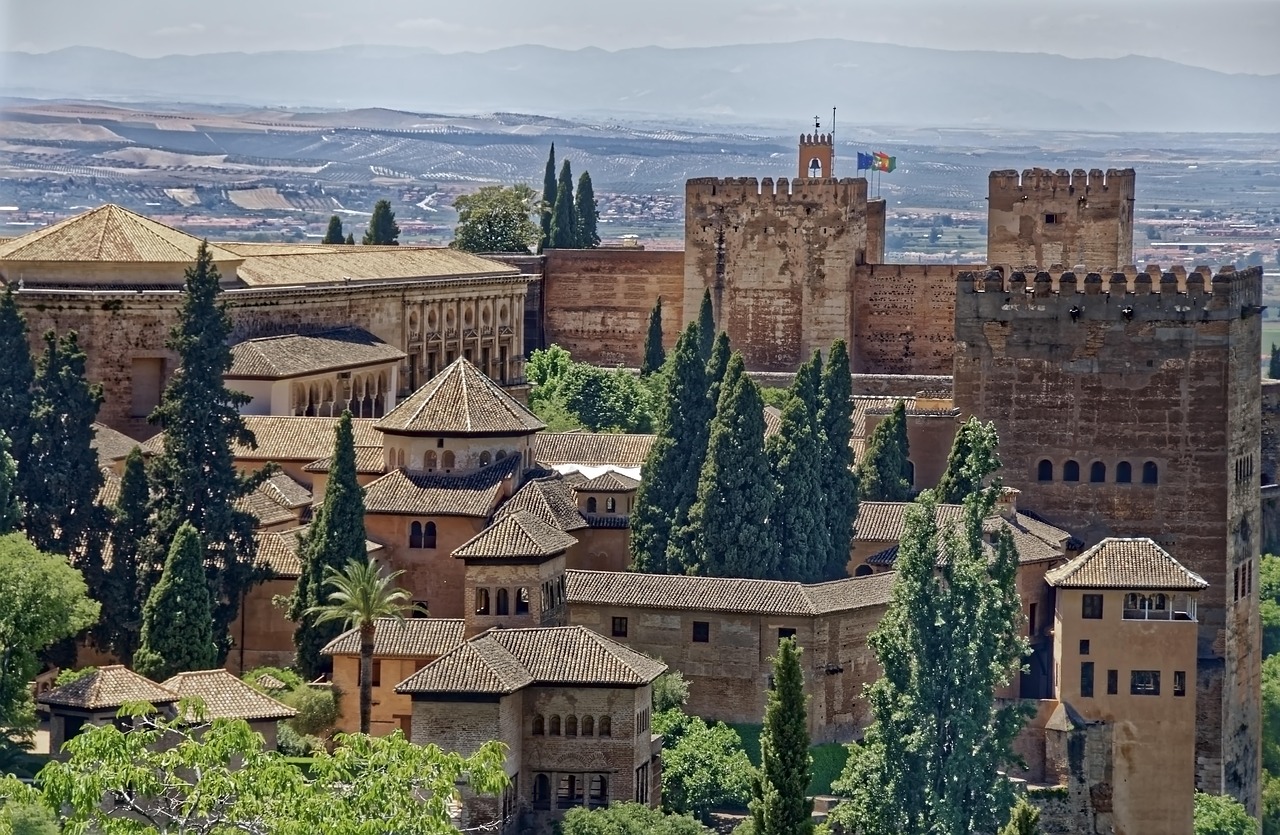
The first rule of Granada is simple: The Alhambra owns the morning. You cannot see the Alhambra in the afternoon and expect to feel the magic. The light in the morning, hitting the red walls (the qasr al-hamra, from which the palace gets its name), turns the fortress into a glowing ember.
You must book your tickets weeks, perhaps months, in advance. The "Alhambra General" ticket is the only one that grants you access to the Nasrid Palaces, the true heart of the complex. Without it, you are merely visiting a fortress. With it, you are stepping into a dream.
The Alhambra and Generalife
Hours: Monday to Sunday, 8:30 AM – 6:00 PM (Winter) / 8:30 AM – 8:00 PM (Summer).
Note: The Nasrid Palaces have a strict entry time window on your ticket—do not be late.
I remember my first time walking through the Court of the Myrtles. The silence there is heavy, broken only by the sound of water flowing through the channel that reflects the arches of the Comares Palace. It is a geometric perfection designed to quiet the mind. You will find yourself staring at the stucco ceilings, covered in muqarnas—honeycomb stalactite vaulting that looks more like frost on a winter window than human construction. It is dizzying.
Do not rush. Many people sprint through the Nasrid Palaces to beat the crowds, but the magic is in the details. Look at the inscriptions. The famous "God alone is the Victor" repeats like a heartbeat in the stone. And when you step out into the Court of the Lions, take a moment to lean against the railing. The lions, stoic and ancient, have supported that fountain for centuries.
After the palaces, walk up to the Alcazaba, the military fortress. The views from the Torre de la Vela over the city and the Albayzín are worth the climb. Then, descend through the Generalife gardens. This is the summer palace. The scent changes to wet earth and boxwood. The water channels here are playful, designed to surprise you with a splash or a sudden silence.
By 2:00 PM, you will be exhausted and hungry. Do not eat at the tourist traps near the entrance. Instead, take the bus or walk down into the Realejo neighborhood. This was the old Jewish quarter, distinct from the Arab Albayzín.
Find your way to Bar Poë. It is a tiny, bustling spot with a chalkboard menu that changes constantly.
Address: Calle Jardines, 19, 18001 Granada, Spain
Hours: Usually 1:00 PM – 11:30 PM (closed Mondays).
Order their tostas (open-faced sandwiches). A favorite of mine is the pringá—a slow-cooked meat mixture usually reserved for winter, but they make it sing year-round. Pair it with a glass of local wine. This is your first real introduction to the Granada philosophy: the tapa. In Granada, when you buy a drink, you get food. At Bar Poë, the tapas are not an afterthought; they are the main event.
As the sun begins to dip, head toward the Albayzín. This is the old Moorish quarter, a labyrinth of narrow, winding streets known as cármenes. You need to be wearing good shoes. The cobblestones are uneven, polished by centuries of footsteps.
Your destination is the Mirador de San Nicolás. It is the most famous viewpoint in the city, and for good reason. You will see the Alhambra sitting on its hill, dark against the backdrop of the Sierra Nevada mountains. If you are lucky, the snow on the peaks will still be white, contrasting with the red walls of the fortress.
But here is a secret: Mirador de San Nicolás is crowded. It is a spectacle. To find the soul of the evening, walk five minutes further to the Carrera del Darro. This street runs along the river, sandwiched between the Alhambra and the Albayzín. As twilight turns to night, the streetlights reflect in the Darro river, and the sound of the city becomes a soft hum. It is romantic, yes, but it is also deeply melancholic in a way that feels ancient.
For dinner, you have to experience the Plaza Nueva area, but again, look for the locals. Walk up Calle Navas. This street is a funnel for energy. You will see people spilling out of bars, glasses in hand.
Bodegas Castañeda
Address: Calle de Almireceros, 1, 18002 Granada, Spain
Hours: 12:30 PM – 11:30 PM.
This place is an institution. It feels like a ship’s hold, dark wood, barrels lining the ceiling. The atmosphere is loud and joyous. Order a vermut or a manzanilla. The waiters, often older men with white jackets, will slide a plate of olives, cheese, or ham onto the bar. You don't order the tapas; you just drink, and the food appears. It is a chaotic, beautiful ballet. Don't be shy about asking for the "special of the night."
Day 2: Caves, Kings, and the Art of the Free Tapas
On day two, you cross the river. You leave the polished stone of the Alhambra and the tourist-heavy Albayzín for the rugged, authentic hills of Sacromonte.
Sacromonte is famous for two things: its cave houses (casas cuevas) and Flamenco. This is the traditional Gitano (Roma) neighborhood. It feels removed from time. The houses are dug into the hillside, white chimneys poking out of the earth.
To get there, you can take a taxi, but I recommend the bus (Line C34) or a long, scenic walk up the hill. The walk is steep, but the views get better with every step.
Your first stop is the Sacromonte Abbey. It might sound dry, but it is fascinating.
Address: Placeta de San Simon, 18010 Granada, Spain
Hours: 10:00 AM – 6:00 PM (Summer) / 10:00 AM – 5:00 PM (Winter).
The Abbey sits atop the "Holy Caves." Legend says that the bones of the city's patron saints were found here. You can descend into the dark, cool caves to see the frescoes depicting the martyrdom of the saints. It is a stark contrast to the light-filled Alhambra. It is visceral and religious. The silence in the caves is absolute, a heavy blanket of quiet.
After the Abbey, you want to get a sense of the cave dwelling life. You can visit the Cueva-Museo de Sacromonte (Museum of the Cave Homes).
Address: Barranco de los Negros, 18010 Granada, Spain
Hours: 10:00 AM – 6:00 PM (Tuesday to Sunday).
This is a restored cave that shows you how families lived until relatively recently. The kitchen is set up, the furniture is humble, and the coolness of the earth walls is palpable. It’s a humble, important reminder of the human resilience that defines this city.
By lunchtime, you are ready for the famous Sacromonte view. Head to Restaurante Carmen El Adarve.
Address: Vereda de Enmedio, 19, 18010 Granada, Spain
Hours: 1:00 PM – 4:30 PM and 8:00 PM – 11:30 PM.
Make a reservation. You want a table on their terrace. From here, the view of the Alhambra is unobstructed and vertical. You are looking across the valley at the fortress you walked through yesterday. It gives you a profound sense of the city's geography. The food here is traditional Andalusian—think oxtail, grilled meats, and rich stews.
In the afternoon, return to the center of Granada to explore the Granada Cathedral and the Royal Chapel (Capilla Real). The Cathedral is imposing and bright, a masterpiece of the Spanish Renaissance, distinct from the Gothic cathedrals of the north. But the Royal Chapel is where the history lies. This is the final resting place of the Catholic Monarchs, Queen Isabella and King Ferdinand, the rulers who finished the Reconquista by taking Granada from the Moors. Their tombs are magnificent, made of bronze and marble, and the atmosphere is solemn.
Address: Calle Gran Vía de Colón, 3, 18001 Granada, Spain
Hours: 10:00 AM – 6:30 PM (Summer) / 10:00 AM – 5:30 PM (Winter).
By night, you must do the Flamenco in Sacromonte. This is non-negotiable. Avoid the big "shows" aimed by buses. You want an intimate cave experience.
Cueva de la Rocío
Address: Camino del Sacromonte, 18010 Granada, Spain
Hours: Shows usually start around 8:00 PM and 9:30 PM (reservations essential).
This is a tiny cave that holds maybe 40 people. Rocío is a force of nature. The singing (cante) here is raw and guttural; the guitar is frantic. You will feel the vibrations in your chest. It is not a performance in the theatrical sense; it is an emotional exorcism.
Before the show, or after, you need to eat. In Sacromonte, the tradition of the "free tapa" is alive and well, perhaps even more generous than in the center. Walk down Vereda de Enmedio. You will find a string of humble bars. Try Bar Los Pica’os or Bar El Rincón de Tino. The tapas here are hearty—plates of paella, chorizo, and fried fish. It is unpretentious, cheap, and delicious.
Day 3: Hidden Gems, Markets, and the Sweet Life
On your final day, you have earned the right to slow down. You’ve done the heavy historical lifting. Now, we dig into the modern pulse and the culinary underbelly of the city.
Start your morning at the Alcaicería. This is the old Moorish silk market, now a narrow, crowded street of souvenir shops. It’s chaotic and colorful. It feels like a movie set. Walk through it, soak in the noise, but don’t buy the plastic flutes yet. Instead, duck into the Mercado de San Agustín.
Address: Calle Postigo Velutti, 18009 Granada, Spain
Hours: 8:00 AM – 3:00 PM (Mondays closed).
This is the stomach of Granada. It is a bustling indoor market that smells of paprika, fresh fish, and ripe fruit. You will see barrels of olives, legs of Jamón Ibérico hanging like trophies, and stalls selling remojón (a salad of orange, cod, and onion). Walk the aisles. Talk to the vendors. Buy some local cheese (I recommend Queso de la Alpujarra) to take home.
For lunch, we are going to a place that is a legend among Granada’s foodies: Los Manueles.
Address: Calle Reyes Católicos, 60, 18009 Granada, Spain
Hours: 1:00 PM – 4:30 PM and 8:00 PM – 11:30 PM.
There are two Los Manueles on the same street (Reyes Católicos is a long street). The original is number 60. They are famous for their croquettes. Not just any croquettes—these are huge, bechamel-heavy, fried perfection. But you must also order the chuletas (lamb chops). They are grilled simply, served with fries and salad. It is honest food, cooked by people who have been doing it for generations.
In the afternoon, escape the noise again. You need a moment of peace. Head to the Carmen de los Mártires. This is a Victorian-style mansion and garden located near the Alhambra, but often overlooked by tourists.
Address: Cuesta de Gomérez, 8, 18009 Granada, Spain
Hours: 10:00 AM – 6:00 PM (Winter) / 10:00 AM – 8:00 PM (Summer).
It is a "Carmen" in the true sense—a house with a walled garden. You can wander through manicured hedges, past peacocks strutting around, and sit by a small lake. It feels like a secret garden from a novel. It is the perfect place to sit on a bench and reflect on the three days you’ve spent here.
As your final evening approaches, you have one last mission: Churros con Chocolate. While the famous spot is often cited as the "Chocolatería San Ginés" (which is open 24 hours and is indeed excellent), I want to send you somewhere with a bit more local grit if you are up for it, or stick with the classic if you want the quintessential experience.
Chocolatería San Ginés
Address: Pasadizo de San Ginés, 3, 18001 Granada, Spain
Hours: Open 24 hours a day.
It is an institution. You walk into a marble-floored room, smelling of frying dough and warm, thick chocolate. Dip the churro. The chocolate is not a drink; it is a pudding, a dip. It is rich, dark, and intense.
For your final dinner, let’s go back to the Realejo. It’s a bit quieter than the Albayzín but just as vibrant. Try La Bella y La Bestia (The Beauty and The Beast).
Address: Calle de la Verónica, 10, 18001 Granada, Spain
Hours: 1:00 PM – 4:30 PM, 8:00 PM – 12:00 AM.
It is a quirky, cozy place with excellent fusion and local food. The vibe is young, the wine list is curated, and the food is inventive. It’s a nice way to end the trip—not in a chaotic tapas bar, but in a place where you can talk and savor the flavors.
Before you leave Granada, take one last walk down Calle Calderería Nueva. It is known as "Little Morocco." The street is lined with tea houses (teterías). The air is thick with the smell of Argentinian tobacco and mint tea. Sit outside if you can, order a té con leche (tea with milk) and a baklava, and watch the city go by.
Granada is a city that gets under your skin. It is a place where the collision of cultures—Islamic, Jewish, Christian, Gitano—has created something unique. Three days is just enough to taste it, to hear the echo of the water in the fountains, and to feel the weight of the history.
When you leave, you will carry the scent of jasmine and frying oil with you. And you will know that the Alhambra is not just a ruin; it is a living presence that watches over a city that refuses to forget its past, even as it embraces the present. This is Granada. It waits for you.