
Ultimate 2 Day Granada Spain Itinerary: Perfect 48 Hours
There is a particular scent to Granada that I have never quite replicated anywhere else. It isn’t just the heavy, sweet perfume of orange blossoms that hangs in the air during late spring, nor is it the dry, ancient dust of the limestone paths in the Albaicín. It is a complex blend of roasting coffee beans from the Albayzín hills, the sharp tang of frying garlic from a hundred tapas bars, and the faint, metallic whisper of water running through stone channels—a lingering memory of the city’s Moorish past.
Granada is not a city you simply "see"; it is a city you feel in your bones. It is a place where the steep, labyrinthine streets of the medieval Arab quarter collide with the grand, rigid geometry of the Renaissance cathedrals. It is the last stronghold of the Nasrid dynasty, the final sigh of Al-Andalus, and it wears its history with a defiant, romantic pride.
If you have only 48 hours here, you are pressed for time, but you are not without hope. Granada is compact, intense, and utterly walkable if you have the stamina for steep inclines. This 2 day Granada Spain itinerary is designed to be a sprint through history, a marathon of eating, and a masterclass in soaking up atmosphere. It is the ultimate weekend in Granada, packed into two perfect days.
Day 1: The Titans and the Teterías
08:00 AM | The Pre-Game Strategy
Before you even think about coffee, you need to get your logistics in order. I cannot stress this enough: The Alhambra is not a place you just rock up to. It is the most visited monument in Spain, and tickets sell out weeks, sometimes months, in advance.
If you haven't booked your ticket to the Nasrid Palaces and the Generalife Gardens yet, stop reading and go do that. Seriously. I’ll wait. The "Official Website" is occasionally a labyrinth of its own, but it’s the only way to avoid third-party markups.
Once your ticket is secured, start your day at the bottom of the city. Grab a strong coffee and a tostada con tomate (crusty bread rubbed with ripe tomato and olive oil) at a local bar. You need the fuel.
09:30 AM | The Alhambra: A Palatial Dream
Address: Calle Real de la Alhambra, s/n, 18009 Granada, Spain
Hours: Winter (Oct–Mar) 08:30–18:00; Summer (Apr–Sept) 08:30–20:00. Closed January 1 and December 25.
Note: Entry times for the Nasrid Palaces are strictly enforced. Arrive at least 30 minutes before your slot.
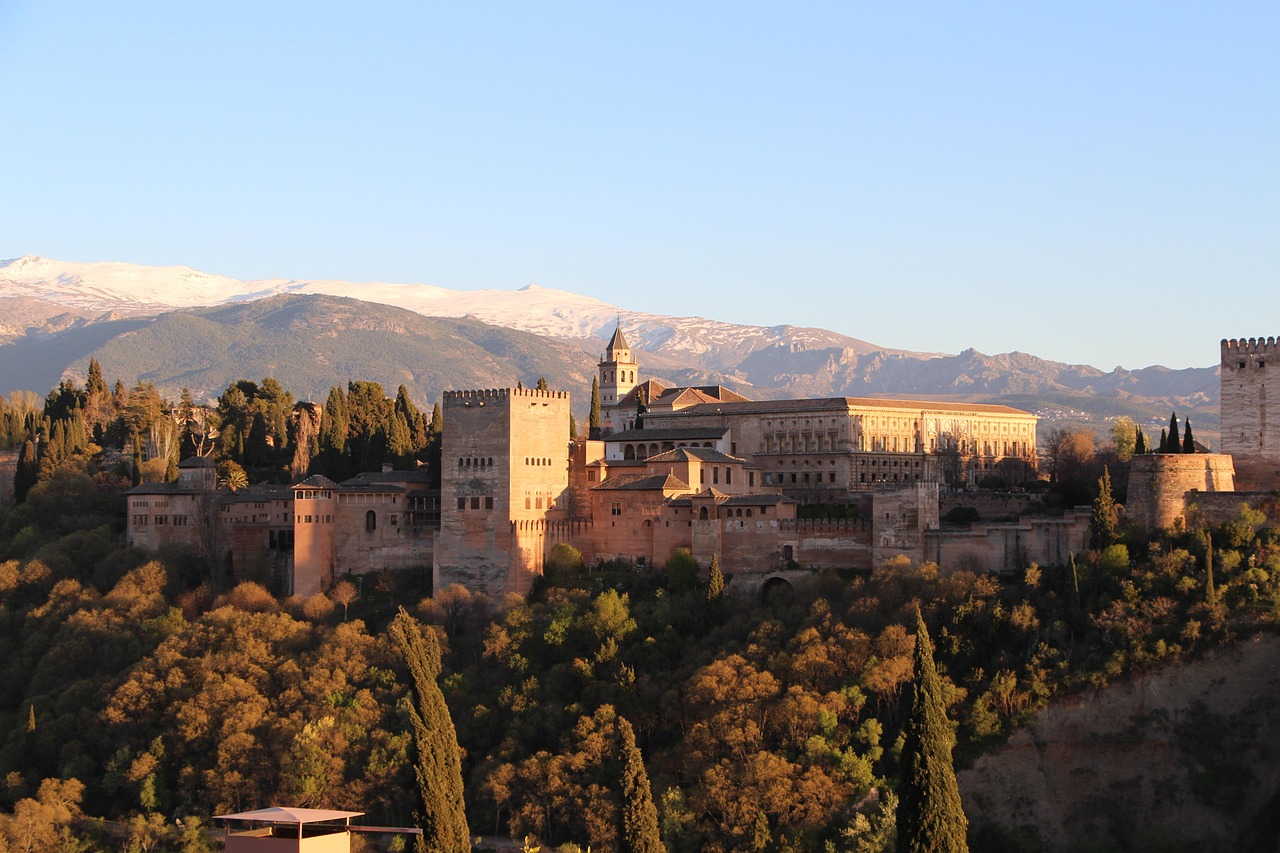
The Alhambra is not a building; it is a city unto itself. It crowns the Sabika hill like a tiara, looking down on the white houses of the Albaicín. Your ticket grants you access to the Nasrid Palaces, the Generalife, and the Alcazaba.
Start with the Alcazaba, the military fortress. From the Watchtower of the Vela, you get the first "wow" view of the city—the sweeping panorama of the Sacromonte valley and the Sierra Nevada mountains. It is a stark, rugged introduction to the complex.
Then, move toward the Nasrid Palaces. This is the heart of the Alhambra, the jewel box. As you pass through the Mexuar, you eventually hit the Court of the Myrtles. The silence here is profound, broken only by the water running through the central channel. The reflecting pool, flanked by dark myrtle bushes and framed by the Comares Tower, is one of the most photographed scenes in the world, and for good reason. The geometry is perfect, a deliberate attempt to create heaven on earth.
The highlight, inevitably, is the Hall of the Ambassadors. It is a dizzying explosion of stucco, gold, and calligraphy. Stand in the center and look up at the wooden dome—cedar from Lebanon, painted in blues and golds that mimic the night sky. It is easy to get overwhelmed by the crowds, so find a corner, breathe, and imagine the courtiers whispering in Arabic five centuries ago.
Don’t skip the Generalife, the summer palace of the sultans. It is a short walk away, and the gardens are a riot of green roses and water. The Water Stairway is a masterpiece of hydraulic engineering, with water cascading down banisters on both sides.
1:30 PM | The Art of the Free Tapas
Address: Bar Los Diamantes, Calle Navas, 28, 18009 Granada, Spain
Hours: Daily 12:00–00:00 (often closed Sundays for lunch, check locally)
After the Alhambra, you will be exhausted. You will also be hungry. Welcome to the Granada tapas culture. Unlike Madrid or Barcelona, where you pay for every plate, Granada is one of the last bastions of the free tapa. Buy a drink, get a plate of food. It’s a system that encourages hopping from bar to bar.
Head down into the center to Calle Navas. You will find Bar Los Diamantes. It is chaotic, loud, and absolutely essential. It is also the place where I once accidentally ordered a plate of fried baby squid that was larger than my head.
Squeeze in at the bar. Order a caña (a small draft beer) or a tinto de verano (red wine with lemon soda). The standard tapa here is often a choice of fried fish or a stew, but the real magic is the "Especial Diamantes"—a mountain of seafood (usually shrimp, squid, and fish) sautéed in garlic and oil. It is messy, salty, and perfect. Don't be shy about asking for a plate to share if the portions are huge.
3:00 PM | Immersion in the Albaicín
Address: Plaza Nueva, 18009 Granada, Spain
Hours: Always open (shops and cafes generally 10:00–22:00)
Walk off lunch by climbing into the Albaicín. This is the old Arab quarter, a UNESCO World Heritage site. It is a tangle of narrow, winding streets (callejones) that were designed to confuse invaders and baffle tourists.
Start at Plaza Nueva, the only flat square in the neighborhood. From here, take the steps up toward the Fuente del Toro (Fountain of the Bull). As you ascend, the city changes. The noise of traffic fades, replaced by the sound of footsteps on cobblestones and the tinkling of water in public fountains.
The Albaicín is a place to get lost. I mean that literally. Do not rely on Google Maps here; the GPS will panic. Instead, follow the slope upward. Peek into the courtyards (patios) visible through open doors—usually filled with potted geraniums and laundry lines.
If you need a moment of respite, stop at the Bañuelo, the ancient Arab baths dating back to the 11th century. They are remarkably well-preserved, with the star-shaped skylights in the ceiling that let in light while keeping the bathers hidden from the outside world. It is a cool, dark, subterranean space that feels like a secret.
5:30 PM | Sunset at the Mirador de San Nicolás
Address: Plaza de San Nicolás, 18010 Granada, Spain
Hours: Always open; best light 1 hour before sunset.
This is the moment. The reason you came to Granada. You have seen the Alhambra from the inside, now you must see it from the outside, bathed in the dying light.
The Mirador de San Nicolás is a small plaza in front of the church of San Nicolás. By 5:30 PM, it is packed. You will be jostling for space with tourists, locals, street sellers, and usually a guitarist or two playing flamenco rhythms.
Find a spot on the low wall. The view is unobstructed. The Alhambra sits on the opposite hill, dark and massive against the backdrop of the Sierra Nevada. As the sun drops behind the mountains, the white stone of the palaces turns pink, then orange, then a deep, burning red. The "red fortress" truly earns its name.
There is a palpable magic here. The crowd usually goes silent as the light changes. It is the perfect time to reflect on the day. I once sat here next to an old man who told me that every sunset in Granada is different because the dust in the air changes its composition. I don’t know if that’s scientifically true, but it feels right.
8:30 PM | Dinner and the Albayzín Teterías
Address: Calle Calderería Nueva, 18010 Granada, Spain
Hours: Varies by venue, generally 18:00–02:00
After the sunset, descend back toward the "Calderería Nueva." This street is often called "Little Marrakesh." It is lined with teterías (tea houses) and shops selling spices, pastries, and textiles.
Dinner tonight isn’t a sit-down affair; it’s a grazing experience. Start with a stop at a pastelería for some baklava or a piece of yemas de San León (a local sweet made of egg yolk and sugar).
Then, enter a tetería like Tetería As Sirat or Tetería Alfajuar. Order a "Mondú" or a "Bismillah"—a hot milk drink flavored with cinnamon, cardamom, and almond. Or, if you prefer, try a shisha (hookah) with apple tobacco. The atmosphere is dimly lit, cushioned, and incredibly relaxing. It’s a reminder that for nearly 800 years, this was an Islamic city. It’s a soft, aromatic end to a day of hard history.
Day 2: Sacred Mountains, Golden Chapels, and the Gypsy Soul
09:00 AM | Crossing the River to Sacromonte
Address: Camino del Sacromonte, 18010 Granada, Spain
Hours: The neighborhood is always open; the Abbey typically 10:00–18:00 (check seasonal variations).
Cross the Darro River via the Puente Espinosa. On the other side, you’ll see a steep hill rising up. That is Sacromonte. This is the traditional Gitano (Roma) neighborhood of Granada. Famous for its cave dwellings (casas cuevas), it offers a completely different perspective on the city.
Walk up the main road. The views of the Alhambra from here, looking across the valley, are spectacular in the morning light. You are walking in the footsteps of the Gitano community who settled here in the 15th century.
If you have the energy, visit the Sacromonte Abbey. It involves a steep climb, but the inside holds the "Catacombs"—underground chambers with chapels carved into the rock. It’s an eerie, holy place, distinct from the Islamic splendor you saw yesterday.
11:00 AM | The Royal Chapel and the Cathedral
Address: Capilla Real, Cuesta del Rey Chico, 18009 Granada, Spain
Hours: Mon–Sat 10:45–17:45; Sun 11:00–16:30. Closed for lunch occasionally.
Walk back into the city center (Centro). It’s time to switch gears to the Christian conquest. After the Reconquista in 1492, the Catholic Monarchs, Ferdinand and Isabella, chose Granada as their final resting place.
The Royal Chapel (Capilla Real) is not a cathedral; it is a mausoleum. It feels austere, heavy, and regal. The tombs of Ferdinand and Isabella are made of bronze and marble, sculpted by the Italian artist Domenico Fancelli. Look closely at Isabella’s tomb; she is holding a small book—likely a replica of the contract she signed with Columbus, funding his voyage. It is a chillingly direct link to the dawn of the modern age.
Adjacent is the Granada Cathedral. While the exterior is somewhat blocked by the market, the interior is a riot of light. Unlike the dark, mystical atmosphere of the Alhambra, the Cathedral is bright, airy, and purely Renaissance. The massive main nave is impressive, but I love the side chapels, particularly the one dedicated to the Virgin of the Antigua.
1:00 PM | The Mercado de San Agustín
Address: Calle San Agustín, 18009 Granada, Spain
Hours: Mon–Sat 08:00–15:00; Sun usually closed or limited hours.
For lunch, dive into the Mercado de San Agustín. This is a working food market, not a tourist trap. The ground floor is a symphony of shouting vendors, piles of glistening fish, hanging cured meats, and pyramids of fruit.
I recommend buying ingredients for a picnic: some local cheese (Queso de Granada), a chorizo, a baguette, and some olives. Or, head to the small bars inside the market for a quick, cheap, and authentic meal. It’s loud, vibrant, and smells like the Mediterranean coast.
3:00 PM | Carmen Life and the Carrera del Darro
Address: Carmen de los Mártires, C. Real de la Alhambra, 8, 18009 Granada, Spain
Hours: Gardens 10:00–18:00 (winter) / 10:00–20:00 (summer).
In the afternoon, you might be feeling the cumulative effect of the hills. It’s time for a "Carmen." A Carmen is a specific type of Granada house: a free-standing building surrounded by high walls, with a garden and a view of the Alhambra.
While there are many private Carmens, the Carmen de los Mártires is a public one, just a short walk from the Alhambra. It is a Victorian mansion set in sprawling gardens that feel like a lost world. There are peacocks roaming freely, ponds, and hidden paths. It is incredibly romantic and usually much quieter than the main tourist hubs. It offers a glimpse into the bourgeois life of the late 19th century, a completely different layer of Granada’s history.
Afterward, walk down the Cuesta del Rey Chico and stroll along the Carrera del Darro. This is one of the most beautiful streets in Spain, running alongside the river. On your left, the steep cliffs of the Albaicín rise up; on your right, the ruins of the Baños del Nueva (Arab Baths) peek out from the water. It is shadowy, cool, and atmospheric.
7:30 PM | The Grand Finale: Zambra and Gastronomy
Address: Cueva de la Rocío, Calderería Nueva, 18010 Granada, Spain
Hours: Shows usually 19:30, 20:30, 21:30. Dinner served from 19:00.
You cannot leave Granada without experiencing flamenco in its birthplace. But be warned: The "Flamenco shows" in the city center are often tourist traps. You want to go to Sacromonte.
For your final night, book a table at a cave restaurant in Sacromonte. Cueva de la Rocío is legendary. It is a family-run establishment in a genuine cave. The show is intimate, raw, and emotional. There is no stage, just a small clearing in the dirt floor. The singers (cantaores) pour their souls out, the guitarists (tocaores) play with lightning speed, and the dancers (bailaoras) stomp the earth.
The food is traditional Sacromonte cuisine. Try the "Tortilla del Sacromonte"—an omelet with brains and testicles. It sounds extreme, but it is a local delicacy, flavored with spices that hark back to the Moorish kitchen. If that’s too much, the rabbit in garlic is superb.
The clapping (palmas) in the cave echoes off the stone walls. The sweat, the passion, the shadows—it is the most authentic way to end your 48 hours. You will leave with the rhythm of the guitar in your chest.
Practical Tips for Your 48 Hours in Granada
Getting Around:
Granada is a walking city, but the hills are brutal. The city has an excellent bus system (SAL). If you want to save your legs, take the "City Tour" bus or the bus that goes up to the Alhambra (C30/C32). Taxis are plentiful, but the narrow streets of the Albaicín are off-limits to cars, so be prepared to walk the last few hundred meters.
The Granada Card:
If you are doing the Alhambra, the Cathedral, and the Chapel, calculate if the Granada Card is worth it. It includes public transport and some museum entries. However, it usually does *not* include the Alhambra ticket itself, so check the current terms.
What to Wear:
Comfortable shoes are non-negotiable. Think cobblestones, uneven steps, and steep gradients. Bring layers; the climate in Granada is deceptive. It can be 25°C (77°F) in the sun, but once the sun sets behind the mountains, the temperature drops rapidly. The Alhambra is high up and often windy; a light jacket is essential even in summer.
Etiquette:
Granada is a city of residents. It is not a theme park. Be respectful in the churches; cover your shoulders. When walking through the Albaicín, remember that people live in those houses—don’t peer into windows or shout loudly in the streets at night.
The Granada of the Senses
As your 48 hours draw to a close, you will likely find yourself wanting to stay longer. Granada has a way of sinking its teeth into you. It is a city that rewards the curious. It asks you to walk, to climb, to sweat a little, and to slow down.
It is in the slow sipping of a tea in a darkened room, the squint of your eyes against the harsh afternoon sun reflecting off the cathedral walls, and the taste of a free tapa that arrives unexpectedly with your beer. It is a city of ghosts, but they are friendly ghosts. They invite you to sit down, order a glass of wine, and watch the world go by.
Come for the Alhambra, yes. But stay for the feeling of the city itself. Granada is the last sigh of a vanished world, and for two days, it can be yours.