Spain Shoulder Season 2026: Best Months to Visit & Save
There is a specific scent to Spain in the transition months. It isn’t just the generic smell of sun-baked stone or the ocean spray you get in the blistering peak of August. In the shoulder seasons—specifically the sweet spots of April/May and September/October—there is a richer bouquet in the air.
It is the smell of damp earth after a spring shower in the olive groves of Andalusia, the sharp, resinous tang of pine needles warming in the October sun on the Costa Brava, and the yeasty warmth of fresh churros being fried at 8 a.m. as you walk through a Barcelona barrio that is finally waking up, rather than being already exhausted by the onslaught of tourism.
I have been writing about travel in Spain for over a decade, and I have made every mistake a traveler can make. I have stood in line for the Alhambra in 100-degree heat, feeling my skin crisp like a piece of bread. I have tried to find a hotel room in Seville in May where the air conditioning actually worked. But most importantly, I have learned the rhythm of this country. Spain breathes. It inhales during the long, hot summer, and it exhales during the spring and autumn. And if you want to see the country’s soul, you need to be there for the exhale.
If you are planning a trip for 2026, you are looking at a country that is increasingly aware of the strain of "over-tourism." The locals in Barcelona and Mallorca are vocal about the crowds. The prices in July and August are astronomical. But the Spain of October and April? That is a country that rolls out the red carpet. It is a country that has room for you. It is a country where you can actually make eye contact with a waiter, where you can hear the church bells, and where your money goes roughly 30% further than it does in the peak.
The Spring Awakening: April and May
If you are a photographer, a walker, or someone who loves the concept of "golden hour" but wishes it lasted all day, 2026 in the spring is your target. Spain in April is a riot of color. The almond trees are in bloom, dusting the hillsides in pale pink and white. The air is crisp, often waking up cool enough to require a light jacket, but warming up to a perfect 68°F (20°C) by lunch.
April 2026 will be particularly special because of the calendar. Easter, or Semana Santa, falls in mid-April. If you have never witnessed a Spanish Easter, you are missing one of the country's most profound cultural spectacles. It is not the pastel bunnies and eggs of the US or UK; it is solemn, dramatic, and visually stunning. The processions in Seville and Málaga are world-famous. The air smells of incense and wax. The rhythmic beat of drums echoes through narrow, winding streets.
However, I need to be honest with you: Seville during Semana Santa is packed. It is technically shoulder season, but that week is a local holiday peak. If you want the true shoulder season bargain—where the locals are back at work and the tourists are mostly gone—aim for late April or early May.
May is arguably the perfect month in Spain. The countryside is an electric green, thanks to the spring rains. The temperatures are rising, but they haven't yet hit the oppressive levels of summer. It is the time for sitting in outdoor terraces, sipping a cold cruzcampo or a crisp Albariño, and watching the world go by.
The Golden Autumn: September and October
By September, the frantic energy of August has dissipated. The Spanish families have returned to their cities, the schools are back in session, and the beaches are no longer looking like crowded sardine cans. The Mediterranean Sea is at its warmest temperature of the year, heated by three months of relentless sun. Swimming in October off the coast of Valencia or in the Balearic Islands feels like sliding into a warm bath.
October brings the harvest. If you are a food lover, this is your season. The air in La Rioja and Ribera del Duero smells of crushed grapes. The vendimia (grape harvest) festivals are happening. The markets are overflowing with mushrooms (setas), chestnuts, and the beginning of the game meats. It is a season of earthy flavors and robust red wines.
The Weather Reality Check: April vs. June
One of the most common questions I get is about the weather comparison. Let’s look at the data for 2026, based on historical trends and current climate patterns.
In April, you are looking at average highs of 65°F-70°F (18°C-21°C) in Madrid and the interior. It is pleasant for walking, but the north—Galicia and the Basque Country—will be rainy and green. You need to pack layers. A rain jacket is non-negotiable.
By June, the heat is locking in. Madrid hits 80°F-85°F (27°C-30°C) easily, and the sun is intense. Seville and Córdoba are already flirting with 90°F (32°C). While the evenings are lovely, the midday sun forces you inside. You lose hours of sightseeing to the heat.
The difference in "comfort" is massive. In April, you can walk the Roman aqueduct of Segovia at noon and enjoy it. In June, you are racing to find shade. For the active traveler who wants to hike the Caminito del Rey or explore the Albaicin district of Granada on foot, April and May win, hands down.
The Financials: Why Your Wallet Needs the Shoulder Season
Let’s talk numbers, because "saving" is part of the title of this article. If you are looking for cheap Spain holidays in 2026, the shoulder season is your golden ticket.
Consider the cost of accommodation. In August, a mid-range hotel in Barcelona can easily command €300-€400 a night. In May or October, that same hotel might be €160-€200. That is a saving of over €1,000 on a one-week trip, just on the room. Furthermore, hotels are more likely to upgrade you or offer perks like a free breakfast or a spa credit simply because they aren't at 100% occupancy.
Dining also changes. In peak season, restaurants in tourist hotspots often switch to a "tourist menu"—lower quality, higher price, turned over quickly. In the shoulder season, the chef has time to cook properly. You can find "Menu del Día" deals for €15-€20 that include three courses, wine, and bread. In August, that same restaurant might charge à la carte prices that double that.
Flights are the wild card, but generally, flying into Spain in May or September is cheaper than July or August, though it can be close. The real savings come once you land.
The Itinerary: A 10-Day Journey Through the Best of the Shoulder Season
If I were planning a trip for 2026, knowing what I know, here is the exact 10-day itinerary I would recommend. This route balances the cities, the history, and the coast, hitting the sweet spots of accessibility and beauty.
Days 1-3: Barcelona (The Relaxed City)
Start in Barcelona. Many people worry about crowds here, but Barcelona crowds September 2026 will be manageable compared to July. The city is livable again. The locals are back. The weather is perfect for walking.
Why it’s essential: This is not a tourist trap. It is a haven for natural wines and rustic Catalan tapas. The vibe is industrial, loud, and incredibly authentic. Order the grilled octopus and a glass of skin-contact white wine. It captures the modern, edgy soul of the city.
Deep Dive: The concept of "Brutal" refers to the raw, unfiltered nature of the food and wine. The space is essentially a concrete bunker, stripped back to basics. In the shoulder season, you can actually get a table here without booking a month in advance. The energy is palpable—you are surrounded by locals decompressing after work. It’s the antithesis of the sanitized paella experience on Las Ramblas.
Why it’s essential: Skip the overcrowded Boqueria. Go to the Llibertat market in the Gràcia neighborhood. It’s a neighborhood market where the vendors know their customers.
Deep Dive: Gràcia was once a separate village and still retains that village feel. In April, the market stalls spill out with strawberries and artichokes. In October, it’s all about mushrooms and chestnuts. Grab a coffee at the market bar and watch the morning ritual. It’s here you’ll see the true pace of Catalan life—slow, deliberate, and focused on quality.
Days 4-6: Seville (The Soul of Andalusia)
Take a high-speed train from Barcelona to Seville (about 5.5 hours). It’s a journey that takes you from the Mediterranean coast to the heart of the south.
Why it’s essential: Founded in 1670, this is the oldest bar in Seville. It is a time capsule. The waiters still wear traditional green vests and use chalk to mark your tab on the wooden bar top.
Deep Dive: In the shoulder season, the air in Seville is heavy with the scent of orange blossoms (April) or the woodsmoke from tabernas firing up their grills (October). Standing at the bar at El Rinconcillo, eating espinacas con garbanzos (spinach and chickpeas) and pavia de bacalao (fried cod), you feel the weight of centuries. The atmosphere is boisterous, chaotic, and utterly charming. It’s the best place to understand the Andalusian love for tapeo—moving from bar to bar, standing, chatting, eating small plates.
Why it’s essential: You cannot go to Andalusia and not hear Flamenco in its purest form. This is an intimate, seated venue focused entirely on the art.
Deep Dive: Avoid the "tourist shows" with dinner packages. Casa de la Memoria is a small, stone-walled room where the only focus is the dancer, the guitarist, and the singer. In the shoulder season, the shows often sell out, but the crowd is respectful. You can hear the snap of the fingers, the stomp of the foot, and the breath of the singer. It is emotional, raw, and often brings people to tears. It reminds you that Flamenco is not a performance; it is a cry from the soul.
Days 7-8: Granada (The Last Stronghold)
From Seville, take the train or a bus to Granada. The train is scenic, winding through olive groves that stretch to the horizon.
Why it’s essential: You go to Granada for the free tapas culture. Los Manueles is a legend. You order a drink, and you get a substantial plate of food. Repeat.
Deep Dive: The signature dish here is croquetas de jamón—ham croquettes. They are creamy, salty, and served piping hot. In the shoulder season, the evenings in Granada get crisp and chilly. Sitting inside these bustling, tiled halls, steaming up the windows with your breath and the heat of the food, is one of the great pleasures of Spanish travel. It is incredibly cheap. You can have a full meal and three drinks for less than €15.
Why it’s essential: Granada has a distinct Moorish influence, known as the Alpujarra style. This tea house is an oasis of tranquility.
Deep Dive: Order a "Mint Majesty" tea and a plate of pastel de pistacho. The interior is dimly lit, with stained glass, plush cushions, and the smell of mint and apple tobacco. It is the perfect respite after walking the steep streets of the Albaicin. In the shoulder season, you can linger here for hours without being rushed.
Days 9-10: Madrid (The Grand Finale)
End in Madrid. It’s the hub, and where you’ll likely fly out of. Don't skip it.
Why it’s essential: It’s the most famous gourmet market, and yes, it’s popular, but in the shoulder season, the crush is manageable.
Deep Dive: It’s a glass-enclosed iron structure near Plaza Mayor. It’s visually stunning. Grab a glass of Verdejo wine and wander. The key here is to pick one or two things and savor them. I love the oysters from the stall on the left, or the jamón ibérico from the center. It’s a celebration of Spanish produce under one roof.
Why it’s essential: Guinness World Record holder for the oldest restaurant. It was founded in 1725.
Deep Dive: You must book this weeks in advance, even in shoulder season. The specialty is cochinillo asado (roast suckling pig) and cordero asado (roast lamb), cooked in the original wood-fired oven. The atmosphere is formal but warm. Eating here feels like stepping into a painting by Goya. It is expensive, but it is a bucket-list experience that justifies the cost.
Driving in Spain: The Shoulder Season Advantage
If you have the time, renting a car is the absolute best way to see Spain in 2026. Driving in Spain is a joy—the roads are pristine, the signage is clear, and the drivers (mostly) adhere to rules. However, driving in August is a nightmare of heat and traffic jams on the coast.
Driving in Spain May 2026 weather is pure freedom.
Take the drive from Seville to Ronda, for example. In May, the rolling hills are emerald green, dotted with white villages (pueblos blancos). The wildflowers are in bloom—poppies, lavender, and yellow broom. You can drive with the windows down, the air cool and scented with thyme and rosemary.
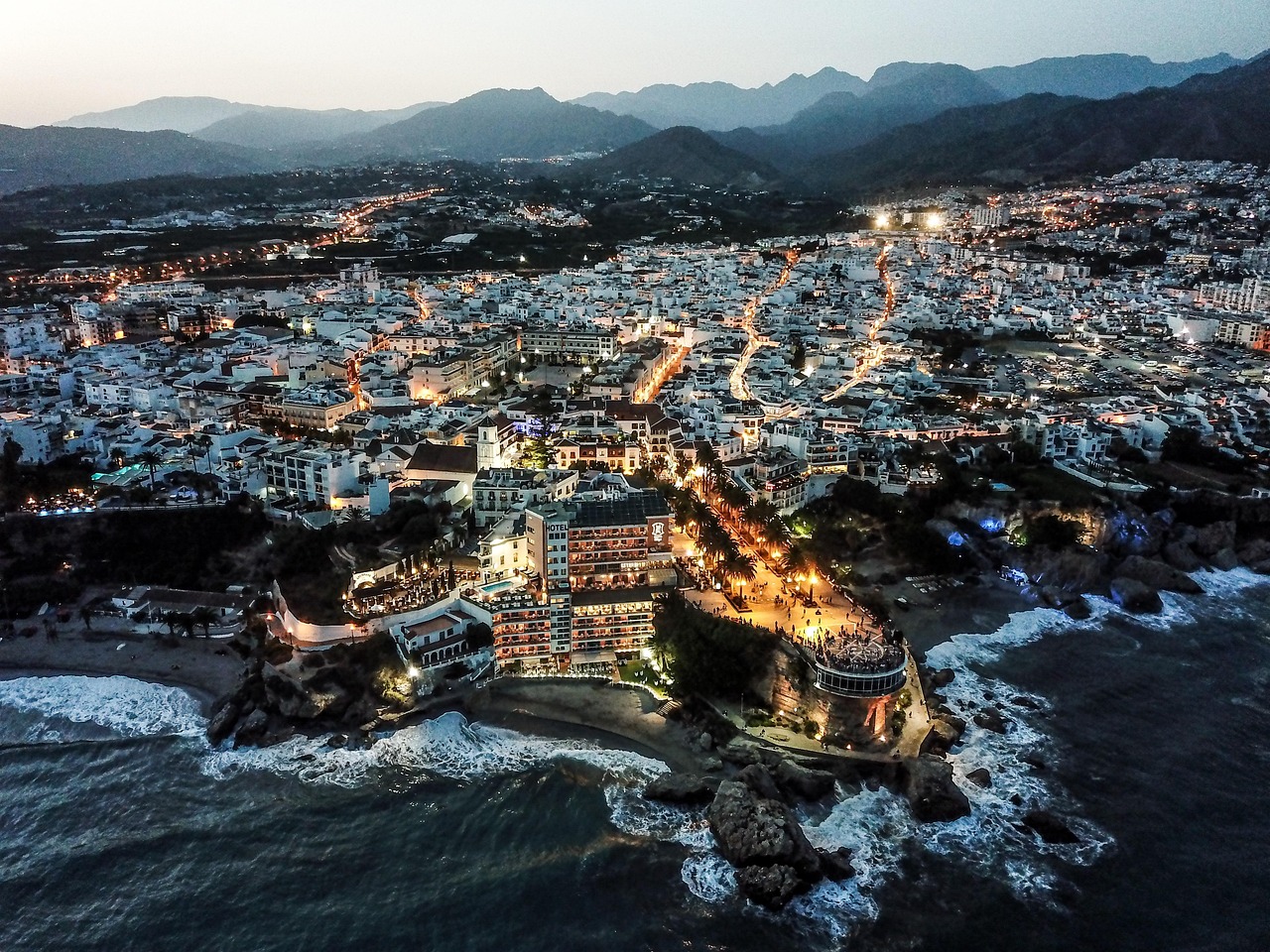
The A-7 coastal drive from Málaga to Nerja in October is spectacular. The sea is a deep, dark blue, and the cliffs are dramatic. You can stop at roadside chiringuitos (beach bars) that are still open, serving fresh grilled sardines, without the chaos of the summer crowds. Parking is available. The stress level drops to zero.
The Verdict: April/May vs. September/October
So, which is better for 2026?
If you love lush landscapes, wildflowers, and the drama of Easter religious events, choose April/May. The light is bright and clear, perfect for architecture photography. The nights are cool enough to justify a cozy dinner indoors.
If you love warm seas, harvest festivals, and that lingering "end of summer" romance, choose September/October. The light turns golden earlier in the day, casting a flattering glow over the cities. The food is richer, heartier.
The Cost Comparison: A Snapshot
To truly understand the value, look at a hypothetical comparison for a 10-day trip for two people in 2026 (excluding international flights, focusing on in-country costs).
| Category | August (Peak Season) | April (Shoulder Season) |
|---|---|---|
| Hotels | €250/night avg (€2,500 total) | €130/night avg (€1,300 total) |
| Car Rental | €60/day (€600 total) | €40/day (€400 total) |
| Dining | €150/day (€1,500 total) | €100/day (€1,000 total) |
| Total | €4,600 | €2,700 |
Real World Savings
That is a savings of nearly €2,000. That is a significant amount of money that could be put towards a nicer hotel, a private guide, or simply saved for the next trip. It turns a standard vacation into a luxury experience.
Final Thoughts on 2026
As we move toward 2026, the conversation around travel is changing. We are becoming more conscious of the impact we have on the places we visit. Choosing the shoulder season isn't just a financial decision; it's an ethical one. By visiting in April or October, you are spreading the economic benefit to the locals year-round, rather than overwhelming them for three months and leaving them with nothing.
You are also engaging in a form of "slow travel." When you aren't fighting the heat or the crowds, you have the mental space to be curious. You might stumble upon a village festival you didn't know existed. You might strike up a conversation with a shopkeeper who tells you about their family history in the region. You might sit on a park bench for an hour just to watch the leaves fall.
"Spain is a country that rewards patience. It is a country that is best experienced at a leisurely pace, preferably on foot, with a glass of wine in hand and no itinerary to rush you along."
The shoulder season of 2026 offers you the chance to see the country not as a theme park for tourists, but as a living, breathing home. It offers you the chance to save your money, yes, but more importantly, to save your sanity.
Pack a light jacket, learn a few words of Spanish (at least "gracias" and "una mesa para dos"), and prepare to fall in love with a Spain that feels like it belongs to you, not the crowds.