The Ultimate Guide to Spain Day Trips 2026: Seville, Granada & Hidden Gems
There is a specific kind of exhaustion that only comes from trying to do everything. You know the one. It’s the feeling of sprinting through a museum, barely registering the brushstrokes because you’re mentally calculating the walking time to the next reservation. It’s the ache in your feet that has nothing to do with distance and everything to do with the crushing weight of a schedule that is, somehow, already slipping through your fingers.
But Spain, in its infinite, sun-drenched wisdom, taught me to stop running. It happened on a Tuesday, somewhere between the chaotic clatter of the Mercado de San Miguel and the hushed reverence of the Templo de Debod. I realized I hadn't actually heard a single word of the guided tour I was on. I was too busy jostling for a better camera angle. The next day, I did something radical. I canceled my plans to visit the Reina Sofia and instead took the Cercanías train north, simply because I’d seen a sliver of blue on the map.
I ended up in Alcalá de Henares. I spent four hours wandering a university town that felt like a living novel, eating a lunch that took two hours because the waiter insisted I try the cochinillo and then stay for a coffee. I didn't see a single masterpiece of painting, but I saw the way the afternoon light hit the cobblestones, and I felt the profound, restorative peace of having nowhere else to be. That was the day I fell in love with the Spanish day trip.
The day trip is not a compromise; it is the highest form of travel. It is a declaration that you value depth over breadth, experience over a checklist. In 2026, as the world gets louder and faster, this philosophy feels more urgent than ever. Spain is uniquely suited to this rhythm. Its high-speed AVE trains turn the country into a living diorama, unfolding outside your window, while its network of ALSA buses and local lines can whisk you into the heart of the mountains for the price of a cinema ticket.
This guide is not a list of the most famous places to conquer. You already know about the Alhambra. You’ve heard of the Mezquita. This is a guide to the Spain that lives in the margins of the guidebooks. It’s a collection of ten journeys—three anchored by the magnificent energy of Seville and Granada, and seven dedicated to the hidden gems that reward the curious traveler. These are the places where you can lose your itinerary and find yourself. This is the Spain that waits for you in 2026, just an hour or two away.
The Seville Hub: Gateway to the Soul of Andalusia
Seville is a city that breathes rhythm. It’s the flamenco stomp echoing from a hidden tablao, the scent of orange blossoms heavy in the evening air, the relentless sun bouncing off the golden stones of the Plaza de España. It is, in many ways, the perfect basecamp. Staying in Seville offers you the luxury of waking up in the heart of Andalusian splendor, yet it places you within striking distance of places that feel worlds away in time and temperament.
1. Córdoba: The City of a Thousand Doors
The high-speed AVE train from Seville’s Santa Justa station to Córdoba is a study in deceptive speed. You’re whisked through the arid plains of Andalusia in under 45 minutes, a blur of olive groves and whitewashed hills, yet the cultural distance you travel is immense. You leave the grand, open embrace of Seville and head for the labyrinthine intimacy of Córdoba.
The real journey, however, begins the moment you step out of the station. The main event is the Mezquita-Catedral. To call it a mosque-cathedral is a clinical understatement. It is a geological event, a forest of candy-striped arches that seems to grow from the very soil. Stepping inside from the blinding Andalusian sun is a profound sensory shift. Some spaces refuse to be contained in a frame. Instead, find a spot near the Mihrab and just listen. The whispers of tourists, the rustle of footsteps, the echo of a cough—it all blends into a sound that feels centuries old.
After the Mezquita, the real Córdoba reveals itself in the Judería, the old Jewish Quarter. This is not a figure of speech; it is a mandatory activity. The streets are a tangle of narrow, winding passages. Every corner is a potential postcard: a pot of geraniums, a heavy wooden door with a lion-head knocker, a glimpse into a courtyard shimmering with a fountain. The Andalusian courtyards, the patios, are the soul of Córdoba. The Palacio de Viana is a museum of twelve distinct courtyards, each a masterpiece of horticultural design.
For lunch, you cannot leave without trying salmorejo. This is not a mere soup; it is a thick, velvety emulsion of tomatoes, bread, garlic, and olive oil. I found my definitive version at a small, family-run place called Taberna Salinas (Calle del Pañuelo, 2, 14002 Córdoba). It’s a no-frills establishment, loud with the chatter of locals, and absolutely perfect.
2. Carmona: The Overlooked Jewel
If Córdoba is a deep dive into history, Carmona is a gentle wade into a pool of timeless elegance. It sits on a ridge overlooking the vast, shimmering plains of the Guadalquivir. The Romans loved it, the Moors fortified it, and the Christians reconquered it. The result is a stunningly preserved historic core that feels both grand and intimate. It’s the perfect antidote to Seville’s overwhelming majesty.
The absolute must-see is the Parador de Carmona. Even if you’re not staying there, you must go for a drink on its terrace. The Parador is a converted 14th-century fortress, and its terrace offers what is arguably the most breathtaking sunset view in all of Andalusia. You are perched high above the plains, watching the sky bleed from orange to purple, with the lights of the town beginning to twinkle below.
Carmona also holds a secret that is not for the faint of heart: the Necrópolis Romana. This is an ancient Roman cemetery, and you can actually go inside the tombs. The most famous is the Tomb of the Elephant, a stunningly preserved burial chamber with intricate frescoes. Stepping down into the cool, subterranean darkness is a humbling, slightly eerie experience.
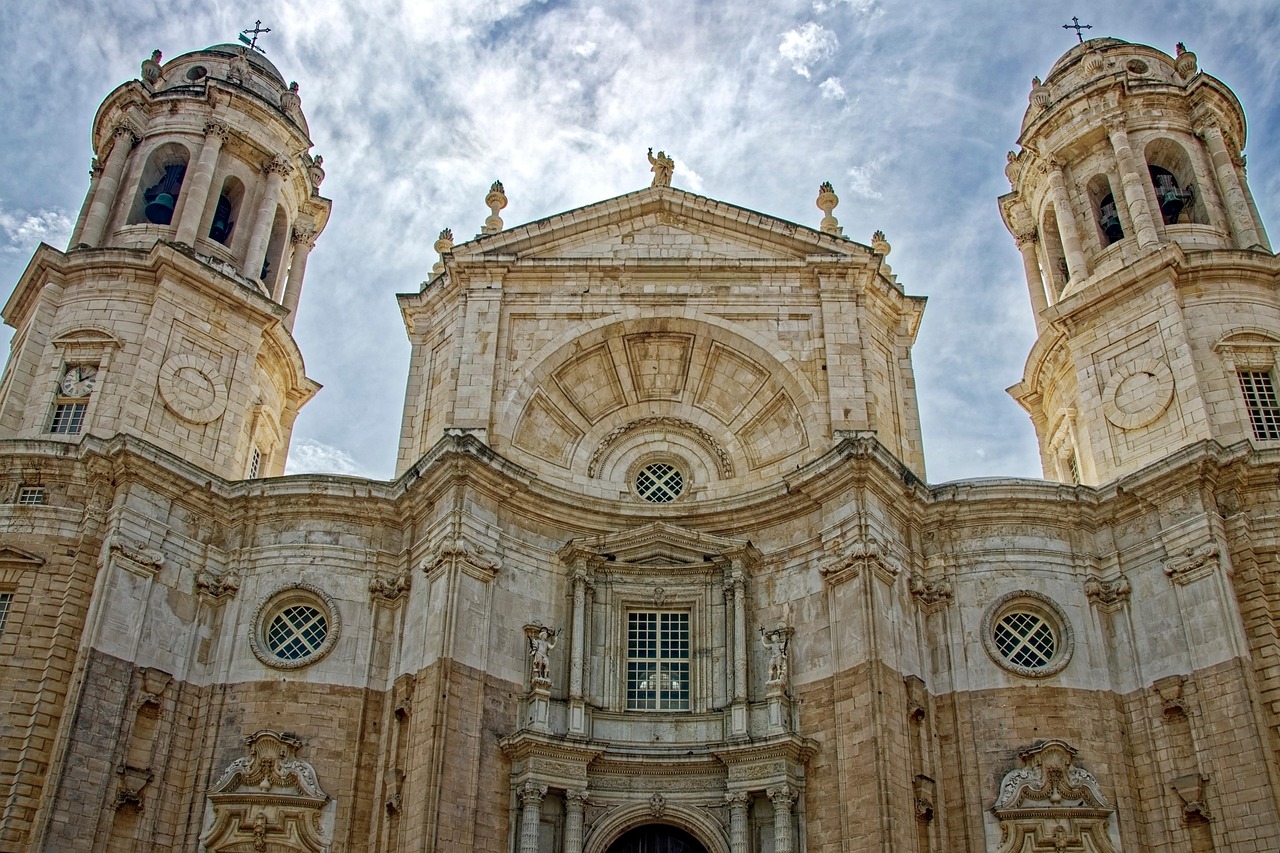
3. Cádiz: The Atlantic Breeze
Leaving Seville for Cádiz is like stepping out of a warm, ornate room into a bracing sea wind. You trade the inland heat and the scent of orange blossoms for the salt-spray tang of the Atlantic. As the train chugs across the vast, flat wetlands of the Doñana National Park, you can feel the landscape change. Cádiz is said to be the oldest continuously inhabited city in Western Europe, and it carries its age with a kind of scruffy, unpretentious grace.
The first thing you should do is head to the Mercado Central de Abastos. This is not a sanitized food hall; it is a glorious, chaotic symphony of the sea. The shouts of the fishmongers, the glint of silver on sardines and anchovies, the smell of brine and ice—it’s all there. Food in Cádiz is a serious business, and the undisputed king is tortillita de camarones. These are delicate, lacy creations made from tiny, whole shrimp. The best, according to every local, are at Freiduría Las Flores (Calle San Francisco, 14, 11004 Cádiz). It’s a tiny, unassuming fry shop.
Before you leave, you must experience the sherry. This is not the sweet, cloying stuff of your grandmother’s cabinet. True Fino from the region is bone-dry, crisp, and saline. A visit to a traditional taberna like La Taberna del Pescador (Calle Compañía, 9, 11005 Cádiz) is essential. Order a plate of local cheese and olives, ask for a Fino, and watch the world go by.
The Granada Hub: Echoes of Al-Andalus
Granada is a city of ghosts and spices. It is the last great bastion of the Moors in Spain, and you can feel their presence in the very stones. The Alhambra is not just a palace; it is a dream of paradise carved in stucco and tile. But the city that cradles it is equally compelling. Granada is a city of steep, winding streets, of hidden cármenes, of the poignant sound of flamenco sung in the gypsy caves of the Sacromonte. It is a city that demands you wander.
4. Guadix: The Cave-Dweller’s Paradise
You know you’re in for something different when the landscape outside your train window starts to look like the surface of the moon. The journey from Granada to Guadix takes you up into the high plains. Then, as you approach the town, you see them: holes in the ground. You have arrived in the Barrio de las Cuevas, the cave-dwelling district of Guadix. This is not a historical reenactment; people have been living in these troglodyte homes for centuries, and they still do today.
The caves here are not damp, primitive dens. They are fully functioning homes, often with several rooms, electricity, plumbing, and beautifully decorated interiors. The thick earth walls provide natural insulation. Visiting Guadix is a surreal experience. You can arrange a tour of a show cave, like the Casa-Museo de las Cuevas del Agua. But the real magic is simply walking the streets of the cave district. You’ll see families tending their gardens in front of their cave entrances, kids playing in the dust.
5. Lanjarón: The Water of Life
After the intense, historical atmosphere of Granada, your body might crave a different kind of therapy. For that, you head to Lanjarón, a spa town nestled in the foothills of the Sierra Nevada. The entire town is defined by water. It’s not just the ornate fountains that dot its plazas; it’s the reason for its existence. The water here, gushing from the mountains, is bottled and shipped all over Spain.
The journey from Granada is a short, 40-minute bus ride. Lanjarón is a town of two distinct personalities. The upper town is where the action is, centered around the Balneario (spa) and the source itself. The source, or fuente, is a social hub. Every morning, locals arrive with their plastic jugs and bottles, queuing patiently to fill them with the free, fresh mineral water. It’s a ritual. You can join them. The real joy of Lanjarón, however, is the walk. There are well-marked trails leading up into the hills behind the town, offering stunning views of the valley and the snow-capped peaks of the Sierra Nevada.
6. La Calahorra: The Castle in the Sky
For a day trip that feels like a journey into a fantasy novel, look no further than La Calahorra. This is a place of stark, breathtaking beauty. The Castillo de La Calahorra is one of the first Renaissance castles built in Spain, and its location is utterly dramatic. It sits atop a conical hill, a perfect silhouette against the vast, empty sky, overlooking the starkly beautiful landscape of the Lecrín Valley.
The journey from Granada is part of the adventure. You’ll take a bus or drive through a winding mountain road that climbs steadily. When you arrive at the village, which sits at the foot of the castle hill, the first thing you’ll notice is the silence. The climb up to the castle is steep but short. Walking around its base, touching the cool, rough-hewn stone, and gazing out from the ramparts is an experience of pure, unadulterated awe.
The Hidden Gems: Beyond the Beaten Path
Now we leave the comfort of the main hubs behind. This is where the real adventure begins. These are the places that don’t fit neatly into a two-week itinerary, the places that require a little more planning, a little more effort, and a little more faith. But the reward is a Spain that feels entirely your own.
7. Priego de Córdoba: The Unassuming Masterpiece
Let’s head back towards the province of Córdoba, but this time, deep into the rolling hills of the Subbética mountains. Priego de Córdoba is a town that will surprise you. It has no single, world-famous monument that screams for your attention. Instead, its beauty is a slow reveal. It’s a town of graceful churches, bubbling fountains, and one of the most exquisitely preserved old quarters in Andalusia.
The heart of Priego is the Barrio de la Villa, a labyrinth of narrow, cobbled streets, whitewashed houses, and flower-filled patios. Priego de Córdoba is also a gastronomic powerhouse. This is the heart of the "Olive Oil Valley." The region produces some of Spain’s most celebrated extra virgin olive oil. The local cuisine is robust and mountain-influenced. You must try rabo de toro (oxtail stew) or flamenquín.
8. Almonte & El Rocío: The Spiritual Wild West
This is not just a day trip; it’s a journey into a different reality. You travel from the ordered, historic world of Andalusia into the vast, untamed wilderness of the Doñana National Park, ending in a village that looks like it was built for a Western that never got made. El Rocío is a place of sand, sun, and devotion. Its main street is not paved; it’s a wide, sandy track.
The village sits on the edge of the national park, one of the most important wetland ecosystems in Europe. You can take a 4x4 tour from the village directly into the park. This is an unforgettable experience. As you bounce along dusty tracks, your guide will point out the elusive Iberian lynx, majestic eagles, and vast flocks of flamingos. The village itself is a strange and wonderful place. Horses are a primary mode of transport, and it’s common to see riders trotting down the sandy "avenues."
9. Cazorla: The Gateway to the Wild
For a day trip that plunges you into Spain’s rugged interior, head for the Sierras de Cazorla, Segura y Las Villas Natural Park. This is Spain’s largest protected area, a vast mountain wilderness of pine forests, dramatic gorges, and crystal-clear rivers. The town of Cazorla is the perfect gateway. It’s a handsome, historic town with a lively atmosphere, but its real appeal is what lies just beyond its streets.
The road from Cazorla into the heart of the park is a masterpiece of engineering. You’ll pass through forests of Spanish fir (pinsapo), a rare and beautiful tree that seems to belong in a fairy tale. You’ll follow the course of the Guadalquivir river, which has its source here. One of the most spectacular stops is the Embalse de la Trinchera, a high-altitude reservoir. The landscape here is raw and elemental, reminiscent of the Scottish Highlands or the American West.
10. Baeza: The Silent Renaissance
Our final journey takes us to the province of Jaén, and specifically to Baeza. While Úbeda often gets the lion’s share of attention for its grander palaces, Baeza is, in my opinion, the more profound experience. It is a town that feels like it has been holding its breath for 500 years. It’s a UNESCO World Heritage site, but it wears its accolades with a quiet, scholarly grace.
As you walk through the Puerta de Jaén, the main medieval gate, you are stepping into a different time. The heart of Baeza is its collection of Renaissance squares and buildings. The Plaza de Santa María is an open-air museum, dominated by the Gothic-Renaissance cathedral and the Antigua Universidad de Baeza. What makes Baeza so special is the sense of discovery. Unlike a city that is constantly bustling with tourists, Baeza is quiet. You can enter a 16th-century church and be the only person there. You can sit at a table in the Plaza del Pópulo, one of the oldest squares in Europe, and have a coffee while swallows wheel and dive in the blue sky above.
Conclusion: The Art of Returning
These ten journeys are more than just dots on a map. They are invitations. They are invitations to slow down, to look closer, to listen harder. They are a reminder that the best travel moments are often the unscripted ones: the unexpected conversation in a local bar, the perfect slant of afternoon light on an old stone wall, the taste of a dish you’ve never heard of that suddenly makes perfect sense.
In 2026, as you plan your Spanish adventure, I urge you to leave a day—or two, or three—wide open. Don’t fill it with a checklist. Pick one of these places, or another that calls to you from the map, and just go. Take the train. Get lost in the streets. Order the thing you can’t pronounce. Talk to the person next to you. Linger over your coffee.
This is the secret that Spain has been trying to teach us all along: the journey is the destination. The magic isn't in the grand monument at the end of the road; it's in the road itself. It’s in the quiet moments, the small discoveries, the profound sense of connection that comes from being truly present in a place. So go. The train is waiting.