


Granada's Best Authentic Restaurants: Top Hidden Gems & Prices
There is a particular slant of light in Granada, a honeyed, ancient gold that seems to pour down from the Sierra Nevada mountains and pool in the narrow arteries of the Albaicín. It’s a light that makes the tapa—whether it’s a glistening slice of jamón or a humble plate of chickpeas—look like a masterpiece. For years, I’ve been chasing that light, and the flavor that comes with it. But here’s the secret I’ve learned after a decade of forking over euros in this city: the best food isn’t found on the postcards. It’s found in the smoky, loud, joyfully chaotic rooms where the locals go to escape the tourist tide.
Granada is the last bastion of the free tapa. In a world of shrinking portions and rising prices, this city holds the line. Buy a caña (a small beer) or a glass of wine, and the kitchen sends out a plate of food. Sometimes it’s a snack; sometimes it’s a full meal. It’s a culture of generosity, of community, and of deep, unpretentious flavor. But navigating the maze of cobbled streets to find the real deal can be daunting. So, I’m going to take you by the hand, past the overpriced flamenco shows and the frozen paella traps, into the heart of where Granada really eats. This is the Granada that lives in the blood of its people.
The Albaicín: History on a Plate
The Albaicín is a labyrinth. It’s a hillside neighborhood of whitewashed walls, crumbling Islamic palaces, and Romanesque churches that feels like a step back in time. It’s also notoriously difficult to park in, which is why the best way to explore it is on foot, with a destination in mind.
Address: Placeta de las Escuelas del Rey, 1, 18009 Granada, Spain
Hours: Monday to Saturday, 12:00 PM – 11:00 PM (Kitchen usually serves 1:00 PM – 4:00 PM and 8:00 PM – 10:30 PM). Closed Sunday.
I remember the first time I stumbled into Bar Los Augustinos. It was raining—a rare, violent downpour that turned the steep streets into rivers. I ducked under a stone archway, seeking shelter, and found myself in a time capsule. The walls are covered in tiles depicting scenes of Granada’s history, and the air is thick with the smell of frying fish and garlic. It’s named after the Augustinian monks who used to study in the seminary nearby, and it has the feel of a monastery refectory, albeit one that serves a mean tortilla de bacalao (cod omelet).
This place is famous among university students and old-timers alike. The bar is always packed, a crush of elbows and laughter. Don’t come here for a quiet romantic dinner; come here for the energy. The tapas are legendary and, crucially, they change daily based on what the chef buys from the market.
One day it might be puntillitas (tiny, battered squid) that melt in your mouth; the next, a rich stew of patatas a la riojana. The key here is to order a drink, find a sliver of counter space, and wait. The tapas come fast and they are substantial. If you’re hungry, order a portion of their choco frito (fried cuttlefish). It arrives piping hot, chewy and salty, with a squeeze of lemon that cuts through the richness. It’s the kind of food that demands a nap afterward, and you won’t regret a second of it.
Address: Calle Verónica de la Magdalena, 38, 18010 Granada, Spain
Hours: Tuesday to Sunday, 1:00 PM – 4:30 PM and 8:00 PM – 12:00 AM. Closed Monday.
If Los Augustinos is the history lesson, El Reventaero is the wild party. Located slightly off the beaten path, away from the Mirador de San Nicolás crowds, this is a bar that takes its food seriously but doesn't take itself too seriously. The decor is a chaotic mix of bullfighting posters, vintage signs, and graffiti, and the noise level is consistently at an 11 out of 10.
The magic of El Reventaero lies in the size of the tapas. They are comically large. I once watched a group of four German tourists order four drinks and receive four plates of food that constituted a full dinner.
Their specialty is the sándwich de pringá. Pringá is a slow-cooked mixture of pork, chorizo, and morcilla (blood sausage), traditionally eaten in the mountains. Here, they pile it high on crusty bread and serve it with a cold beer. It’s messy, savory, and deeply satisfying. The atmosphere is electric, fueled by sherry and the clinking of glasses. It’s a place to make friends with the person standing next to you, shouting over the music about which tapa is the best (it’s the pringá, trust me).
The Plains of Granada: The Art of the Freiduría
Down the hill, near the cathedral and the bustling Plaza Nueva, lies the area known simply as "El Centro." Here, the architecture shifts from Moorish to Renaissance, and the food culture shifts to the freiduría—the art of frying.
Address: Calle Postigo Velutti, 4, 18009 Granada, Spain
Hours: Monday to Saturday, 12:00 PM – 11:00 PM. Closed Sunday.
La Monarcas is a temple to the fryer. It’s a small, bright, unassuming spot, but the line outside is a testament to its reputation. The menu is a celebration of everything that tastes better submerged in hot oil. While many places in Granada serve tapas, La Monarcas is known for its raciones (larger, shareable plates) and its incredibly fresh seafood.
The first time I ate here, I ordered the boquerones en vinagre (fresh anchovies marinated in vinegar). They were translucent, almost silvery, with a delicate acidity that woke up my palate. They tasted like the sea.
But the true star is the cazón en adobo (dogfish marinated in spices and then fried). The batter is light as a feather, crispy and golden, while the fish inside remains moist and flaky. It’s served with a wedge of lemon and a side of alioli. It’s a masterclass in texture. Watching the kitchen staff, I saw a rhythm of dredging, frying, and plating that has been perfected over years. It’s not fancy, but it is flawless. If you want to understand the soul of Andalusian frying, this is the place.
Address: Calle Jardines, 15, 18002 Granada, Spain
Hours: Monday to Saturday, 11:00 AM – 11:00 PM. Closed Sunday.
The name translates to "Beauty and the Beast," and the interior tries to live up to that dichotomy with a mix of elegant touches and rustic, exposed brick. But the real beauty here is the variety. This is a spot that bridges the gap between a traditional tapas bar and a modern gastro-pub. It’s located right in the thick of the shopping district, making it the perfect refueling stop during a day of buying leather goods and souvenirs.
What sets La Bella y La Bestia apart is its willingness to experiment alongside tradition. You can get your classic tortilla española here, and it’s excellent—creamy, runny in the center. But you can also get their signature burger tapa, which is a mini-sandwich of juicy beef with a slice of melting cheese, served on a brioche bun.
The "Bestia" side comes out in the portions; they are generous. If you order a ración of their pimientos de Padrón (small green peppers fried in olive oil and sprinkled with sea salt), you get a mountain of them. Most are mild, but the hunt for the spicy one is a Russian roulette that keeps the table laughing. It’s a lively, fun place that captures the modern, evolving spirit of Granada dining.
Sacromonte: The Cave Dwellers
High above the Albaicín, clinging to the red clay cliffs, is Sacromonte. This is the historic neighborhood of the Romani (Gitano) people, famous for its cave dwellings and flamenco. Eating here is an atmospheric experience; you are dining in rooms carved out of the earth, listening to the echoes of a deep cultural history.
Address: Calle Verónica de la Magdalena, 40, 18010 Granada, Spain
Hours: Monday to Sunday, 1:00 PM – 4:30 PM and 8:00 PM – 12:00 AM.
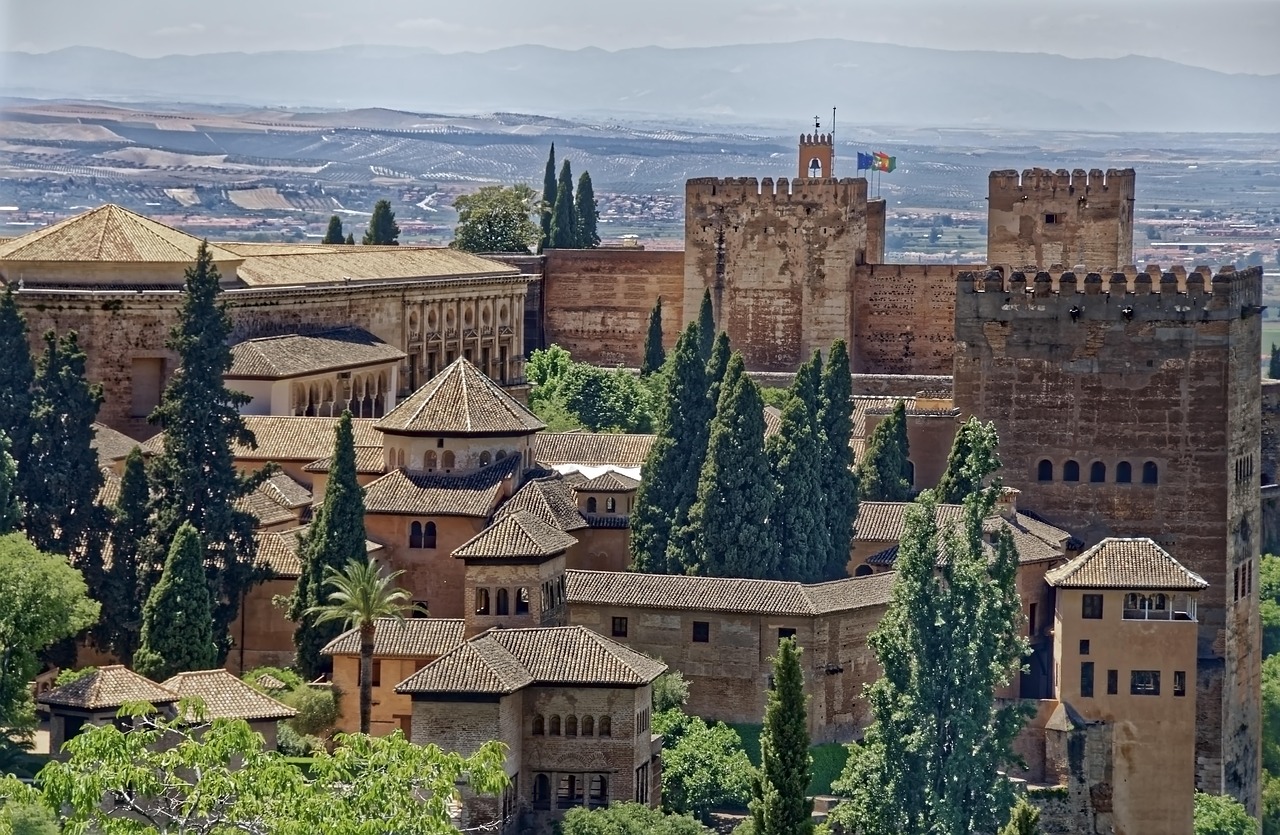
You don’t just walk into El Adarve; you make a reservation, and you make a pilgrimage. It’s situated on the edge of Sacromonte, offering a view that stops your heart. On one side, the Alhambra rises like a sandcastle; on the other, the valley spreads out towards the plains. The restaurant itself is a carmen—a traditional house with a walled garden. The dining room is elegant, filled with arches and brickwork, but the real magic happens when the sun goes down and the city lights begin to twinkle.
While this is a sit-down restaurant rather than a standing-room tapas bar, it is essential for anyone wanting to understand the depth of Granada’s cuisine. This is where you come for the paella. Their paella de marisco is a thing of beauty. The rice is a socarrat—crispy and caramelized at the bottom of the pan—and the broth is rich with the essence of the sea.
It’s not cheap, but it’s a splurge that feels earned. Watching the sunset over the Alhambra with a glass of Albariño in hand, a forkful of saffron-scented rice in your mouth, is a memory that stays with you long after you’ve left the city.
Address: Camillo José Cela, 6, 18010 Granada, Spain
Hours: Tuesday to Sunday, 1:00 PM – 4:30 PM and 8:00 PM – 12:00 AM. Closed Monday.
There are two main locations of Los Diamantes: one in the center (which is always heaving) and one up in Sacromonte. The Sacromonte branch is larger, with a terrace that offers stunning views, but the vibe is identical: high-octane, loud, and dedicated to one thing—seafood. This is not the place for a quiet conversation. It’s the place to shout "¡Ole!" and wipe garlic mayonnaise off your chin.
The concept is simple: you order drinks, and the tapas are bowls of shellfish. It’s chaotic and brilliant. They are famous for their gambas pil-pil (prawns in a garlic and chili oil that emulsifies into a buttery sauce) and their chocos. The waiters walk around with trays of these small plates, dropping them off at random intervals.
The rule here is to grab a spoon and dig in immediately. It’s communal, tactile dining. I remember sitting on the terrace here one autumn evening, the air crisp, the sky turning purple. A bowl of cazón arrived, steaming and fragrant. The sound of the guitar from a nearby tablao drifted over, blending with the clatter of cutlery. It felt like the essence of Sacromonte—raw, beautiful, and unapologetically alive.
The Modern Twist: Vegetarian and Fusion
Granada is traditional, but it’s not stuck in the past. A new generation of chefs is reimagining Andalusian ingredients, and thankfully, they haven’t forgotten the vegetarians.
Address: Calle Rosario, 16, 18003 Granada, Spain
Hours: Monday to Friday, 1:00 PM – 4:00 PM and 8:00 PM – 11:00 PM. Saturday, 1:00 PM – 4:00 PM. Closed Sunday.
Finding a strictly vegan restaurant in the heart of tapas country can feel like looking for a needle in a haystack. But Vegano is not just a substitute; it’s a destination. Located just a short walk from the cathedral, it offers a sanctuary for plant-based eaters without sacrificing the social aspect of Granada dining.
The menu is inventive, often changing with the seasons. They take the concepts of traditional dishes and flip them. One standout is their "tuna" tartare, made from tomatoes and algae, seasoned with soy and sesame. It mimics the texture and umami of tuna surprisingly well.
But the dish that won me over was their version of salmorejo (a thick, cold tomato soup usually thickened with bread and topped with egg). Theirs is creamy, rich, and topped with crispy croutons and a vegan "ham" bit that provides that essential salty crunch. It’s a testament to the fact that you can eat compassionately without missing out on the soul of the region's flavors.
Address: Placeta de la Tana, 1, 18009 Granada, Spain
Hours: Tuesday to Saturday, 1:00 PM – 4:30 PM and 8:00 PM – 12:00 AM. Sunday, 1:00 PM – 4:30 PM. Closed Monday.
Tucked away in a tiny square in the Albaicín, La Tana is a wine bar with a serious foodie following. It’s tiny, intimate, and smells of old wood and cork. This is where you go for a glass of wine and a sophisticated tapa. The owner is a sommelier who sources wines from small, organic vineyards across Spain. But the food isn't an afterthought; it's a pairing exercise.
The menu features high-quality cured meats and cheeses, but also hot dishes that change constantly. I’ve had artichokes grilled with nothing but salt and lemon that tasted like spring. I’ve had wild mushrooms sautéed with garlic and parsley that were earthy and luxurious.
Their burrata with tomato jam is a modern classic. La Tana represents the more refined side of Granada’s hidden gems. It’s a place for lingering, for talking about the wine, for enjoying the silence of a small space filled with people who appreciate the finer details. It’s proof that "authentic" doesn’t always mean "rustic."
The Old Town: Hidden Courtyards
Finally, we must venture into the veins of the city, the streets that sprawl out from the Plaza Nueva towards the Darro River. This area is dense with history and, if you know where to look, incredible food.
Address: Calle de Almireceros, 1, 18004 Granada, Spain
Hours: Monday to Saturday, 12:00 PM – 11:30 PM. Closed Sunday.
Bodegas Castañeda is an institution. It’s a bodega in the true sense of the word—a place where wine is stored and served, along with food. The atmosphere is electric, a constant hum of activity. The walls are lined with barrels, and the floor is sticky with spilled wine. It’s beautiful.
When you enter, you are presented with a plate of jamón and cheese immediately, regardless of what you order. This is the way of the bodega. The house specialties are the pimientos de Padrón and the mollejas (sweetbreads). The sweetbreads are not for the faint of heart, but they are a delicacy—crispy on the outside, creamy on the inside, with a squeeze of lemon to cut the richness.
But the real reason to come here is the Montilla-Moriles, a sherry-like wine produced in the nearby province of Córdoba. It’s bone dry and nutty, and it pairs perfectly with the salty food. The energy here is contagious. You stand shoulder to shoulder with locals, and for a moment, you are one of them. It’s loud, it’s boisterous, and it is unmistakably Granada.
Address: Calle Calderería Nueva, 12, 18009 Granada, Spain
Hours: Daily, 11:00 AM – 12:00 AM.
Located in the "Little Morocco" of Granada, the Calderería Nueva, La Limonera is a refreshing change of pace. This street is famous for its teterías (tea houses) and North African sweets. La Limonera blends the Moroccan influence with Spanish tapas. The interior is colorful, with lanterns and low seating, but the bar is standard Spanish.
The food here is lighter, often featuring salads and grilled vegetables. Their ensalada de naranja y aceitunas (orange and olive salad) is a revelation—bitter oranges, black olives, and a dusting of cumin. It’s a perfect palate cleanser.
But the star is the atmosphere. It’s a place to smoke shisha, drink mint tea, and eat kebabs alongside tortilla. It reflects the multicultural history of Granada, a city that has been a crossroads of civilizations for centuries. It’s a relaxed, aromatic alternative to the heavy, fried food of the rest of the city.
The Verdict: How to Eat Like a Granadino
To truly experience Granada’s food scene, you have to adopt the rhythm of the city. Lunch is the main event, usually starting at 2:00 PM and lingering until 4:00 PM. Dinner is late, rarely starting before 9:00 PM. The streets fill up around 8:30 PM with people heading for their first drink.
The "choto" (tapas crawl) is an art form. You don't sit down at one place for the whole night. You order a drink, eat the tapa, then move on to the next bar. Three or four bars in a night is a standard route. You’ll walk past the Alhambra, illuminated against the black sky, past the fountains in the Plaza Bib-Rambla, and through the echoing arches of the Albaicín.
The prices mentioned in these places are generally low compared to the rest of Europe. You can have a full stomach and a happy heart for under 15 euros if you stick to the tapas route. Even the sit-down meals at places like El Adarve are reasonable for the quality.
Granada’s food is not just sustenance; it’s a narrative. Every plate of gambas tells the story of the Mediterranean; every bowl of salmorejo tells the story of the harvest; every glass of wine tells the story of the vineyard. In these hidden gems, far from the glare of the tourist spots, you find the real currency of the city: generosity. So, follow the smell of frying oil and garlic, listen for the clinking of glasses, and step inside. The table is waiting.