Granada to Córdoba Day Trip: The Ultimate Guide to the Mezquita and Beyond
The alarm on my phone buzzed with a stubborn insistence that felt personal, a shrill digital scream slicing through the pre-dawn quiet of our rented apartment in the Albaicín. Outside, the Sierra Nevada mountains were just beginning to soften from black silhouettes into bruised purple outlines. My partner groaned, burying their head deeper into the pillow. "Are we really doing this? Two cities in one day? Are we masochists?"
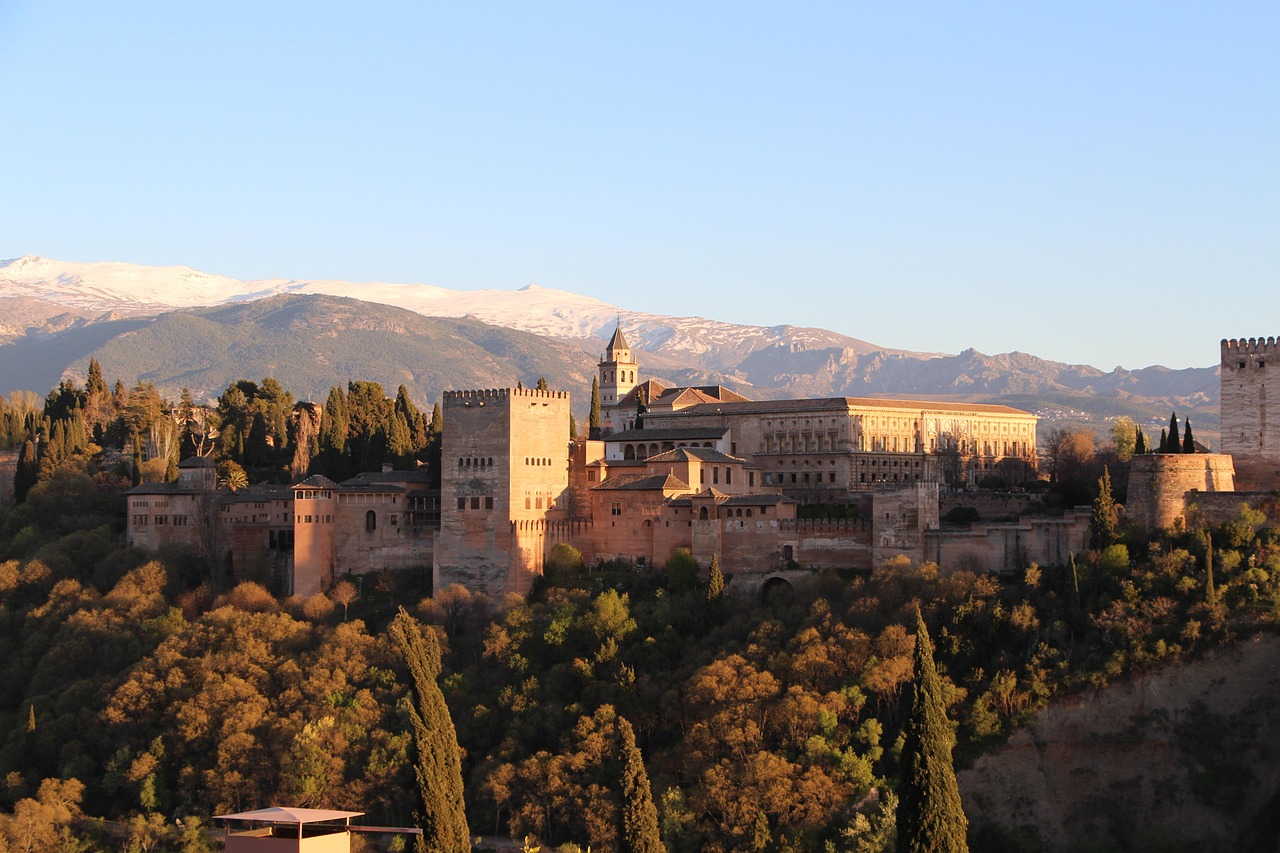
It was a fair question. We were in Granada, a city that demands you slow down, that insists you linger over a third plate of free tapas, that begs you to watch the Alhambra blush pink in the sunset glow. And here we were, planning to sprint 130 kilometers west to Córdoba, to see the world’s most mind-bending mosque-cathedral, grab lunch, and sprint back. It felt like trying to binge-watch a masterpiece series in fast-forward.
But the pull of Córdoba was magnetic. You can't be that close to the Mezquita and not feel its gravitational tug. So, we chugged our coffee, threw on our sturdiest walking shoes, and stepped out into the cool, jasmine-scented air. This is the story of that day—the triumphs, the near-misses, and the honest truth about whether a Granada to Córdoba day trip is a brilliant travel hack or a beautiful mistake.
The Great Transport Debate: Train, Bus, or Steering Wheel?
Before you can even dream of the patios of Córdoba, you have to solve the logistics puzzle. And in Andalusia, this usually boils down to the classic showdown: Renfe (the train) versus the ALSA (the bus), with the occasional wildcard of a rental car.
The Train: The Silver Bullet
If you’re looking for the answer to the query "Granada to Córdoba train time and ticket price," let me save you a search: the AVE high-speed train is the undisputed king of this route. It is a sleek, white missile that makes the journey feel like a mere blip.
We opted for the train, departing from Granada’s majestic station—a building that feels more like a royal palace than a transit hub. We caught the 8:20 AM departure. The question of "How long is the train from Granada to Córdoba?" is best answered with a jaw-dropping stat: it takes roughly 1 hour and 20 minutes. Yes, you read that right. You barely have time to finish a chapter of your book or scroll through your Instagram feed before the announcer is calling out "Córdoba."
The ride itself is butter-smooth. You zip past olive groves that stretch to the horizon, a silver-green sea punctuated by the whitewashed pueblos blancos that look like sugar cubes scattered on a green tablecloth. It’s a beautiful, meditative prelude to the visual feast awaiting you.
Ticket prices, however, are the one sting in the tail. If you book last minute, you could pay upwards of €40–€60 one way. But here is the golden rule of Spanish rail travel: book early. If you snag a "Promo" fare two or three weeks out, you can snag a ticket for as low as €15–€25. We paid €28 each, booked a week ahead, and felt like we’d won the lottery. The train is fast, comfortable, and drops you right in the heart of Córdoba, making it the top choice for day-trippers watching the clock.
The Bus: The Budget-Friendly Sibling
If you’re traveling on a shoestring, the bus is your best friend. The "Granada to Córdoba bus vs train comparison" usually favors the bus on price, but loses on time. The bus takes about 2.5 to 3 hours. It winds through the mountains rather than slicing through them, offering a more rugged view of the landscape, but it eats into your precious exploration time. The ALSA buses are comfortable and air-conditioned, and tickets can be as cheap as €10–€15. For backpackers or those who aren't in a rush, it’s a viable option. But for a tight day trip? The train wins, hands down.
The Car: The Freedom Trap
Renting a car offers the allure of total freedom. You could stop at a roadside venta for a plate of rabbit stew or detour to the ruins of Medina Azahara. However, driving in historic Spanish cities is a specific type of hell reserved for the patient or the desperate. "Granada to Córdoba driving time and parking tips" is a query that usually leads to stress. The drive is easy—about 1 hour 45 minutes via the A-45—but finding parking in Córdoba near the historic center is a nightmare. You will likely end up in a pricey underground garage and walk 20 minutes to the Mezquita. For a day trip where every minute counts, the car adds a layer of complexity you don't need.
We disembarked in Córdoba at 9:45 AM, blinking in the bright Andalusian sun, ready to conquer the city.
The Mezquita: A Forest of Arches and Infinite Geometry
You cannot talk about Córdoba without sounding like a poet, or perhaps a very enthusiastic geometry teacher. The Mezquita-Catedral is the reason most people make this journey. It is the answer to "Is a day trip from Granada to Córdoba worth it?" and the answer is a resounding, echoing YES, just for this building alone.
Walking toward it, the exterior is surprisingly modest—a sturdy, rust-colored wall of brick and stone. But the moment you step through the Puerta del Perdón, the world changes. You enter a hypostyle hall of over 850 columns, a forest of jasper, marble, and onyx, topped with alternating red and white brick arches that look like a petrified wave.
It is cool inside, a sanctuary from the heat, smelling faintly of ancient stone and beeswax. The light filters through the arches, creating a striped, pixelated effect on the floor. We bought our tickets (€13 for the general entry) and spent a good hour just wandering the maze. The most surreal part? In the very center of this Islamic mosque sits a massive Catholic cathedral, built right in the middle after the Reconquista. It feels like a jewel box inside a jewelry box, or perhaps a ship floating inside a cathedral. The clash of styles is jarring, controversial, but undeniably fascinating.
Practical Info: The Mezquita
- Address: Calle Cardenal Herrero, 1, 14003 Córdoba, Spain.
- Hours: Monday–Saturday 10:00 AM–6:00 PM (last entry 5:30 PM); Sundays and religious holidays 8:30 AM–11:30 AM and 3:00 PM–6:00 PM. Note: Hours shift seasonally; always check the official website.
- Tips: Go immediately upon arrival or book a timed slot online to avoid the midday queues that snake around the block. Also, look for the Mihrab (the prayer niche); the gold leaf and intricate mosaics are a masterclass in Islamic art.
The Jewish Quarter and the Calleja de las Flores
After the vastness of the Mezquita, we stepped back out into the labyrinth of the Jewish Quarter (Judería). This is the beating heart of Córdoba’s historic center. "Córdoba Jewish Quarter day trip from Granada how to visit" is best answered by simply letting your feet do the walking. The streets are narrow, winding, and impossibly white, designed to break the heat and confuse invaders.
We found the famous Calleja de las Flores, a tiny alleyway that is arguably the most photographed spot in the city. It’s a narrow passage lined with pots of bright red geraniums that frame the Mezquita’s bell tower in the distance. It’s a postcard come to life. You have to wait your turn for a photo, but it’s worth it.
We ducked into the Synagogue of Córdoba, one of the few remaining synagogues in Andalusia from the pre-expulsion era. It’s tiny, almost hidden, but the stucco ceilings are covered in Hebrew inscriptions and geometric patterns, a whisper of the vibrant Jewish community that once thrived here.
Lunch: Salmorejo and the Art of the Free Tapas
By 1:30 PM, our stomachs were rumbling. In Andalusia, lunch isn’t a meal; it’s an event. We weren't looking for a white-tablecloth experience; we wanted authenticity. We wandered away from the main tourist drags and found ourselves on Calle Romero.
We popped into a bustling bar called Taberna Salinas. The walls were covered in bullfighting posters and the air was thick with the sound of clinking glasses and rapid-fire Spanish. We squeezed onto a stool at the bar.
I ordered the local specialty: Salmorejo Cordobés. If you know gazpacho, forget it. This is its thicker, richer, creamier cousin. It’s a velvety puree of tomatoes, bread, garlic, and olive oil, served cold and topped with diced serrano ham and hard-boiled egg. It is life-changing. It is the taste of summer in a bowl. We also ordered flamenquines (pork loin rolls wrapped in ham and breaded, then fried) and berenjenas con miel (fried eggplant drizzled with cane honey).
The bill came to €25 for two people, including drinks. And yes, because we were at a proper local tavern, a plate of free papas aliñas (spicy potatoes) appeared with our drinks. This is the rhythm of the South: eat, talk, drink, repeat.
Where we ate:
- Taberna Salinas: Calle Romero, 12, 14003 Córdoba.
- Hours: Typically opens around 12:00 PM and closes late (11:00 PM or midnight), but kitchen hours are busiest 1:30 PM–4:00 PM.
- Vibe: Loud, authentic, crowded with locals.
The Alcázar and the Roman Bridges
With our bellies full and our energy restored, we continued our self-guided tour. We headed toward the Alcázar de los Reyes Cristianos. This fortress is famous for its terraced gardens, fountains, and pools. It was a residence for Isabella I and Ferdinand II (the Catholic Monarchs) and where Columbus received the royal blessing for his voyage to the Americas. While the interior is interesting, the gardens are the star. It’s a green oasis of peace (entry €5, hours 10:00 AM–2:00 PM and 4:00 PM–6:00 PM, closed Mondays).
From the Alcázar, you can’t miss the Roman Bridge (Puente Romano). It’s an ancient stone artery that crosses the Guadalquivir River, offering that iconic view of the Mezquita looming on the horizon. Walking across it, you feel the weight of history. The bridge is flanked by the Torre de la Calahorra and the Molinos de la Albolafia, an old water mill that still turns sluggishly in the river current. It’s a lovely spot to watch the sunset, though we were still in the "afternoon" phase of our day.
The Afternoon Slump and the Patio Obsession
Around 4:00 PM, the heat was truly settling in. The "Granada to Córdoba itinerary one day" requires a strategic energy management plan. We retreated to a café for iced coffees (a holy ritual in Spain) and discussed the Patio Culture.
Córdoba is famous for its patios—internal courtyards filled with pots of flowers, fountains, and whitewashed walls. While the famous Patio Festival is in May, many patios are open to the public year-round. We visited Los Patios de San Basilio (entry €5). It’s a private association of residents who open their stunning courtyards to visitors. It felt like stepping into a private paradise. The scent of orange blossom and damp earth, the cool shade of the vines, the splash of the fountain—it’s the architectural soul of the city.
Practical Info: Patios
- Address: Plaza de San Basilio, s/n, 14004 Córdoba.
- Hours: Daily 10:00 AM–2:00 PM and 4:00 PM–8:00 PM (varies slightly by season).
The Return: Exhaustion and Gratitude
By 6:30 PM, the fatigue hit us like a wave. We had walked over 20,000 steps. We had seen the Mezquita, eaten the salmorejo, and gotten lost in the white walls of the Judería. We had to get back to Granada.
We walked back to the train station, buying a bottle of local Montilla-Moriles wine at a shop near the exit (a perfect souvenir). We caught the 7:45 PM AVE back to Granada. The journey back felt different. The sun was dipping low, casting long shadows over the olive groves. We were quiet, processing the sensory overload of the day.
The train arrived in Granada at 9:05 PM. We were exhausted, sun-dazed, and hungry again. We stumbled into a tapas bar near Plaza Nueva, ordered two beers, and waited for our complimentary plates of tortilla and albóndigas. We didn't speak much. We just ate and smiled.
The Verdict: Was It Worth It?
So, we return to the existential question posed by my groggy partner at 6:00 AM: "Is a day trip from Granada to Córdoba worth it?"
The answer is complex. It is physically demanding. It is a whirlwind. You will not see everything. You will not have time to sit for three hours savoring a sherry in the shade of the Mezquita. You will feel like a tourist on a mission.
However.
If you are short on time, if you are based in Granada for a few days and want to maximize your Andalusian experience, it is absolutely worth it. Seeing the Mezquita is a bucket-list event. Walking the streets of the Jewish Quarter is a history lesson come alive. Eating salmorejo is a culinary baptism.
Here is my advice for making it work:
- Take the earliest train possible. Don't roll into Córdoba at 11:00 AM. Be there by 9:30 AM.
- Book Mezquita tickets in advance. Do not waste an hour in line.
- Wear your best walking shoes. The city is made of cobblestones.
- Eat a big breakfast, but save room. You want to eat tapas like a local, not a fixed lunch menu that takes two hours.
- Accept the pace. You are sacrificing depth for breadth. It’s a tasting menu, not a three-course meal.
As we walked home in Granada that night, the scent of jasmine hit us again, linking the two cities in our minds. We had traveled a hundred kilometers and a thousand years in a single day. We were tired, yes, but we were richer for it. We had tasted the salt of the Mezquita and the sweetness of the Córdoban sun. And isn't that what travel is all about?