


Granada in 1 Day: Perfect Itinerary, Map & Tips (2026)
There’s a particular scent to Granada. It’s a layered perfume you don’t just smell, but feel in your bones. It’s the sun-baked dust of ancient stone, the sweet, clinging ghost of orange blossoms (azahar) that drifts from hidden courtyards, the sharp, smoky tang of roasting coffee from a side-street bar, and the faint, tantalizing whisper of garlic and sizzling olive oil. To arrive in Granada, even for a single day, is to step into a living, breathing palimpsest—a city where Roman, Moorish, Jewish, and Christian histories are scrawled over one another, creating a tapestry so rich and complex it can feel almost overwhelming.
But you only have one day. One sun-drenched, whirlwind day to conquer the mighty Alhambra, to lose yourself in a labyrinth of whitewashed alleys, to tap your feet to the rhythm of flamenco, and to toast the sunset with a brimming glass of sherry. Is it possible? Absolutely. Will you see everything? No. But you will taste the essence of Granada, a flavor that will linger on your memory long after the last churro has been dunked. This isn't just a checklist; it's a blueprint for a perfect day, a love letter to a city that demands to be felt, not just seen.
So, lace up your most comfortable walking shoes, charge your phone (you’ll need it for the photos, trust me), and prepare to fall head over heels. This is your 24-hour immersion into the heart of Andalusia, a Granada 24 hour travel guide for an unforgettable experience.
The Unmissable Foundation: Your Alhambra Strategy for 2026
Before we even think about our first coffee, we must address the magnificent, non-negotiable beast that dominates every Granada itinerary: The Alhambra. This is not a museum; it's a sprawling, autonomous city of dreams, a fortress-palace that represents the pinnacle of Nasrid art and power. And in 2026, the rules are stricter and the crowds are larger. Failure to plan here is not an option; it’s a recipe for heartbreak.
The Golden Rule for Alhambra Tickets 2026
Book your tickets the absolute second they become available. Tickets for the Alhambra are released 90 days in advance on the official website (https://tickets.alhambra-patronato.es/). Set a calendar reminder. For a one-day trip, I strongly recommend the "Alhambra General" ticket. It’s the most comprehensive and includes the three crucial parts:
- The Nasrid Palaces: The jaw-dropping, intricate heart of the Alhambra. This is the part everyone dreams of, with its delicate stucco, dizzying geometric patterns, and serene courtyards. Your ticket will have a mandatory, timed entry slot for this section (e.g., 12:00 PM). You cannot enter early or late. This slot will dictate the entire flow of your day.
- The Alcazaba: The original military fortress. It offers the most commanding panoramic views of Granada and the Albayzín. Its weathered towers and ramparts feel raw and ancient.
- The Generalife: The summer palace and country estate of the Nasrid rulers. It’s all about lush gardens, trickling fountains, and breathtaking vistas. It’s a peaceful, green escape from the stone fortress.
Pro-Tip for 2026: On the ticket website, you will be asked to select a specific entry time for the Nasrid Palaces. Choose a slot between 1:00 PM and 3:00 PM. This will allow you a relaxed morning to explore the city, then enter the Alhambra complex around noon to see the Alcazaba and Generalife before your main event. Also, the Generalife gardens are now often included in a separate "Gardenvisit" ticket, but the Alhambra General ticket typically covers it. Double-check the specific inclusions when booking.
Your Granada 1 Day Itinerary 2026: A Whirlwind Tour
This Granada itinerary for first-time visitors is designed to maximize your experience. While we can't provide an interactive map here, consider this your detailed route map for the day.
8:00 AM: The Albaicín Awakening & a Breakfast of Champions
Your day begins not at the Alhambra, but across the river, in the ancient Moorish quarter known as the Albaicín. This UNESCO World Heritage site is a labyrinth, a beautiful, confusing, and utterly essential maze of steep, cobbled streets, whitewashed houses, and hidden cármenes (villas with gardens).
Start your morning in Plaza Nueva, the grand, slightly incongruous square at the gateway to the Albaicín. It’s a hub of activity, with horse-drawn carriages and tour guides, but don’t linger here just yet. Instead, duck into the first narrow alleyway you find and let yourself get gloriously lost. The higher you climb, the quieter it gets. The sounds of the city fade, replaced by the chirping of swallows, the distant clang of a church bell, and the murmur of a neighbor calling across a narrow alley.
For breakfast, you need to fuel up properly. Skip the hotel buffet and head to a local institution. My personal pilgrimage is to La Campana.
- Address: Cuesta de Marañas, 15, 18009 Granada
- Hours: Typically 8:00 AM - 9:00 PM (check for local holidays)
- What to order: This is a classic, old-school Spanish cafetería. It’s loud, fast, and unapologetically authentic. Stand at the bar, as the locals do, and order a café con leche and a tostada con tomate y jamón. They’ll give you a slice of crusty bread, a small bowl of grated fresh tomato, a dish of olive oil, and a tiny forkful of the finest jamón ibérico. You assemble it yourself. The simplicity is perfection: the sweet, acidic tomato, the rich olive oil, the salty, nutty ham, all cut by the bitter bite of your coffee. It’s the taste of a Granada morning.
9:30 AM: The Mirador & the Cathedral
With a full stomach and a sense of direction that is already questionable, continue your ascent. Your goal is the most famous viewpoint in the city: the Mirador de San Nicolás.
- Address: Plaza de San Nicolás, 18010 Granada
- Hours: 24/7 (it’s a public square)
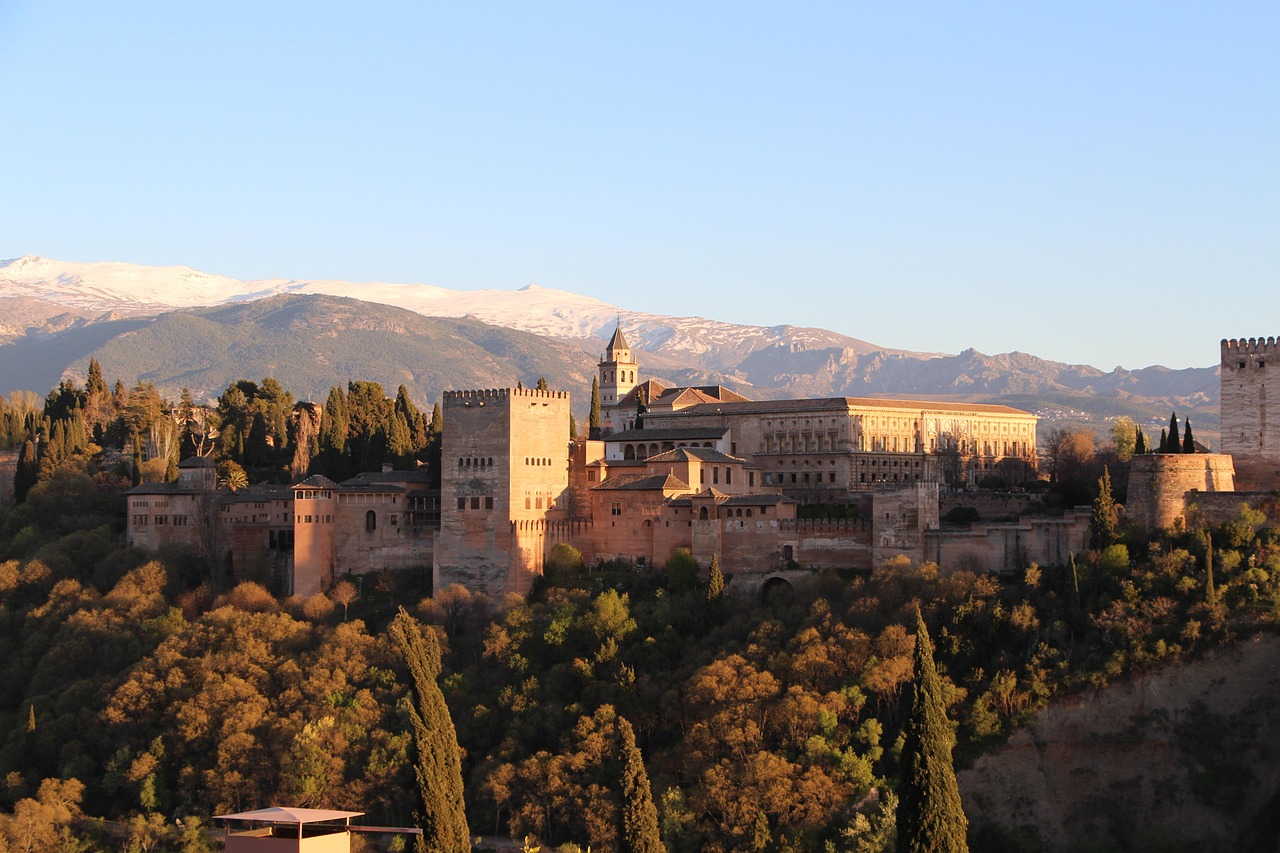
- What to expect: This is the postcard view. As you emerge from the tight alleyways into the small, often crowded square, the Alhambra will reveal itself in all its glory, framed against the rugged backdrop of the Sierra Nevada mountains. Go in the morning, as the light is better for photography and the tour buses haven’t arrived en masse. Stand by the old fountain, watch the artists setting up their easels, and just take it in. This is the view that kings and poets have gazed upon for centuries. It’s a moment of pure, unadulterated awe.
Now, it’s time to descend. The walk down from San Nicolás is a treat in itself. You’ll pass the Church of San Nicolás, a former mosque with a beautiful Moorish tower, and wander through the Carrera del Darro, one of Granada’s most atmospheric streets, which runs alongside the remnants of the old city wall and the babbling Darro River.
Your destination is the city’s grand heart: the Granada Cathedral and Royal Chapel (Capilla Real). They sit side-by-side on the Plaza de las Pasiegas.
- Address: Plaza de las Pasiegas, s/n, 18009 Granada
- Hours: Cathedral: Mon-Sat 10:00 AM - 6:30 PM, Sun 3:00 PM - 5:30 PM. Royal Chapel: Mon-Sat 10:00 AM - 5:30 PM (Apr-Oct), 8:30 AM - 5:30 PM (Nov-Mar), Sun 9:00 AM - 10:30 AM and 11:30 AM - 2:30 PM. Always check official websites for the most current hours.
- The experience: The Cathedral is a Renaissance masterpiece, built after the Reconquista. Its interior is surprisingly bright and soaring, a stark contrast to the Gothic gloom you might expect. But the real treasure is the Royal Chapel, the final resting place of the Catholic Monarchs, Queen Isabella I and King Ferdinand II. It’s a somber, intensely historical space. Seeing their ornate tombs, the wrought-iron grille designed by Bartolomé, and the adjacent museum holding their crowns and jewels is to stand at the very spot where modern Spain was born. It’s a powerful, spine-tingling connection to history.
12:00 PM: The Ascent to Paradise
It’s time. Your Nasrid Palaces slot is likely approaching, so you need to get from the city center up to the Alhambra. You have three options:
- Walk: A beautiful, but steep and time-consuming 20-25 minute climb. I don’t recommend it for a one-day itinerary unless you’re a marathon walker.
- Bus (C30 or C32): The most practical option. You can catch it from near the Cathedral. It’s cheap, efficient, and drops you right at the main entrance.
- Taxi: A quick, affordable option if you’re running late or are tired.
Once you arrive at the Puerta de la Justicia, the main entrance, you’ll go through a security check. Your timed entry for the Nasrid Palaces is your priority. Don’t dawdle too long in the Alcazaba or Generalife beforehand if your slot is soon. A good strategy is to go straight to the Nasrid Palaces first to get it done, then relax and explore the rest.
1:00 PM - 4:00 PM: The Alhambra Deep Dive
This is the heart of your day. The Alhambra is too vast to describe fully, but here’s how to experience its soul in a few hours. This is the core of any how to visit Granada and Alhambra in one day plan.
The Nasrid Palaces: This is a procession, a one-way flow through a series of courtyards and halls. It can feel crowded, but slow down. Don’t just take pictures; look up at the muqarnas (honeycomb vaulting) in the Hall of the Ambassadors, where sultans received dignitaries. Listen to the water in the Court of the Myrtles, its reflecting pool mirroring the perfectly proportioned architecture. Lean over a balcony in the Court of the Lions, with its iconic 12 marble lions, and feel the breeze from the Generalife gardens. This is the pinnacle of Islamic art—a place of mathematics, poetry, and divine beauty.
The Alcazaba: After the intricate palaces, the Alcazaba feels rugged and raw. Climb the Torre de la Vela for the single best view of your day. You’ll see the Albaicín spread out below you like a rumpled white blanket, the Sacromonte hills with its cave-houses to your right, and the modern city sprawling to the left. It’s a dizzying perspective.
The Generalife: Take the path that leads you out to the summer palace. The main attraction here is the Jardines Altos (Upper Gardens). The highlight is the Escalera del Agua (Water Stairway), a staircase flanked by channels of running water and planted with fragrant jasmine and roses. The sound and scent are intoxicating. It’s designed to be a paradise on earth, and it succeeds.
4:30 PM: A Moment of Rest & The Sacred Cave
You’ve earned a break. Take the bus or a taxi back down to the Albaicín. But don’t go to your hotel. Instead, head to the neighborhood of Sacromonte, the traditional Gitano (Roma) quarter, famous for its cave-houses and flamenco. The best way to experience this is by visiting the Sacromonte Abbey.
- Address: Cuesta del Chapiz, 39, 18010 Granada
- Hours: 10:00 AM - 6:00 PM (last entry 5:15 PM)
- What it is: A monastery built over the caves where, according to legend, the bodies of Saint Cecilio and other martyrs were discovered. You can visit the stunningly decorated Cave of Santa Cecilia, the Cave of the Popes, and the university itself. The real magic, however, is the view from the Abbey’s terrace. It’s another, more secluded perspective of the Alhambra, and it’s often blissfully quiet. It’s a place for reflection after the sensory overload of the Alhambra.
7:30 PM: The Sacred Rite of the Tapa
By now, you’ve earned dinner. But in Granada, dinner is not just a meal; it’s a ritual. It’s the tapa crawl. This is Granada’s gift to humanity: when you order a drink (a caña of beer, a glass of wine, a tinto de verano), you get a free, substantial tapa. Not a paltry olive or a single chip, but a plate of paella, a mini-hamburger, patatas bravas, grilled squid, you name it. It’s a point of civic pride.
For the quintessential experience, head to Bodegas Castañeda.
- Address: Cuesta de Marañas, 15, 18009 Granada (right next to La Campana)
- Hours: 12:00 PM - 4:30 PM, 7:00 PM - 11:30 PM (check for local holidays)
- The vibe: It’s a bustling, loud, and joyous chaos. Bar staff shout orders, tapas fly out of the kitchen, and you’ll be lucky to find a spot to lean against a wall. Order a vermut or a caña and see what you get. The menu is a delightful mystery. For a more modern and varied selection, Bar Los Diamantes (Calle Navas, 28) is legendary for its seafood tapas (you sometimes pay a small price for these, but they’re worth it). The rule is: move from bar to bar, have one drink and one tapa, then move on. Let the night guide you.
9:30 PM: The Guitar's Lament & a Final View
As the tapa crawl winds down, the soul of Andalusia begins to sing. For your final, unforgettable experience, book a show at a tablao flamenco in Sacromonte. The most authentic venues are the cave-flamenco bars. Cueva de la Rocío or Cueva del Sacromonte are legendary, intimate, and utterly passionate. This isn't a show for tourists; it's raw, emotional, and visceral. The stomp of the dancer's feet on the packed earth floor, the sorrowful wail of the singer, the lightning-fast fingers of the guitarist—it will give you goosebumps.
After the show, take one last, slow walk. Head to the Mirador de Gracia or back to Plaza Larga in the Albaicín. The Alhambra will be lit up, a golden jewel glowing in the velvet blackness of the night. The city will be quiet now, the day’s heat radiating from the stones. You’ll be tired, your feet will ache, but you’ll feel a profound sense of connection. In 24 hours, you haven’t just seen Granada. You’ve walked its ancient stones, tasted its history, and heard its soul sing. You’ve lived a perfect day.