There is a specific scent to Granada that I carry with me long after I’ve left. It is a layered perfume: the dry, sun-baked dust of the hills, the sharp, resinous punch of rosemary crushed underfoot by a local rushing to the market, and, if you are lucky enough to be standing on the right street corner at the right time, the sweet, sticky cloud of frying dough drenched in honey. Granada is a city that feels less like a destination and more like a memory you are somehow stepping into for the first time. It is a place where history isn't kept behind glass; it is the pavement beneath your worn-out sneakers and the cool stone of a wall you lean against to catch your breath after another steep climb.
Planning a trip here, especially a tight two-day window, can feel daunting. The Alhambra is a beast of a visit—logistically complex, emotionally overwhelming, and physically demanding. The Albaicín is a labyrinth designed to humble the map-obsessed. But here is the secret that seasoned travelers know: Granada rewards the slow. It rewards the person who stops to look up at the intricate plasterwork of a ceiling or who sits down for "just one more" glass of wine because the conversation with the bartender is too good to leave. This itinerary is designed to do more than just check boxes. It is designed to help you fall in love with the city, to navigate the logistics with the ease of a local, and to find those quiet, magical moments that make the struggle of travel worth it.
So, lace up your most comfortable walking shoes. Fill your water bottle. We are going to Granada.
Day 1: The Conquest of the Alhambra and the Golden Hour in the Albaicín
Your first day is about facing the giant. The Alhambra is not just a monument; it is a sprawling complex of palaces, fortresses, and gardens that demands at least five hours of your undivided attention. The biggest mistake people make is trying to combine it with the Albaicín on the same day in a frantic dash. We are not going to do that. We are going to conquer the Alhambra in the morning, retreat for a late lunch, and then immerse ourselves in the Albaicín as the sun begins to set.
The Morning Logistics: Tickets and Timing
Before we even talk about the beauty of the place, we have to talk about the bureaucracy. The Alhambra is victimized by its own popularity. Tickets sell out weeks, sometimes months, in advance. The absolute, non-negotiable rule of a Granada trip is this: book your Alhambra tickets the moment you book your flights.
You have several ticket options, but for a comprehensive experience, you want the "Alhambra General" ticket. This gives you access to the Nasrid Palaces (the jewel in the crown), the Alcazaba (the military fortress with the best views), and the Generalife Gardens (the summer palace grounds). There is also a "Gardens and Generalife" ticket which skips the Nasrid Palaces, but honestly, if you are here for the first time, the Nasrid Palaces are the reason you came. Do not skip them.
When you book, you will be given a strict entry time for the Nasrid Palaces. This is your golden ticket. You cannot enter the palaces one minute before or after that slot. However, you can enter the rest of the complex earlier in the day. My strategy for a two-day itinerary is to book the Nasrid Palaces for roughly 11:00 AM or 12:00 PM. This allows you to wake up at a reasonable hour, enjoy a leisurely breakfast, and enter the complex around 9:30 AM to tackle the Alcazaba first while the morning light is still soft.
The Ascent: Getting There
There are three ways to get up to the Alhambra, which sits atop the Sabika hill. You can walk (it takes about 20-30 minutes from the city center, and it is steep), you can take the bus (Line C30 or C32 from Gran Vía de Colón), or you can take a taxi.
My advice? Take the bus or a taxi up for your morning entry to save your energy. The walk down from the Albaicín later is much more pleasant than the sweaty climb up. If you are staying near the Plaza Nueva, the bus stop is right there. If you take a taxi, tell the driver "Alhambra, Puerta de la Justicia." It will cost about 8-10 euros.
9:30 AM – 11:00 AM: The Alcazaba
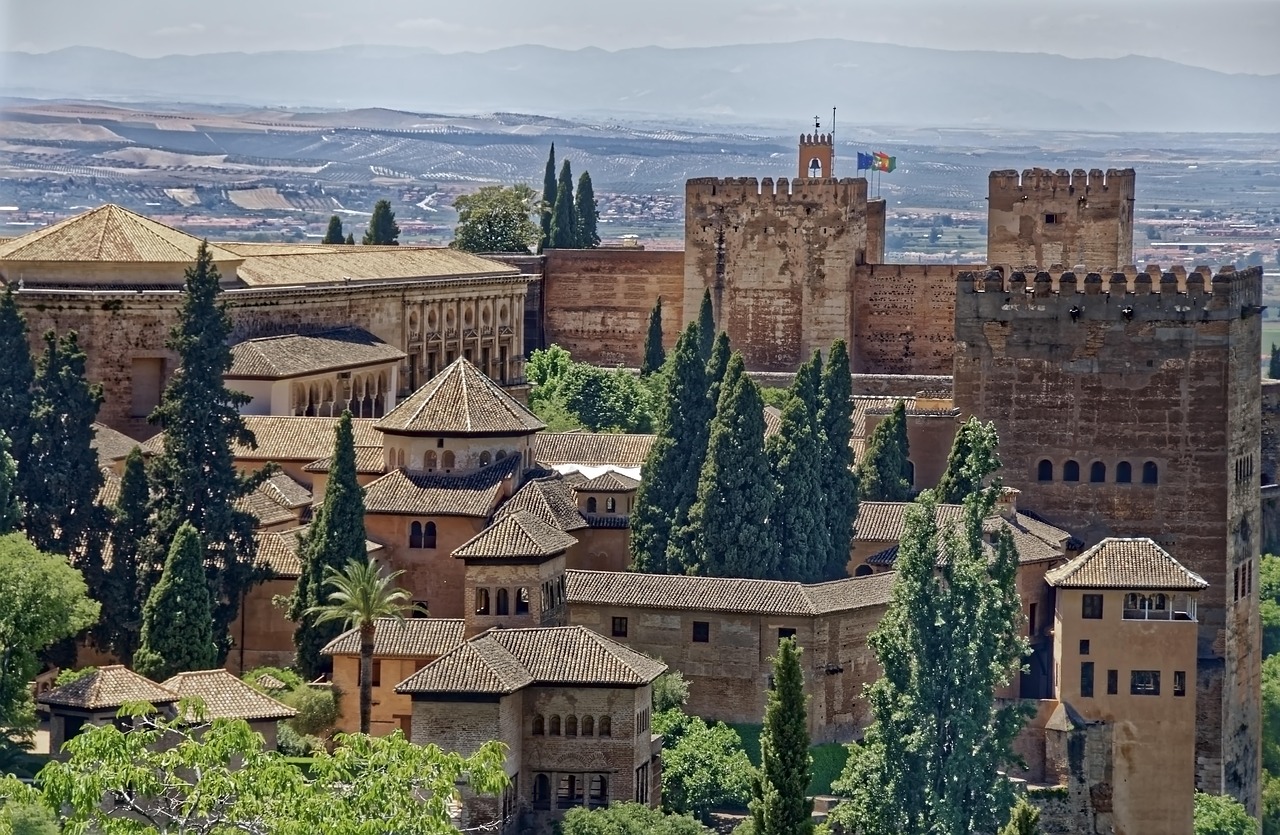
Once you pass through the Gate of Justice (Puerta de la Justicia), you are in. Don’t rush toward the Nasrid Palaces yet. Veer left toward the Alcazaba. This is the oldest part of the complex, the fortress of the Almohad rulers. Climbing the Torre de la Vela is mandatory. From the top, you get the view that defines Granada. You look down over the red-roofed city, across to the Albaicín, and out toward the Sierra Nevada mountains, which often hold snow even into late spring. It is dizzying and magnificent.
The ramparts of the Alcazaba offer quiet corners and fragrant pockets of pine trees. It’s a place to breathe, to let the scale of the landscape sink in before you dive into the intricate details of the palaces.
11:00 AM – 1:00 PM: The Nasrid Palaces
Check your watch. About 15 minutes before your entry time, start making your way toward the Nasrid Palaces entrance. There will be a queue. Security is tight. Once you pass through, the noise of the world seems to drop away.
This is one of the finest examples of Islamic architecture in the world. The Nasrid Palaces are not a single building but a series of courtyards and halls. The first thing you will see is the Court of the Myrtles, dominated by a long reflecting pool. The water mirrors the elegant arches and the Comares Tower, creating a sense of perfect symmetry and cool serenity.
Next is the Hall of the Ambassadors, the throne room. Look up. The dome is a masterpiece of wooden latticework (muqarnas), resembling stalactites or the stars in the night sky. It represents the seven heavens of paradise. It is dark, intricate, and utterly overwhelming. Take your time here. Sit on the floor if you have to (it’s often allowed in the corners) and just stare.
Then, you move into the Court of the Lions. I remember my first time seeing it. I had seen a thousand photos, but nothing prepares you for the reality of those 12 marble lions supporting the fountain in the center of a courtyard framed by 124 delicate columns. The light plays differently here. It feels more intimate, more private. It was the private residence of the sultan, and you can feel it.
1:00 PM – 2:00 PM: The Generalife Gardens
Exit the palaces and follow the signs to the Generalife. This is the summer palace, and the walk there takes you through wooded areas and past the ruins of other palaces (the Partal). The Generalife is all about water and vegetation. The Patio de la Acequia is a long, narrow garden with a central water channel, flanked by flowerbeds and climbing roses. It is pure sensory overload. The sound of the water, the scent of the flowers, the buzzing of bees—it is the ultimate expression of the Islamic concept of paradise on earth.
The Post-Alhambra Ritual: Descending to Lunch
By now, it is likely 2:00 PM or later. You are exhausted, your feet hurt, and you are hungry. Do not eat at the tourist traps near the Alhambra exit. Instead, take the bus or walk down the hill toward the city center. Aim for the area around Plaza Nueva or Calle Calderería Nueva.
We are going to stop for lunch at Bar Los Diamantes. There are two locations on Calle Naveros, but the original one is the chaotic, loud, and utterly authentic seafood bar. It is standing room only, elbow-to-elbow with locals. This is not a place for a quiet romantic meal; it is a place to eat the freshest shrimp in garlic sauce (gambas al ajillo) or their legendary "Cóctel de Langostinos" while shouting your order to the bartender.
Calle Naveros, 2, 18009 Granada, Spain
Typically 1:00 PM – 4:30 PM for lunch, then reopens for dinner. Closed Sundays.
Why it’s worth it: The quintessential Granada tapas experience. Fresh seafood and infectious energy.
Late Afternoon: The Albaicín Awakening
After lunch, head back to your hotel to drop off bags and rest for an hour if you can. Around 5:30 PM, as the harsh sun begins to mellow, it is time to enter the Albaicín.
The Albaicín (or Albayzín) is a UNESCO World Heritage site, a maze of narrow, winding streets (callejones), white-washed houses, and hidden plazas. It was the old Arab quarter. The best way to explore it is to get lost. But if you want a structured route, start at Plaza Nueva. Walk through the archway and up the steps to the Fuente de las Batallas.
From here, the main artery is Calle Calderería Nueva. This street is often called the "Little Morocco" because of the tea houses (teterías) and shops selling spices, leather goods, and lanterns. The air is thick with the smell of mint tea and arguile (shisha). It’s a sensory corridor. Duck into the shops, admire the tagines, and maybe buy a leather coin purse you didn’t know you needed.
The Sanctuary: Basílica de San Juan de Dios
If you want a moment of profound beauty and quiet, peel off Calderería Nueva onto Calle San Jerónimo to find the Basílica de San Juan de Dios. The exterior is impressive, but the interior is a Baroque explosion of gold. It is dark, dramatic, and incredibly ornate. It feels like a jewelry box turned inside out. It’s a stark contrast to the airy minimalism of the Alhambra, showing the different layers of Granada’s history.
Calle San Jerónimo, 19, 18001 Granada, Spain
Generally 10:00 AM – 6:00 PM, but check for worship times.
Why it’s worth it: One of the most important Baroque churches in Spain. The gold leaf density is staggering.
The Main Event: Sunset at Mirador de San Nicolás
By 7:30 PM, you must begin making your way to the Plaza de San Nicolás. This is the most famous viewpoint in Granada, and for good reason. It offers the classic postcard view of the Alhambra set against the Sierra Nevada mountains.
But here is the reality: it is crowded. It is a spectacle. Locals know this, so they gather on the edges of the plaza or on the walls of the adjoining cemetery (the Cementerio de San Nicolás), which offers a slightly elevated and often quieter vantage point.
Arrive early (around 7:45 PM) to snag a spot. As the sun begins to dip, the light turns everything to gold. The Alhambra glows. The mountains turn purple. Street musicians often play soft guitar or flamenco. It is a moment of collective awe. I have sat there with strangers, sharing a bottle of wine, and felt a sense of camaraderie that is rare in tourist hotspots. It is the perfect end to the Alhambra day—seeing the palace you just walked through from a distance, appreciating its place in the landscape.
Evening: The Art of the Free Tapas
You’ve earned dinner. Granada is one of the last cities in Spain where the free tapas (tapa gratis) culture is alive and well. Order a drink, and you get a plate of food. It’s that simple. For the best experience, head to Calle Naveros or Plaza de la Trinidad.
A must-visit is Bodegas Castañeda. It’s a bustling, loud bodega with barrels of wine lining the walls. The bartenders are wizards, balancing multiple plates at once.
Calle de Almireceros, 1, 18009 Granada, Spain
12:00 PM – 4:30 PM and 7:00 PM – 12:00 AM.
Why it’s worth it: Electric atmosphere. Excellent house wine and hearty tapas like patatas bravas.
Day 2: Hidden Gems, Carmen Life, and Deepening the Dive
Now that the "must-see" giant has been tackled, Day 2 is about breathing. It’s about exploring the neighborhoods that surround the Albaicín, finding the best food, and experiencing the specific rhythm of Granada life.
Morning: The Realejo and Sacromonte
Start your morning with a strong coffee and a pastry at a local bakery. Then, head to the Realejo, the old Jewish quarter (Judería) of Granada. It sits in the shadow of the Alhambra but has a distinct identity. It is less steep than the Albaicín and has a vibrant, artistic vibe. Look up at the walls; you will see colorful murals and street art depicting historical figures and local characters.
Walk toward the Monasterio de San Jerónimo. This is the first Renaissance monastery built in Granada after the Reconquista. It’s a massive, imposing structure that often gets overlooked by tourists rushing to the Alhambra. The cloister is peaceful, and the church interior is beautiful. It gives you a sense of the power of the Catholic Monarchs in the decades following 1492.
Cuesta de los Gomeres, 3, 18009 Granada, Spain
Generally 10:00 AM – 6:00 PM (winter) and 10:00 AM – 7:00 PM (summer).
Why it’s worth it: A quiet, majestic counterpoint to the Alhambra’s Islamic art. The Plateresque facade is stunning.
From there, if you are feeling adventurous, walk up into the Sacromonte. This is the neighborhood famous for the cave dwellings (casas cuevas) where the Gitano (Roma) community has lived for centuries. It is the birthplace of many great flamenco artists. The walk up from the Realejo is steep and dusty, but the views are arguably even better than from San Nicolás because you are higher up and looking down on the Alhambra.
Lunch: The Art of the Sandwich at Bodegas Aliatar
By 1:30 PM, your stomach will be rumbling. Head to Bodegas Aliatar, located on the corner of Calle Gran Vía de Colón and Calle Aliatar. This place is an institution. It’s a corner bar that has been serving Granada for over a century.
The menu is simple: "bocadillos" (sandwiches) and "platos combinados" (mixed plates). The star is the bocadillo de calamares (fried squid sandwich) or the bocadillo de atún (tuna sandwich) with a secret sauce that everyone tries to replicate but no one can.
Calle Gran Vía de Colón, 30, 18001 Granada, Spain
8:00 AM – 11:00 PM.
Why it’s worth it: Cheap, fast, and delicious. Eat like a local worker.
Afternoon: The Carmen Life and the Archaeological Museum
Granada is unique for its "Carmenes"—large houses with walled gardens full of fruit trees (peaches, pomegranates, apples). The Albaicín is full of them, but many are private. To get a taste of this lifestyle, wander the streets of the upper Albaicín, specifically around Calle de la Calería and Cuesta del Chapiz.
Your destination is the Casa de Zafra. This is a 14th-century house that is now a museum and cultural center dedicated to the history of the Albaicín. It’s a small, intimate space, but the real magic is the garden. It’s a quiet, shaded oasis with a fountain and views over the city. It’s the perfect place to sit for 20 minutes and just exist.
Calle de la Calería, 15, 18010 Granada, Spain
10:00 AM – 5:00 PM (Tue-Sat), 10:00 AM – 2:00 PM (Sun). Closed Mon.
Why it’s worth it: A rare glimpse into the private, domestic architecture of Nasrid Granada.
Afterward, walk down to the Museo Arqueológico de Granada. Housed in the Palacio de Dar al-Horra (another restored palace), this museum holds the artifacts of the city’s past. It’s not a massive museum, but the collection of ceramics, textiles, and reconstructions of Arab-era rooms helps contextualize everything you’ve seen at the Alhambra. It connects the grand palace on the hill to the people who lived in the city below.
Calle de la Almona, 14, 18009 Granada, Spain
9:00 AM – 6:00 PM (Tue-Sat), 9:00 AM – 3:00 PM (Sun). Closed Mon.
Why it’s worth it: Gives depth to the Alhambra. You see the everyday objects that make history feel human.
Late Afternoon: The Tea Houses (Teterías) of Calderería Nueva
As the afternoon light turns soft, return to the "Little Morocco." This is the time to sit in a tetería. These are tea houses that serve mint tea, fruit juices, and pastries in a relaxed, dimly lit atmosphere.
Café Almona is a classic choice. It’s right on Calderería Nueva and has a lovely upper terrace. Order a "tè de menthe" (mint tea) and a "pastel de datiles" (date pastry). Listen to the bubbling of the shisha pipes and the chatter of the crowd. This is the most "exotic" feeling part of Granada, a reminder of the city’s North African connections.
Calle Calderería Nueva, 29, 18009 Granada, Spain
10:00 AM – 11:00 PM.
Why it’s worth it: A transportive sensory experience without leaving the city.
Evening: Beyond the Free Tapas – A Sit-Down Dinner
While free tapas are fun, sometimes you want a proper dinner. Granada has a burgeoning culinary scene. For your second night, I recommend heading to the Plaza de la Trinidad area or the Alcaicería (the old silk market, rebuilt after a fire, but still atmospheric).
Try Restaurante Cunini if you love seafood. It’s a bit more upscale but very reasonable. The fried fish platter is exceptional. Alternatively, for a modern twist on Andalusian cuisine, look for Obra or El Bañuelo.
If you want to stay in the Albaicín for dinner, El Escobín is a legendary spot on Calle Calderería Vieja, known for its high-quality tapas and raciones. It’s a bit pricier than the free-tapas places, but the food is exquisite.
Calle Calderería Vieja, 3, 18009 Granada, Spain
12:00 PM – 11:30 PM.
Why it’s worth it: Bridges the gap between traditional tapas and a sit-down meal.
The Flamenco Choice: The Sacromonte Caves
If you have energy left after dinner, you have a choice. You can go to a "tablaos" in the city center, which are convenient but often touristy. Or, you can take a taxi up to the Sacromonte neighborhood for a genuine cave flamenco show. This is called "Zambra."
Places like Cueva de la Rocío or Cueva de la Rocio (yes, the naming is confusing in Granada) are famous. It’s raw, intense, and deeply emotional. You sit on wooden benches in a cave, and the dancers and singers perform with a passion that feels like it comes from the earth itself. It is not a polished show; it is a raw expression of history and pain. It is expensive compared to the rest of Granada, but it is an unforgettable experience.
Camillo José Cela, 19, 18010 Granada, Spain (Located in Sacromonte)
Shows usually start around 8:00 PM or 9:00 PM. Reservations essential.
Why it’s worth it: It is the soul of Granada. It is the art of the people who built the Alhambra.
Practicalities and Pro-Tips for a Seamless Trip
Where to Stay
The Albaicín: Staying here means you are immersed in the atmosphere. However, be warned: many hotels are up steep hills, and taxis cannot reach your door. Look for hotels that offer luggage assistance or are located near the lower streets like Plaza Larga. Hotel Casa Morisca is a lovely option with great views.
The Centro (near Gran Vía): This is flatter, easier for luggage, and closer to the bus stop for the Alhambra. You are a 5-minute walk from the Albaicín gate. Hotel Saray is a solid 4-star choice with a pool (a godsend in summer).
The Realejo: Trendy, artistic, and slightly more local. A great base if you want to avoid the biggest crowds.
What to Wear/Bring
- Shoes: I cannot stress this enough. Granada is a city of hills and cobblestones. Wear your best broken-in sneakers or walking shoes. Heels are a disaster here.
- Water Bottle: There are public fountains (fuentes) everywhere. The water is cold, delicious, and safe to drink. Refill constantly.
- Sun Protection: The sun in Andalusia is fierce. Sunglasses, a hat, and sunscreen are mandatory, even in winter.
- Layers: Even in summer, the evenings can get chilly, especially in the Albaicín or Sacromonte.
The Best Time to Visit
- Spring (April-May) and Autumn (September-October): This is the sweet spot. The weather is warm but not scorching, and the gardens at the Alhambra are in full bloom or turning golden. The light is beautiful.
- Winter: Cold, but crisp and clear. The Sierra Nevada views are the best because the air is so sharp. You will have the Alhambra largely to yourself, but pack a heavy coat.
- Summer (June-August): It is brutally hot. Temperatures regularly hit 40°C (104°F). If you must visit in summer, do the Alhambra first thing in the morning, stay inside during the afternoon (siesta), and come out for the late evening. Hydrate constantly.
Booking the Alhambra: The Deep Dive
I mentioned booking early, but here is the nuance. If you go to the official website (patronatoalhambra.es) and see "Sold Out," do not panic immediately. Tickets are released in batches. Check early in the morning (Spanish time) or late at night. Sometimes cancellations happen. If you are truly desperate, you can buy a "Granada Card" which includes the Alhambra (though sometimes with less flexibility on times) or book a guided tour through a reputable agency. They often buy blocks of tickets in advance. It will cost more, but it guarantees entry.
The Walking Route from Alhambra to Albaicín
While I recommend going up to the Alhambra by bus, the walk down is a classic route.
- Exit the Alhambra via the main exit (Puerta de la Violeta).
- Walk down the road until you reach the Cuesta del Chiquillo. This is a steep, winding pedestrian path (watch your step!).
- The path leads you down through the gardens of the Aljibe del Rey (the largest surviving Arab cistern, built in the 11th century). It’s a hidden gem, cool and damp, smelling of moss and stone.
- From the cistern, you can easily navigate into the lower Albaicín streets. This route bypasses the bus traffic and gives you a real sense of the topography.
The Cultural Quirk: The "Tapa" Logic
In Granada, you order a drink (beer, wine, soda), and you get a tapa. If you order another drink at the same bar, you usually get a different tapa. If you want a "proper" meal, you order "raciones" (larger portions) or "medias raciones" (half portions). The etiquette is to move from bar to bar. Have a drink and a tapa at one, move to the next. It’s a progressive dinner on foot.
A Personal Farewell
Granada is a city that asks you to slow down. It asks you to look at the details—the way a ceramic tile catches the light, the geometric shadows cast by a mashrabiya screen, the wrinkles on the hands of the woman selling pomegranates in the market.
On your second evening, after you’ve seen the caves or had that final glass of wine in a crowded plaza, try to find a quiet spot in the Albaicín, maybe near the Ermita de San Miguel Alto, a small chapel high up on the hill. From there, you can see the Alhambra lit up like a golden ship sailing on a dark sea. It is a view that reminds you that this city was built on dreams of paradise. And for two short days, you get to live inside that dream.
Enjoy every step, every bite, and every view. Granada is waiting for you.