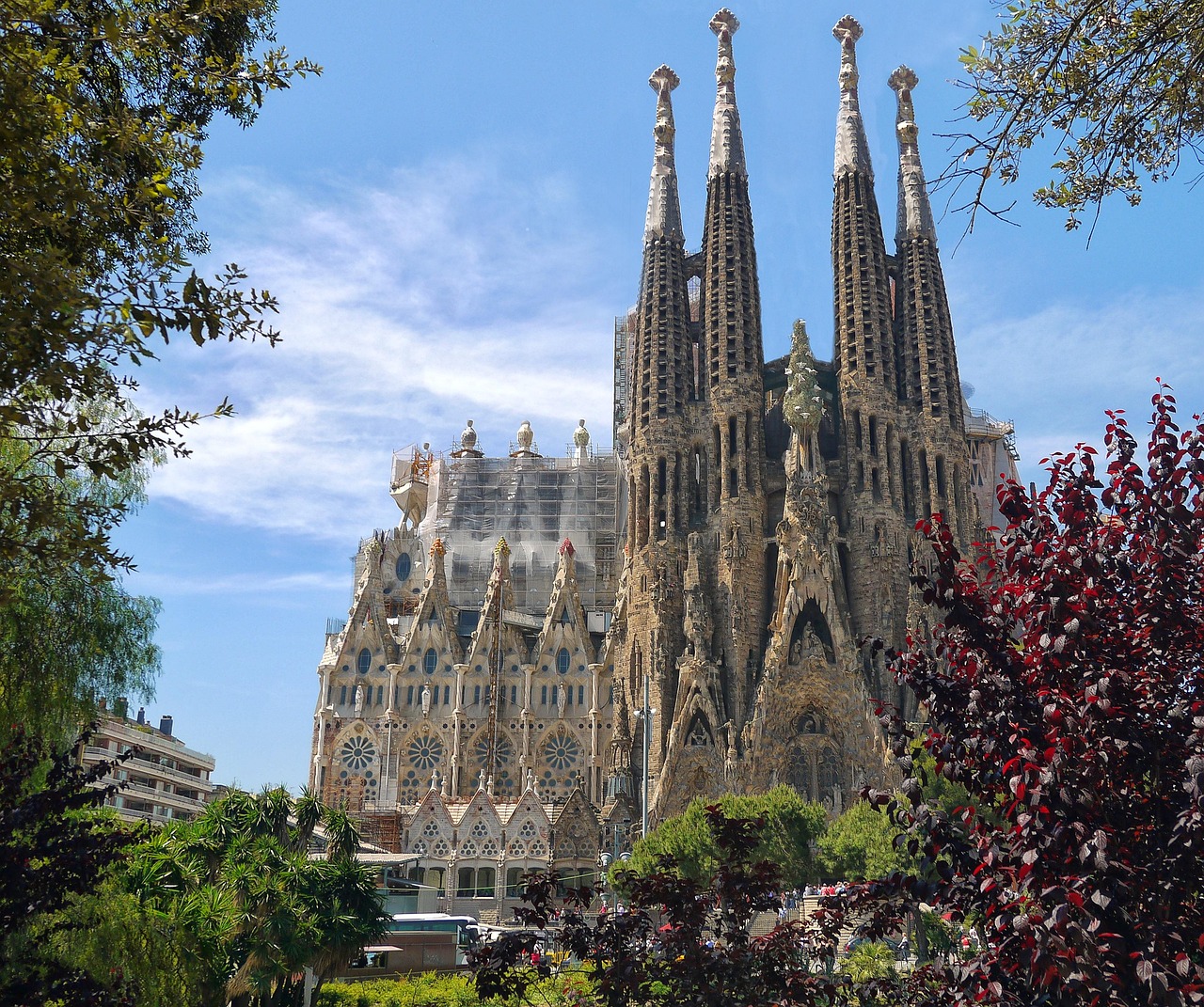
I truly understood Antoni Gaudí not inside the hallowed, bone-white nave of the Sagrada Família, but standing in a forgotten crypt on the outskirts of Barcelona. I was tracing the finger of a stone column that felt less like architecture and more like a petrified forest. The city hums with his genius—a fever dream of trencadís (broken tile mosaics) and skeletal stone—but the headlines always point to the same towering titan.
In 2026, standing in the shadow of that basilica means standing in a line that snakes around the block, filled with the same sweat and anticipation you find at any major global landmark. But Gaudí was never just about the grand gestures. He was a man of the earth, a devout Catholic who found God in the geometry of a gecko’s back and the spiral of a snail’s shell. His architecture was a rebellion against the straight line, a love letter to nature’s chaotic perfection.
To truly know him—to feel the pulse of his imagination—you have to step off the beaten path. You have to go where the tour buses don’t fit. Here is your guide to the seven essential sites where you can skip the lines, breathe in the history, and find the soul of the man who turned stone into poetry.
1. Palau Güell: The Dark, Opulent Jewel
Let’s start where Gaudí’s career as a master architect truly began. Before the fame and the tourists, there was the Güell family. Palau Güell is a study in contrasts. From the outside, it is a severe, somber limestone facade that blends into the busy rhythm of La Rambla. It looks fortress-like. But the moment you step through those heavy doors, the world shifts.
The central parlor is a marvel of acoustics and light. Gaudí designed the ceiling with perforations that let natural light filter in like stars, while the high windows open up to the street, allowing the sounds of the city to drift in as a distant murmur. The real magic is on the roof. The chimneys here are not just functional vents; they are armored sentinels, pre-dating the famous warriors of Park Güell. Standing among them, with the noise of La Rambla far below, you realize this was the testing ground for a genius.
2. Casa Vicens: The Awakening of a Master
Most tourists walk right past this house in the Gràcia district without a second glance. It is often overshadowed by the big names, but Casa Vicens is where the Gaudí we know—the Gaudí of organic shapes and vibrant colors—took his first breath. Built between 1883 and 1885, it was his first major commission.
Walking into the courtyard is like stepping into a Moroccan riad dreaming of Barcelona. The red and white diamond-patterned tiles on the exterior are striking. The dining room is a symphony of nature; the walls are covered in ceramic tiles painted with bright yellow canna flowers, and the ceiling beams look like palm trunks. It’s a declaration that Gaudí wasn’t interested in building boxes; he wanted to build ecosystems.
3. Palau de la Música Catalana: The Modernist Cathedral of Sound
Gaudí didn’t design this building—Lluís Domènech i Montaner did—but you cannot write a guide to Gaudí’s Barcelona without this masterpiece. It is the spiritual sibling to his work. Inside the main hall, the "stone" balcony supporting the choir is actually painted plaster and iron. But the true showstopper is the skylight: an inverted stained-glass dome that looks like a crystallized sunflower.
The energy here is electric. It captures the same communal, spiritual fervor that Gaudí poured into the Sagrada Família. It is essential viewing to understand the artistic ecosystem Gaudí thrived in.
4. Casa Batlló: The Whale in the Heart of Passeig de Gràcia
Casa Batlló is the house that looks like it was built by the sea. The facade, undulating and blue, shimmering with mosaic shards, is pure liquid motion. Locals call it the "House of Bones" (Casa dels Ossos) because the balconies look like skeletal masks. It is macabre, whimsical, and utterly captivating.
The interior is where the magic happens. The light well is tiled in blue, fading from light at the top to dark at the bottom to mimic the way light penetrates the ocean. There is a small room on the third floor containing a giant, curved oak structure that looks like the ribcage of a giant beast. The AR experience allows you to see the house as it was when the Batlló family lived there, bridging the gap between art and home.
5. Casa Milà (La Pedrera): The Stone Quarry of Dreams
If Casa Batlló is the sea, Casa Milà is the mountain. "La Pedrera" means "The Stone Quarry," and it earns that name. It is a massive, wavy block of rough-hewn stone that looks like a cliff face eroded by the wind. The roof terrace is the highlight: Gaudí’s architectural forest of warrior chimneys.
Don’t miss the attic, which houses the "Whale’s Belly" exhibit—a series of parabolic arches made of white brick. It feels like being inside the hull of a great wooden ship. It is structurally brilliant and aesthetically soothing.
6. The Crypt of Colònia Güell: The Secret Laboratory
This is the holy grail for the true Gaudí aficionado. Located in a textile village 20 minutes by train from the city center, this crypt is where Gaudí experimented with the forms that would later define the Sagrada Família. It was commissioned by Eusebi Güell but never finished.
The interior is the revelation. The columns are tilted, leaning at angles that seem to defy gravity, branching out at the top like trees in a forest. Gaudí was testing his hyperboloid structures here. It is the rawest, most experimental Gaudí you will ever see—the blueprint of a dream.
7. Sant Pau Art Nouveau Station: The Neighbors of Genius
While not designed by Gaudí, the Sant Pau Recinte Modernista is essential context. It sits directly across the avenue from the Sagrada Família. It was designed by Lluís Domènech i Montaner. Why include it? Because standing in the Sagrada Família, you are looking at Gaudí’s vision. But if you cross the street here, you are looking at the world he lived in.
The gardens between the pavilions are perfect for sitting. You can hear the bells of the Sagrada Família ringing across the street. It is the perfect, peaceful bookend to a day of Gaudí hunting.
How to Navigate Gaudí in 2026: The Strategy
The landscape of travel has changed. In 2026, Barcelona is implementing stricter tourist caps to preserve the integrity of these buildings. "Skip the line" isn't a luxury; it is a necessity.
- The Early Bird: Always book the first slot of the day (usually 9:00 AM). You will share the space with security guards, not thousands of people.
- The Night Owl: Many sites (Casa Milà, Sagrada Família) offer night tours. The atmosphere is darker, more dramatic, and limited to smaller groups.
- The Combo (Articket BCN): Buy this pass once. It covers the top 6 monuments (Sagrada, Park Güell, Casa Batlló, Casa Milà, Palau de la Música, and Sant Pau). You skip the ticket line at every location.
- The Outsider: Don't neglect the sites outside the center (Colònia Güell, Casa Vicens). They are the palate cleansers that make the main courses taste even sweeter.
Gaudí said, "The straight line belongs to men, the curved one to God." To find Gaudí, you must leave the straight lines of the main avenues. You must turn the corner, take the train, and look up. Barcelona is a city that rewards the curious.