
Best Time to Visit Spain for Perfect Weather: Month-by-Month Guide
There is a specific scent to the Spanish air that I have spent the better part of my adult life trying to define. It isn’t just one thing. It is the sharp, briny slap of the Mediterranean in July, mixed with the dust of ancient Moorish walls and the sweet, greasy perfume of churros frying in the street below your balcony. I have chased the sun across the Iberian Peninsula more times than I care to admit, dragging suitcases over cobblestones and sweating through train journeys, all in pursuit of that elusive beast: "perfect weather."
Spain is not a monolith. It is a jagged puzzle piece of climates, a place where you can be shivering in a wool coat in the north while simultaneously frying an egg on the pavement in the south. The Best Time to Visit Spain for Perfect Weather depends entirely on which Spain you are looking for. Do you want the searing, sun-drenched silence of Andalusia in August, or the moody, misty greens of Galicia in November?
In this Month-by-Month Guide, I am going to pull back the curtain on the Spanish climate. I will tell you the truth about the winds, the rain, and the glorious, golden hours that make this country a religion for sun worshippers. We will dig into the specific neighborhoods, the hole-in-the-wall tapas bars, and the hidden corners of the map that require precise timing to enjoy. Buckle up; we are going on a weather journey.
January: The Stark Beauty of the Quiet North
January in Spain is a study in contrasts. While the rest of Europe is hibernating, Spain is awake, albeit shivering slightly. The south is mild, but the north is raw and dramatic. If you are looking for solitude and don't mind a sweater, this is your month.
The Vibe
It is the month of turrón (nougat) leftovers and the feeling that the country is sleeping off a hangover. The light is thin and silver, particularly in the north, giving the stone cities a ghostly, cinematic quality.
Weather
Expect crisp days. Madrid is cold, often dipping below freezing at night, but the sun is fierce during the day. The Basque Country and Galicia will be wet—very wet. This is the time for the "brave the elements" traveler.
Where to Go
The Basque Country. It is moody, green, and the food is arguably the best in the world during winter.
Bilbao in January is not for the faint of heart; it rains a lot. But that is the magic. The rain drives you into the sidrerías (cider houses) and the crowded pintxo bars of the Casco Viejo. The weather forces a sense of community. You huddle together, shoulder to shoulder, nursing glasses of Txakoli wine and skewers of chorizo.
Address: Plaza Nueva, 12, 48005 Bilbao, Spain.
Hours: Most pintxo bars are open from 11:00 AM to 2:00 PM for the lunch rush, and then again from 7:00 PM to 11:00 PM.
The experience here is kinetic. You don't sit; you stand. You lean against the mahogany bar, dodging the waiter who is shouting orders in rapid-fire Euskera. The air is thick with the smell of garlic sizzling in olive oil and the sharp tang of vinegar. The particular magic of the "Pintxo Pote" is that for a few euros, you get a pintxo and a drink. In January, the warmth of the bar is amplified by the steam rising from the griddle where the txuleta (aged beef steak) is being seared. The sound is a cacophony of clinking glasses, the hiss of the grill, and the roar of conversation. It is a sensory shield against the cold, wet Basque night outside. You grab a toothpick, spear a glistening piece of tortilla, and feel utterly, perfectly alive.
February: The Rains and the Rías Baixas
February is the wettest month in much of Spain, but it brings a secret weapon: the wildflowers of Andalusia start to peek out, and the seafood in the northwest is at its peak.
The Vibe
A limbo month. The holidays are over, spring is a rumor. It is a time for indoor pursuits: museums, long lunches, and wine.
Weather
Rain in the north and center. Mild in the south, but unpredictable. However, the temperatures in the southernmost tip (Costa de la Luz) are often mild enough for long walks on the beach without the tourist hordes.
Where to Go
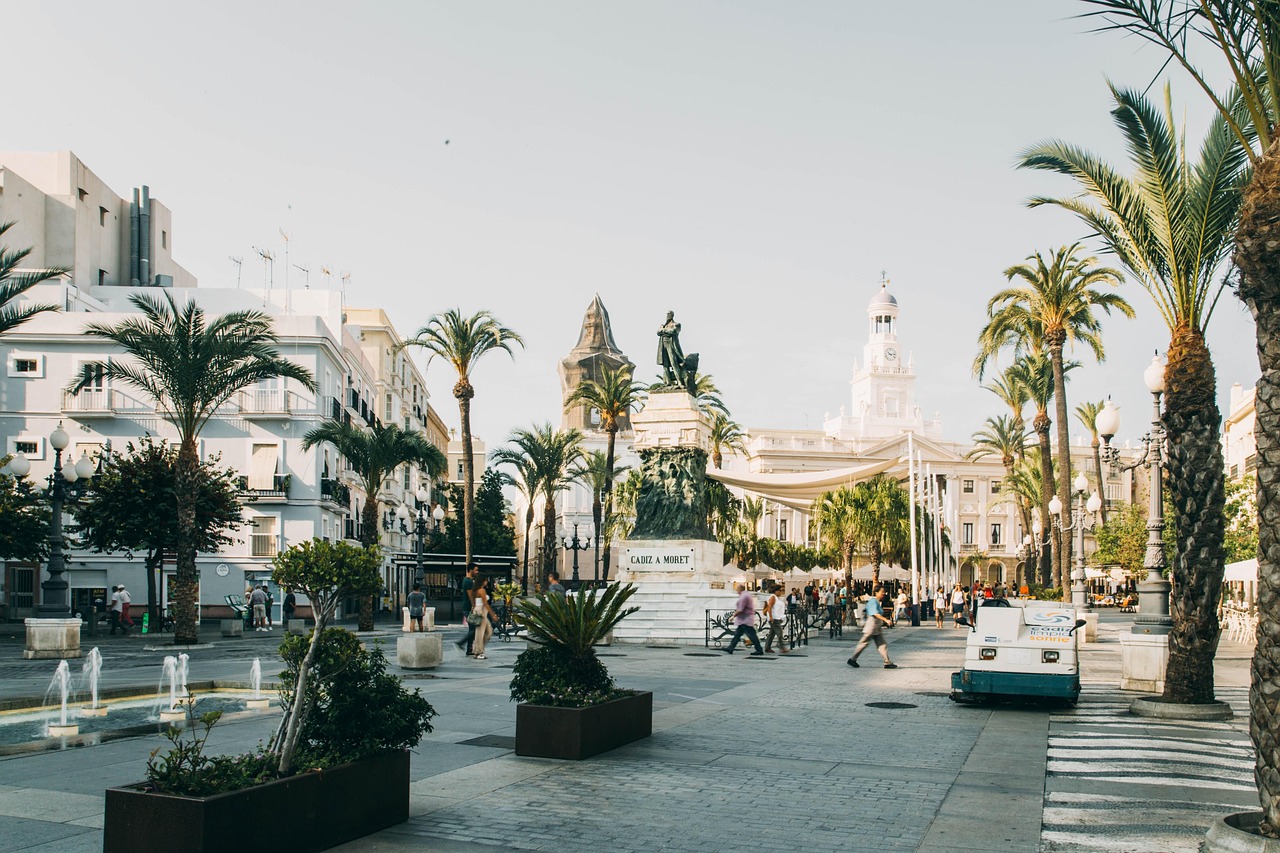
Cádiz. It is the oldest continuously inhabited city in Western Europe, and it feels like it in February—weathered, salty, and beautiful.
Cádiz is a peninsula surrounded by water, and in February, the wind—the levante—can howl. But this is the best time to see the city's beating heart: the Mercado Central de Abastos.
Address: Calle San Francisco, 1, 11005 Cádiz, Spain.
Hours: Tuesday to Saturday, 8:00 AM to 3:00 PM; Mondays and Sundays closed or limited.
Walking into the market in February is an assault on the senses in the best way. The floor is wet with brine. The glistening silver sides of massive bluefin tuna, caught just offshore, are laid out on marble slabs. The fishmongers, weathered men and women with hands like leather, hack away at the meat with terrifyingly large knives. The air smells of the Atlantic—iodine, salt, and cold, clean air. In February, you aren't fighting summer crowds; you are watching the commerce of a city that lives off the sea. Afterward, you step out into the Plaza de las Flores, where the wind whips your hair, and you order a glass of Manzanilla sherry. It tastes like the wind itself—pale, dry, and saline. It is a stark, beautiful, and very real Spanish experience.
March: The Almond Blossoms and the Awakening
March is a wildcard, but it is my favorite month for the south. The heat hasn't arrived, but the cold is gone. The countryside turns a violent, electric green.
The Vibe
Hope. The terraces of bars start to fill up again. The Spaniards emerge from their winter hiding spots.
Weather
Unpredictable. You might get a rainy week, but you might also get 22°C (72°F) days that feel like June.
Where to Go
Andalusia, specifically the Pueblos Blancos (White Villages).
Seville in March is a dream. The city is preparing for Semana Santa (Holy Week), but before the frenzy, there is a quiet, fragrant magic.
Address: Real Alcázar of Seville, Plaza del Patio de Banderas, s/n, 41004 Seville, Spain.
Hours: Summer (March 1 - October 31): Monday to Sunday, 9:30 AM to 7:00 PM.
The defining characteristic of Seville in March is the smell of azahar (orange blossom). The streets are lined with bitter orange trees, and in March, they bloom. The scent is intoxicating, a sweet, heady perfume that hangs over the city like a veil. Walking through the Alcázar, the historic royal palace, in March is perfect because the courtyards are filled with the scent of flowers, but the oppressive heat of summer hasn't made the stone walls radiate furnace-like temperatures yet. You can trace the cool tiles with your fingers and hear the trickle of fountains without melting. The light in March is golden, hitting the mudejar plasterwork and turning it into lace. It is the month where the city feels like a garden, and you can sit in the Plaza de España for hours, watching the light change, without needing to retreat to the shade. It is the perfect weather—warm enough for a dress, cool enough to walk for miles.
April: The Sweet Spot (and the Sandstorms)
April is widely considered the absolute best time to visit Spain for perfect weather, particularly in the south. It is the month of Semana Santa (Holy Week), which brings a cultural depth that is unmatched.
The Vibe
Intense, emotional, and vibrant. The cities are full of processions, but the countryside is blooming.
Weather
Generally warm and sunny, though the Levante wind in the southeast can bring dust from the Sahara, turning the sky a hazy orange.
Where to Go
Granada. The Alhambra in April is legendary.
Granada is unique because it has snow-capped mountains (the Sierra Nevada) visible behind the warm city streets.
Address: Plaza Nueva, 1, 18001 Granada, Spain.
Hours: The city is alive 24/7 during Semana Santa.
In April, the weather in Granada is a gamble you usually win. It is mild, perfect for exploring the Albaicín district's steep stairs. But the real atmosphere is in the streets during the pasos (processions). Imagine the smell of beeswax candles and incense so thick you can taste it. The air is cool, a relief from the heat that will come later. The sound is the slow, rhythmic beat of drums and the mournful wail of a trumpet, echoing off the limestone walls. You stand in a plaza, maybe Plaza Nueva, and watch the elaborate floats carried by hundreds of people in purple robes. The weather is crucial here—it’s cool enough to stand for hours, and the clear April skies make the backdrop of the Alhambra on the hill look like a painted set. It is a sensory overload of sound, smell, and the cool night air on your skin.
May: The Golden Month
If I had to pick just one month to live in Spain, it would be May. The country is in full bloom, the heat is present but not yet scorching, and the daylight hours are gloriously long.
The Vibe
Joyful anticipation. Everyone knows summer is coming, and they are squeezing every drop out of the spring.
Weather
Near perfect across the board. Warm days, cool nights. The water is still a bit chilly, but the air is divine.
Where to Go
Madrid. The capital is electric in May.
Madrid can be a furnace in summer, but in May, it is the perfect outdoor city.
Address: Calle de la Palma, 22, 28004 Madrid, Spain.
Hours: Bars open late, but the evening "movida" starts around 7:00 PM and goes until dawn.
May in Madrid is about the "terraza." The phenomenon of the ir de cañas (going for beers) takes over the city. The streets of Malasaña are packed with people spilling out of bars, holding small glasses of cold beer or tinto de verano. The weather is the catalyst; it is warm enough to wear a t-shirt at midnight. The air is filled with the scent of frying potatoes and the sound of laughter. There is a specific shade of blue in the Madrid sky in May—clear, intense, and infinite. You can sit at a table on the sidewalk, watch the stylish Madrileños pass by, and feel the warmth of the pavement through your shoes. It is the moment where the city becomes one giant, communal living room. The humidity is low, the breeze is gentle, and the urge to stay out "just five more minutes" is irresistible.
June: The Heat Rises (But the North is Paradise)
June is the start of the high season. The south gets hot, but the north of Spain enters its most glorious phase.
The Vibe
Pre-summer excitement. The beach clubs open. The nights get shorter and hotter.
Weather
The north (Galicia, Asturias, Basque Country) is idyllic—warm, sunny, but rarely sweltering. The south begins to bake.
Where to Go
The Basque Coast (San Sebastián and beyond).
San Sebastián (Donostia) is the crown jewel of the north. In June, the water is still cold, but the sand of La Concha beach is warm.
Address: Calle 31 de Agosto, 20003 San Sebastián, Spain.
Hours: The city never sleeps, but the bars peak 1:00 PM - 3:30 PM and 8:30 PM - 11:30 PM.
June in San Sebastián is a study in contrasts. You have the jagged green cliffs and the cool Atlantic waves, but the weather on the beach is glorious. The specific experience here is the transition from the beach to the Old Town (Parte Vieja). As the sun starts to dip, the temperature doesn't drop drastically; it stays warm and balmy. You walk into a sidrería. The windows are steamed up. The air is humid and smells of fermented apples and fried fish. The bartender pours the cider from a great height to aerate it, splashing it onto the floor. The sound of the "glug-glug" of the cider, the clatter of boots on the wooden floor, and the sight of the sun setting over the bay through the open door creates a perfect moment. The weather allows you to bar-hop comfortably until late, eating pintxos that are rich and savory, fueling a night that feels like it could last forever.
July: The Seville Furnace and the Mallorcan Dream
July is serious business. This is summer, Spanish style. It means intense heat, intense sun, and intense life.
The Vibe
Survival and hedonism. The pace slows down in the middle of the day, but the nights are wild.
Weather
Hot. In Seville and Cordoba, it can reach 40°C (104°F). The north is warm. The islands are perfect.
Where to Go
Seville (for the early morning) and Mallorca (for the beaches).
To survive Seville in July, you must become a creature of the dawn. The weather dictates a specific rhythm.
Address: Calle Mateos Gago, 41004 Seville, Spain.
Hours: Many bars open at 8:00 AM for breakfast.
At 6:00 AM in July, Seville is already bright and buzzing. The air is still relatively cool, holding onto the night's freshness for a precious hour or two. The smell of tostada con tomate (crusty bread rubbed with tomato and olive oil) and strong coffee fills the streets. This is the "Golden Hour" of the summer. By 10:00 AM, the heat becomes a physical wall. You retreat. But that 6:00 AM experience is unique. You see locals playing chess in the parks, the stone of the Cathedral glowing pink in the rising sun. It is a city that has learned to dance with the heat. The sensory experience is the smell of jasmine battling the rising scent of hot stone. It is a dry, baking heat that feels like walking into a bakery oven, but at dawn, it is a promise of the day's potential. You drink a cold zumo (juice) and feel the energy of a city that is awake before the sun gets angry.
August: The Exodus to the Sea
August is when Spain empties out. The locals head to the coast or the mountains. The cities become quieter, oven-hot, and slightly surreal.
The Vibe
Slow, heavy, and aquatic. Everything revolves around finding water.
Weather
Blistering inland. Perfectly warm and breezy on the coasts and islands.
Where to Go
The Canary Islands (Tenerife or Lanzarote).
While the mainland sweats, the Canaries offer a "warm, not hot" paradise with a twist.
Address: Timanfaya National Park, 35509 Yaiza, Lanzarote, Spain.
Hours: 9:00 AM - 6:00 PM (Summer).
Lanzarote is an island of fire and water. In August, the weather is consistently 25-28°C with a breeze. The experience at Timanfaya National Park is surreal. You stand on dormant volcanoes where the earth is still hot. You can pour water into a fissure and it shoots out as steam a second later. The air here smells of sulfur and dry earth. It is a Mars-like landscape, but an hour's drive away, you have the turquoise waters of the Atlantic. The contrast is the magic. The weather in August in the Canaries is the reliable sun that mainland Europe sometimes loses. You spend the day hiking the volcanic trails in the dry heat, feeling the sun on your back, and then you plunge into the cool Atlantic ocean. The water is refreshing, not shocking. It is the perfect balance of elements.
September: The Vermouth Month
September is the reversal of June. The heat breaks, but the warmth remains. The water is at its warmest all year. This is the "Vermouth Month"—leisurely, golden, and sophisticated.
The Vibe
Relaxed luxury. The tourists have thinned, but the energy is still high.
Weather
The south becomes pleasant again. The north is still lovely. The Balearic Islands are sublime.
Where to Go
Barcelona. Specifically, the Gràcia neighborhood.
Barcelona in September is breathable. The humidity drops, and the locals return from their own holidays.
Address: Plaça de la Virreina, 08012 Barcelona, Spain.
Hours: Vermouth bars open from 12:00 PM to 4:00 PM and 7:00 PM to 11:00 PM.
The ritual of "Vermut" is sacred in Barcelona, and September is its high season. The weather is perfect for sitting in a square with a glass of red, sweet vermouth on ice, garnished with an olive and a slice of orange. The air in Gràcia smells of roasted peppers and the sea, which is just a few blocks away. The light in September turns honey-gold in the late afternoon, hitting the modernist architecture of the neighborhood. It is a time of brisa (breeze). You sit there, watching the world go by, the heat of the summer finally releasing its grip on the stone buildings. It is a sensory experience of doing nothing, which is the most Spanish thing of all. The taste of the vermouth is complex and herbal, matching the mood of the city as it transitions from the frantic summer to the civilized autumn.
October: The Secret Season
October is the secret best time to visit Spain. It is often called "Veranillo de San Martín" (Little Summer of St. Martin). The beaches are still usable, but the cities are comfortable.
The Vibe
Melancholy beauty. The light is soft, the harvest is in.
Weather
Mild and sunny in the south. Cool and rainy in the north. A great month for culture, not just beach.
Where to Go
La Rioja (Wine Country).
October in La Rioja is the vendimia (grape harvest). The weather is crucial—it must be dry to harvest the grapes without rotting.
Address: Bodegas Muga, Calle del Estación, 1, 26200 Haro, La Rioja, Spain.
Hours: Visits by appointment usually, but the atmosphere in the town is 24/7.
The weather in October in La Rioja is crisp in the morning, warm in the afternoon, and chilly at night. It is perfect for wearing layers. The air smells of fermentation—yeasty, sweet, and earthy. The vineyards are turning shades of rust and gold. Standing in a winery like Muga, you hear the mechanical sorting machines (or the stomping of feet) processing the year's crop. The humidity in the cellar is high, the smell of old oak barrels is intoxicating. You taste the new wine, which is sharp and raw. The weather outside is the "terroir"—you feel the wind that dried the grapes, the sun that ripened them. It is a sensory immersion into the taste of the land itself. Afterward, you sit in the plaza of Haro and eat a chuletón (bone-in steak) that sizzles with fat, the perfect end to a harvest day.
November: The Return to the Hearth
November is the true start of autumn. The rains return to the north, the leaves fall in the center, and the south gets cool and misty.
The Vibe
Cozy. It is the time of sobremesa—the time spent lingering at the table after a meal.
Weather
Grey and wet in the north; cool and misty in the south; cold in Madrid.
Where to Go
Galicia (Santiago de Compostela).
Galicia is lush, green, and wet. In November, it is a place for introspection and hearty food.
Address: O Gato Negro, Rúa do Vilar, 53, 15702 Santiago de Compostela, A Coruña, Spain.
Hours: 10:00 AM - 11:30 PM.
The weather in November dictates the architecture and lifestyle here. Houses are built to keep the rain out and the warmth in. The lareira (hearth) is central. In a restaurant like O Gato Negro, the atmosphere is warm and damp. You smell the caldo gallego (broth) simmering. The rain is likely falling outside, a steady drumming on the cobblestones. The air inside is thick with steam and the smell of embers. You eat pulpo a la gallega (octopus) with paprika and olive oil, the texture soft and warming. The contrast between the wet, wild, green landscape outside and the smoky warmth inside is the essence of Galician November. It is a survivalist's pleasure. The taste of the food is robust, meant to fuel you against the damp chill. It is a time for red wine and conversation that lasts for hours.
December: The Light in the Darkness
December brings the cold, but also the magic of the holidays. The Christmas markets, the lights, the turrón.
The Vibe
Festive and crisp. The cities are decked out in lights, making the cold nights bright.
Weather
Cold. Snow in the mountains and occasionally in Madrid. Rain in the north.
Where to Go
Madrid. The Christmas lights are world-class.
While Madrid is the giant of Christmas, the golden stone of Salamanca makes for a magical December atmosphere.
Address: Plaza Mayor, 37002 Salamanca, Spain.
Hours: The market runs all day, but the lights turn on around 6:00 PM.
December in Salamanca is cold, often below freezing at night. But the Plaza Mayor, built of golden sandstone, seems to radiate its own warmth. The Christmas market (Mercado de Navidad) fills the square. The air smells of roasting chestnuts and cascaron (sugary almonds). The cold air makes your cheeks sting, which makes the heat of the chocolate con churros you buy from a stall even more pleasurable. The sound is of the wind whistling through the arcades and the chatter of locals buying their holiday sweets. The architecture of the Plaza, glowing under the festive lights, looks like a nativity scene itself. The sensory experience is the biting cold against the sweet, hot chocolate, the smell of pine needles from the tree sellers, and the feeling of being part of a centuries-old tradition of gathering in the heart of the city to celebrate the coming of light in the dark of winter.
The Canary Islands & Balearics: A Microclimate Guide
To ignore these islands is to ignore a huge part of Spain's weather tapestry.
The Canary Islands (Tenerife, Lanzarote, Gran Canaria)
Climate: "Eternal Spring." It rarely drops below 18°C or rises above 28°C.
Best Time: November to April if you hate the heat; year-round if you want guaranteed sun.
The Balearic Islands (Mallorca, Ibiza, Menorca)
Climate: Mediterranean classic. Hot, dry summers; mild, wet winters.
Best Time: June and September. The water is warmest, the air is perfect, and the island is lush but not overcrowded.
The Verdict: When Should You Go?
After years of chasing the sun and dodging the rain, I can tell you that the "perfect weather" is a myth that depends on your tolerance for heat and your love for the sea.
- For the Culture Vulture: May or September. You can walk the cities without melting, and the light is beautiful.
- For the Sun Worshipper: June through August, but head north (San Sebastián) or to the islands. Unless you want to experience the "furnace" of Seville, which is a badge of honor.
- For the Budget/Peace Seeker: February or November. The weather is moody, but the prices are lower and the cities belong to you.
Spain is a country that lives outdoors. The weather is not just a statistic; it is the conductor of the symphony of daily life. It dictates when you eat, when you sleep, and when you come alive. Whenever you choose to go, dress in layers, bring your appetite, and prepare to surrender to the rhythm of the sun.