





Best Granada to Jaén Day Trips: Hidden Gems & Must-Sees
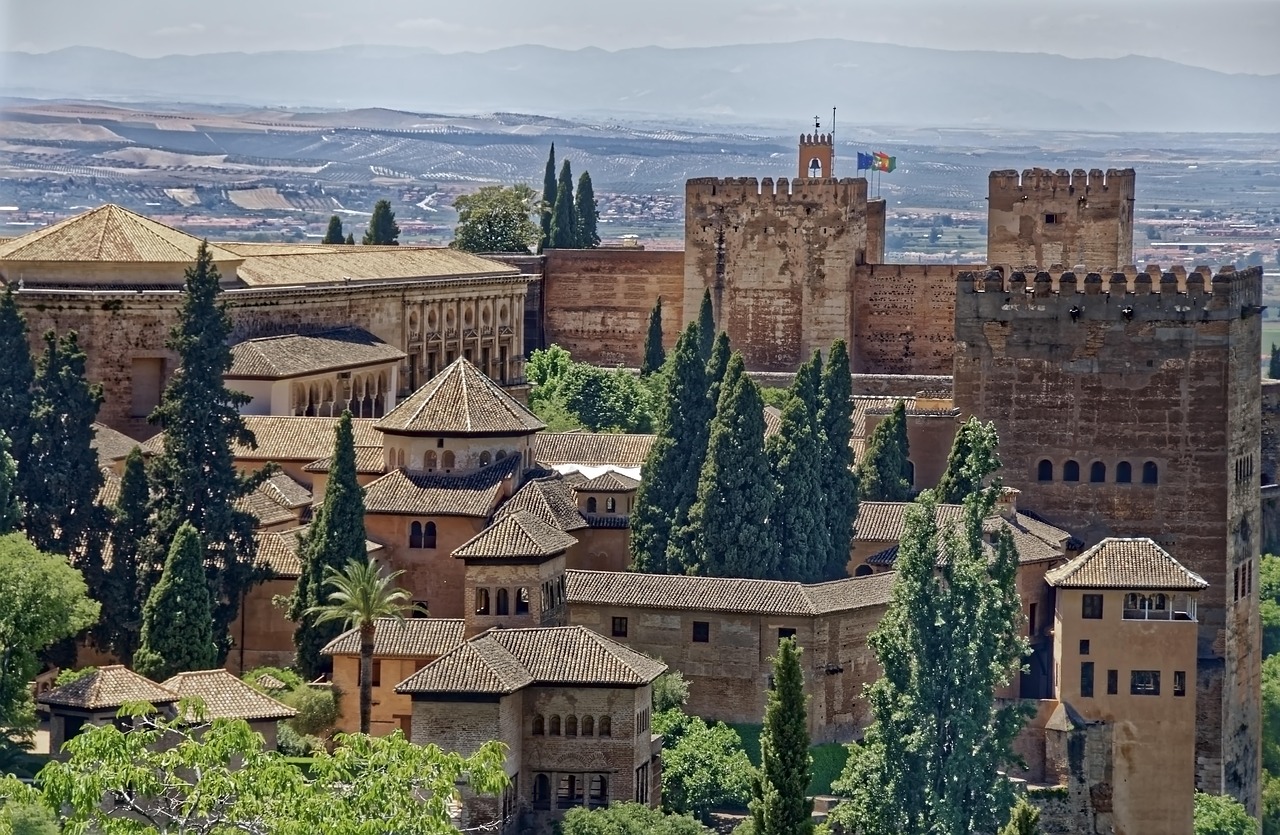
The alarm on my phone buzzed with a cheerful, digital chirp that felt entirely at odds with the sleepy, golden light just beginning to creep over the Alhambra’s distant silhouette. It was 6:30 AM in Granada. The air coming through the crack in my window carried the faint, sweet scent of night-blooming jasmine and the lingering coolness of the Sierra Nevada foothills. Most tourists were still dreaming of the intricate tilework and echoing courtyards they’d explored the day before. But I had a mission. I was chasing the sun as it moved east, following the ancient Roman roads and modern highways that connect the Moorish soul of Granada to the steadfast, olive-clad heart of Andalusia: the province of Jaén.
People often ask me, "Is it worth it? A day trip from Granada to Jaén?" And I always smile, because they’re asking the wrong question. They see it as a long drive for a single city. I see it as a journey through a landscape that tells the story of Spain in every shade of green and gold. This isn't just a drive; it's a pilgrimage to the olive oil capital of the world, a quest for Roman ruins that feel like open-air cathedrals, and a hunt for the best tallos you’ll ever taste. If you have a car and a sense of adventure, the 100-kilometer stretch between these two cities is one of the most rewarding day trips you can take in southern Spain.
So, let’s go. Pour yourself a coffee, check your tire pressure, and let’s hit the road.
The Route: A Landscape Painted in Green and Gold
Leaving Granada, you’ll likely take the A-44 towards Bailén. The first hour is a study in dramatic transition. The dusty, sun-baked hills around Granada, dotted with whitewashed cortijos (farmhouses), slowly give way to something lusher, wetter, more profound. As you climb, the air changes. You’ll pass through the comarca of the Montes Orientales, where the landscape becomes a rugged tapestry of holm oaks and cork trees.
But the real magic happens as you descend towards the Jaén basin. It’s a view that hits you all at once, usually around the town of Mancha Real. Suddenly, the world is nothing but olive trees. An endless, rolling ocean of silver-green leaves that shimmers in the morning light. This is the Campiña de Jaén, and with over 60 million olive trees, it’s arguably the largest continuous olive grove on Earth. It’s a humbling, breathtaking sight. The sheer scale of it is almost impossible to comprehend. You drive through it, windows down, smelling the peppery, green scent of the trees and the rich, dark earth.
The drive itself takes about an hour and twenty minutes without stops, covering roughly 100 kilometers (62 miles). But I implore you, don’t just rush through. The journey is part of the destination.
The First Stop: Unearthing Rome in Baeza (A Detour Worth Taking)
Before you even reach Jaén city, there’s a hidden gem tucked away to the south: Baeza. Many travelers skip it in favor of its more famous twin, Úbeda, but I find Baeza’s quiet dignity even more compelling. It’s a place where Renaissance splendor meets ancient Roman foundations, all perched on a cliff overlooking the Guadalquivir valley.
My first time in Baeza, I got hopelessly lost in the labyrinth of whitewashed streets, following the sound of a church bell. I stumbled into the Plaza de Santa María, the heart of the old town, and felt like I had stepped onto a film set. The square is anchored by the Antigua Iglesia de Santa María, a Gothic church that was later transformed with a Renaissance facade. It now houses the Cathedral of Baeza. But the real treasure is the Púlpito del Pecador (The Sinner’s Pulpit), a stone balcony jutting out from the facade with breathtaking views over the olive groves below.
From there, a short walk takes you to the Arcos de Baeza, the remains of a massive Roman gate that once guarded the city. Touching the cool, weathered stones, you can feel the weight of two millennia. It’s a tangible connection to the past that no museum can replicate.
Hidden Gem: Baeza
Address: Baeza, 23440, Jaén, Spain.
Hours: The town is open 24/7, but specific sites have hours. The Cathedral of Baeza is typically open to visitors Monday-Saturday from 10:00 AM to 2:00 PM and 4:00 PM to 7:00 PM, with limited hours on Sundays for worship.
Why it’s a must-see: Baeza offers a more intimate, less-touristed glimpse into Andalusia’s Renaissance and Roman past. Its views of the olive plains are unparalleled, and the local pastry shops, especially Confitería Santa Clara, serve up pastries that are little pieces of heaven. The tortadillas de Baeza, thin, crispy wafers filled with sweet yolk cream, are a revelation.
The Heart of the Empire: Jaén City
Arriving in Jaén feels different from Granada. There’s a solid, imposing quality to it. It doesn’t whisper; it proclaims. This was a critical city for the Reconquista, the final stronghold before the fall of Granada. King Ferdinand III of Castile captured it in 1246, and it became a symbol of Christian power. The city’s motto is Muy Noble y Muy Leal Ciudad de Jaén (Very Noble and Very Loyal City of Jaén), and it wears this title with pride.
Your first landmark will announce itself from miles away. The Santa Catalina Castle sits atop the highest hill, a formidable silhouette against the sky. It’s a fortress built on the remains of an Almohad citadel, and it’s the perfect starting point. Don’t just look at it from below; drive or walk up there.
Santa Catalina Castle
Address: Castillo de Santa Catalina, 23007 Jaén, Spain.
Hours: October to March: Tuesday to Saturday, 10:00 AM to 6:00 PM; Sundays and holidays, 10:00 AM to 3:00 PM. April to September: Tuesday to Saturday, 10:00 AM to 8:00 PM; Sundays and holidays, 10:00 AM to 3:00 PM. Closed on Mondays.
Why it’s a must-see: 360-degree views of the city, olive groves, and distant Sierra Nevada. The castle itself is a beautiful ruin, with crenellated walls and silent courtyards.
From the castle, a short walk downhill brings you to the majestic Jaén Cathedral, officially the Cathedral of the Assumption of the Virgin Mary. It’s often called the "Renaissance Cathedral" because its construction spanned the transition from late Gothic to Renaissance styles. The main facade is a masterpiece, known as the "Portada de los Gigantes" (Portal of the Giants) for its imposing columns and statues.
Jaén Cathedral
Address: Catedral de Jaén, Plaza de Santa María, 1, 23005 Jaén, Spain.
Hours: Monday to Saturday: 10:00 AM to 2:00 PM and 4:00 PM to 7:00 PM. Sunday mornings are for worship, with potential guided tours in the afternoon.
Why it’s a must-see: Step inside and the exterior grandeur gives way to a surprisingly sober and elegant space. But the real secret is the Capilla de San Ildefonso, home to the Santuario de la Virgen de la Capilla, the patron saint of Jaén. The atmosphere here is thick with devotion and is the spiritual core of the city.
Just a stone’s throw from the cathedral is the Palacio de los Villardompardo, a 16th-century palace that now houses the city’s most important archaeological museum. This place is an absolute goldmine.
Palacio de los Villardompardo & Roman Baths
Address: Palacio de los Villardompardo, Plaza de Santa María, 8, 23005 Jaén, Spain.
Hours: Tuesday to Saturday: 9:00 AM to 9:00 PM. Sunday: 9:00 AM to 3:00 PM. Closed on Mondays.
Why it’s a must-see: It houses the largest and best-preserved Roman public baths in Spain, dating back to the 1st century AD. You can walk through the frigidarium, tepidarium, and caldarium and see the hypocaust system. It’s an astonishingly complete site.
A Taste of Liquid Gold: The Olive Oil Experience
You cannot, under any circumstances, leave the province of Jaén without tasting its lifeblood: olive oil. This is the epicenter of extra virgin olive oil production, home to the Picual olive. A day trip here is incomplete without a sensory immersion in "liquid gold."
A fantastic option is a visit to a local cooperative like Almazara Nuestra Señora del Carmen in Torredelcampo. You'll learn about the pressing process and engage in a proper tasting. You’ll learn to slurp the oil (like a wine taster) to identify notes of green almond and the signature peppery kick at the back of the throat.
Olive Oil Tasting: Almazara Nuestra Señora del Carmen
Address: Ctra. Jaén-Torredelcampo Km 4,5, 23100 Torredelcampo, Jaén, Spain.
Hours: Visits are usually by appointment. It’s best to call or email ahead. Monday to Friday, typically 9:00 AM to 6:00 PM.
Why it’s a must-see: An education for your palate. You’ll learn the proper tasting technique and appreciate the complex flavors of high-quality Picual olive oil.
The Best Time to Visit Jaén from Granada
The best time for a day trip is in the spring (April-May) or autumn (September-October). In spring, the olive trees are a vibrant, electric green. In autumn, the landscape turns bronze and gold, and the air fills with the intoxicating smell of the fresh harvest.
The Journey Back: A Savory Detour in Martos
As the afternoon sun softens, it’s time to start thinking about the drive back to Granada. But there’s one more stop I insist you make. The town of Martos, about 20 minutes south of Jaén city, is the undisputed capital of the tallo.
A tallo is a type of flatbread, crispy on one side, soft on the other, cooked on a griddle. Head to Bar-Restaurante El Guadalquivir in Martos for an authentic experience. Order a round of tallos with manteca colorá (spiced pork lard and paprika) or chorizo. It’s messy, loud, and absolutely perfect—the taste of the Andalusian countryside.
Must-Eat in Martos: Bar-Restaurante El Guadalquivir
Address: Calle San Francisco, 30, 23100 Martos, Jaén, Spain.
Hours: Typically open for lunch from 1:30 PM to 4:00 PM and dinner from 8:30 PM to 11:30 PM. Closed Monday evenings and all day Tuesday.
Why it’s a must-see: Authentic, no-frills, soul-satisfying food. The home of the legendary tallo.
The Practicalities: Making Your Trip Smooth
Driving vs. Train
Driving is by far the best option for this trip. It gives you the freedom to explore Baeza, Jaén city, the olive oil mill, and Martos all in one day. The drive is straightforward on the A-44.
If you don't have a car, a cheap Granada to Jaén day trip by train is possible but more constrained. You would take a Renfe train from Granada to Linares-Baeza station. From there, a bus or taxi is needed to reach Jaén or Baeza. This means you’d likely only have time to see Jaén city properly. The journey takes about 1 hour 45 minutes one way.
Guided Day Trips
A guided day trip from Granada to Jaén is an option if you prefer not to drive. A guide can provide invaluable historical context you might miss on your own. However, you’ll be on their schedule, which might mean missing spontaneous stops for the best olive oil or a plate of tallos.
Final Thoughts: The Soul of the Journey
As you drive back towards Granada in the evening, the headlights of your car illuminating the silvery leaves of the olive trees, you’ll feel a sense of satisfaction. You’ll have walked through Roman baths, stood on the battlements of a medieval castle, and tasted the world’s best olive oil.
A day trip from Granada to Jaén is more than just ticking a box. It’s about understanding the deep, interconnected history of Andalusia. It’s a journey of a hundred kilometers that feels like a journey through a thousand years. And that, my friends, is always worth taking.