
There is a specific scent I chase when I return to Catalonia, one that rarely hits you in the blistering heat of August. It is the smell of damp stone cooling down after a morning shower, mixed with the sharp, green snap of olive oil hitting a hot pan, and the faint, salty breeze rolling off the Mediterranean. It is the smell of a Barcelona that feels lived-in, not just toured.
We have all seen the photos: the Sagrada Família swallowed by a sea of selfie sticks, La Rambla looking less like a promenade and more like a human traffic jam, the queue for Parc Güell stretching around the block like a sad, beige snake. The internet is full of guides telling you to go in June or July for the "vibe," but they rarely mention that the vibe comes with a side of heatstroke and a 45-minute wait for a table to eat paella that was likely frozen two weeks ago.
I have been traveling to and writing about Barcelona for over a decade, through the boom years, the quiet years, and the years where the city wrestled with its own popularity. And if there is one truth I have learned, it is this: The soul of Barcelona isn't found in the peak of summer. It is found in the shoulders. It is found in the months where the locals get their city back, and if you play your cards right, you get to borrow it, too.
If you want the golden ratio of perfect weather, manageable crowds, and prices that won't require a second mortgage, 2026 offers a very specific set of windows. You just have to know when to knock.
The Sweet Spot of Spring: Late March to Early May
If I had to choose just one time to tell you to book my flights for 2026, it would be the window from roughly March 22nd to May 15th. This is the city at its most generous.
By late March, the biting wind that whips down from the Pyrenees has usually softened. You can sit outside in a t-shirt during the day, though you’ll still need a denim jacket for the evening paseo. The locals haven't quite realized the party has started yet. The tourists who descend for Easter (Semana Santa) usually clear out by mid-April, leaving behind a city that is blooming with jacaranda trees and chestnut blossoms.
Why does this save you money? Airlines haven't quite switched over to their "summer pricing" algorithms yet. Hotels are still charging off-peak rates, meaning that boutique hotel in the Gothic Quarter that charges €300 a night in August might be hovering around €140 in April.
Where to go during these months:
El Jardí (Carrer de l'Hospital, 13, 08001 Barcelona) is a literal hidden garden tucked away behind the Cathedral. It is open from 10:00 AM to 10:00 PM, and in April, the jasmine is climbing the walls. It is the perfect spot to order a glass of Xarel·lo (a local Catalan white wine) and just listen to the water fountain. The vibe is "secret oasis," and because it’s tucked away, it’s usually free of the tour groups clogging the square above.
Can Paixano (La Xampanyeria) (Carrer de la Reina Cristina, 7, 08003 Barcelona) is a chaotic, loud, wonderful institution in the Born district. It’s a cava bar that has been around since 1969. During the summer, the line to get in is a nightmare that spills into the street. In late March or early April? You can usually squeeze in. They serve cheap, sparkling cava and plates of cured ham and cheese piled high on slices of bread. It’s standing room only, sticky floors, and smiles all around. They open at 9:00 AM (yes, really) and usually close around 10:00 PM, but get there before 6:00 PM to guarantee a spot. It’s cash only. This is where you go to feel the heartbeat of the city.
Late Summer Relief: September 15th to October 20th
The second best window, and perhaps the most dramatic in terms of "crowd shedding," is the moment the calendar flips past the first week of September. The locals return from their own holidays, the heat breaks, and the city breathes out.
The first two weeks of September are still technically high season, so I recommend aiming for after the 15th. By late September, the sea is still warm enough to swim in—warmer, actually, than it is in June—but the beaches are spacious. You can actually find a spot on Barceloneta without playing human Tetris.
October in Barcelona is criminally underrated. It is often sunny and 70°F (21°C) well into the month. The light takes on a golden quality that photographers call "the magic hour" that lasts all afternoon. It is harvest season in the wine regions just outside the city (Penedès and Priorat), which means restaurants roll out menus featuring mar i muntanya (sea and mountain) dishes with fresh ingredients.
Where to go during these months:
Barceloneta Beach (The Local Spot): Okay, hear me out. I know I said avoid the tourist traps, but in late September, Barceloneta transforms. To truly avoid the crowds, walk past the main strip near the W Hotel and head toward the area near the Hotel Arts, or even better, take the metro to Bogatell Beach or Mar Bella Beach. These are the beaches the locals use. The "chiringuitos" (beach bars) are still open, serving grilled sardines and clara (beer mixed with lemon soda), but they are mellow. The water temperature usually peaks around 73°F (23°C) in early October, which is surprisingly refreshing.
La Pedrera (Casa Milà) Night Experience: In the summer, the wait to enter La Pedrera is brutal. However, in October, they usually run their "La Pedrera Night" events on select evenings. It allows you to visit the rooftop terrace when the sun is setting and the city lights begin to twinkle, followed by a jazz concert in the courtyard. It is an intimate, romantic experience that feels like you own the building. Check their website for specific 2026 dates as they are released, but historically they run Thursday to Sunday evenings, starting around 8:00 PM. It’s pricier than a standard ticket, but you are paying for the silence and the atmosphere, which is worth every penny.
The Deep Winter (But Not That Deep): November and February
If you are strictly trying to save the most money possible, look at November (post-Fira de Barcelona congress season) and February (post-Carnival). These are the greyest months, statistically. But "grey" in Barcelona usually means a soft, diffused light that is actually great for street photography, and intermittent rain that keeps the dust down.
In November, you can get a five-star hotel for the price of a three-star in July. The lines for the Picasso Museum are non-existent. You can wander the Gothic Quarter for hours and feel like you are in a time capsule. It is the time to do the "indoor" Barcelona: the museums, the tapas bars, the bookstores.
Where to go during these months:
El Born Centre de Cultura i Memòria: This is one of my favorite spots in the city, regardless of the weather. It is a covered market (Mercat del Born) that was built in the 1870s but was excavated to reveal the ruins of the city from 1714, beneath the floor. It is a history lesson and an architectural marvel all in one. In November, it is warm, dry, and usually populated only by a handful of people. You can walk on glass floors looking down at ancient streets while the rain drums softly on the iron roof above. It’s hypnotic. Open Tuesday to Sunday, usually 10:00 AM to 8:00 PM (Mondays are often closed).
Café de l'Òpera: If the weather turns nasty, duck into this historic café on La Rambla (Rambla del Caputxins, 74). It opened in 1929 and looks it, in the best possible way. Mirrors, marble tables, waiters in waistcoats. It’s not cheap, but you aren't paying for the coffee; you’re paying for the seat and the atmosphere for as long as you want to stay. Order a suís (a thick hot chocolate) and a merenga. It’s the perfect place to watch the rain fall on La Rambla without actually being in the chaos.
The 2026 Calendar: Dates to Circle Right Now
Planning a trip in 2026 requires a bit of foresight regarding local holidays and events, as these can instantly spike crowds and prices even in the shoulder seasons.
- Semana Santa (Holy Week): In 2026, Easter falls on Sunday, April 5th. The week leading up to it (March 29th - April 3rd) will be busy. If you want the spring weather but not the religious pilgrim crowds, book for April 10th onwards.
- La Diada de Sant Jordi (April 23rd): This is arguably the most beautiful day in Barcelona. It’s the day of the patron saint, but it’s celebrated by men giving women books and women giving men roses. The streets are filled with bookstalls and flower vendors. It is crowded, but it’s a happy, romantic crowd. It is worth experiencing once. If you go for this, book accommodation early.
- Primavera Sound & Sónar: These are major music festivals. Primavera Sound usually happens late May/early June, and Sónar is in June. If you aren't going for the music, avoid these dates. Hotel prices triple.
- Festa Major de Gràcia (Mid-August): This is a neighborhood festival where the streets of Gràcia are decorated with elaborate themes. It’s incredible, but it brings locals and tourists together in the thousands. If you want to avoid this, stick to the late September/early October plan.
- Christmas & Three Kings: December 25th to January 6th is peak season. The Three Kings parade on January 5th is massive. If you want a winter city break, aim for early December (before the 15th) or mid-January onwards.
The "Save" Factor: It’s Not Just About Flights
When the title says "Save," it implies more than just cheap airfare. It’s about the "invisible costs" of travel: your time, your energy, and your patience.
When you visit in late April, you save money on the hotel, yes. But you also save the three hours you would have spent queueing for the Park Güell ticket office. You save the stress of navigating a subway car packed like a tin of sardines. You save the money you would have spent on water and sunscreen because you are overheating.
Furthermore, the "Shoulder Season" forces a different style of travel. In August, the heat forces you inside from 2:00 PM to 5:00 PM. You end up in overpriced souvenir shops just for the AC. In April or October, the weather is perfect for walking. You can walk from Passeig de Gràcia down to the sea, stopping at shops and cafes that aren't desperate for your cash because they are already busy with locals.
The 2026 Strategy: A Sample "Perfect Week" Itinerary
If I were planning my own trip for 2026, looking for that sweet spot, this is exactly what I would do, targeting the week of April 12th - 19th or October 12th - 19th.
| Day | The Plan |
|---|---|
| Day 1 Arrival & Gothic Quarter |
Land, take the Aerobus to Plaça de Catalunya (€6.75, much cheaper than a taxi). Check into a hotel off Carrer de Ferran. Walk the backstreets of the Barri Gòtic. In the shoulder season, you can actually hear the church bells. Dinner at El Xampanyeria or La Plata (Carrer de Mercè, 28). |
| Day 2 Masterpieces, No Sweat |
Book tickets for the Sagrada Família for 9:00 AM. Then, head to Parc Güell. Because you are visiting in the shoulder season, you can book the "sunset slot" (usually last entry is 7:00 PM). |
| Day 3 The Sea & The Born |
Morning at the beach (Bogatell). Lunch at Can Solé (Carrer de Sant Carles, 4, Barceloneta). Spend the afternoon wandering El Born, visiting the Picasso Museum or Santa Maria del Mar. |
| Day 4 Montjuïc & The Magic |
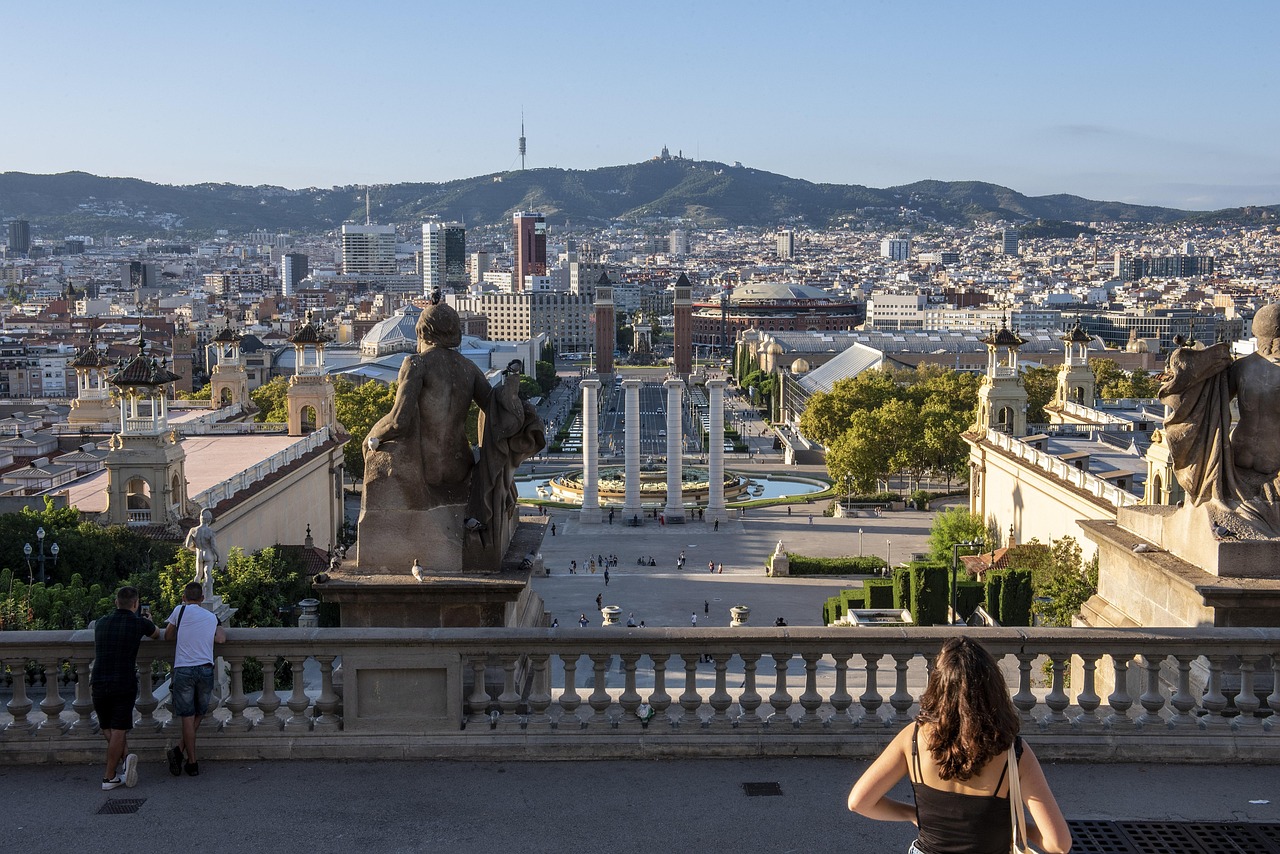
Take the funicular up Montjuïc. Visit the MNAC. In the evening, walk down for the Magic Fountain show (check schedule). Grab dinner at Martinez (Carrer de la Font, 17) for a terrace view. |
| Day 5 Day Trip |
From Barcelona Sants station, take a train to Sitges (35 mins) or Montserrat (1 hour). Both are easily doable as a day trip. |
| Day 6 Modernisme & Markets |
Walk the Eixample district (look up at the facades). Hit the Mercat de la Boqueria in the morning (before 11:00 AM). |
| Day 7 The Slow Morning |
Go to a local bakery, buy a bikini and coffee. Sit in Plaça Reial. Watch the palm trees sway. Listen to the water fountain. |
Final Thoughts on 2026
The world is obsessed with "secret spots," but the real secret isn't a hidden bar or a closed-door restaurant. The secret is timing.
Barcelona in 2026 will be as vibrant and magnetic as ever. The Gaudí buildings won't move, and the tapas will taste just as good. By choosing the shoulder seasons—specifically that golden window in April/May or the lovely tail-end of summer in September/October—you aren't just saving money. You are buying a different, more authentic experience. You are buying the ability to connect with the city on its own terms.
So, get your calendar out. Look at the weeks around Easter, or the weeks after the summer rush. Book a hotel in the Eixample or the Born. Buy tickets for the big attractions in advance (always). And prepare to fall in love with a city that has the space to love you back.
¡Bon viatge!