Albaicin to Alhambra Walk: Best Views & Path Guide 2026
There is a specific kind of silence that falls over the Albayzín just before dawn. It isn’t an empty silence; it is full of the scent of jasmine and old stone, the distant hum of a delivery truck navigating the narrow Calle Calderería Nueva, and the memory of a million footsteps that have worn the cobblestones smooth as river pebbles. I remember my first time in Granada. I had arrived late the night before, thrown my bag onto a narrow bed in a hostel that smelled faintly of incense and damp plaster, and set my alarm for 4:30 AM. I didn't know the city yet, not really, but I knew that the guidebooks—and the whispers of travelers I’d met in Seville and Córdoba—said the same thing: You have to walk it.
Not the bus. Not a taxi up to the Mirador de San Nicolás, breathless and rushed. They meant the walk from the heart of the Moorish quarter, through the dark, sleeping streets, up to the gates of the Alhambra. In 2026, with the city evolving and the crowds growing denser every season, that recommendation holds more weight than ever. It is an act of pilgrimage. It is the best way to earn the view of the Palaces.
This guide is designed to be your companion for that journey. We are going to walk the route together, step for step, minute by minute. We will talk about the cobblestones that trip you, the inclines that steal your breath, the hidden corners where the light hits just right, and the logistics that will ensure your 2026 trip is seamless, safe, and utterly unforgettable.
The Soul of the Path: Why Walk?
Before we get into the "how," let's talk about the "why." In a world of efficient transport, walking a 45-minute uphill route seems counterintuitive. But the geography of Granada dictates its history. The Alhambra sits on the Sabika hill, a red earth promontory that juts out like a ship's prow. The Albayzín sits on the adjacent ridge, the Mauror hill. Between them lies the valley, now the modern city, and the Darro River.
To walk from the Albayzín to the Alhambra is to traverse the psychological and physical distance between the two great seats of power in Al-Andalus. You are following the path of the old Cuesta de los Chiqueros (Slope of the Piglets), a route that has connected these two monuments for centuries. You are moving from the residential, labyrinthine world of the palaces' servants and guards to the celestial fortress of the sultans. When you finally push open the heavy wooden door of the Alhambra ticket office, sweating and exhilarated, you haven't just arrived; you have entered the narrative.
Preparation for the 2026 Pilgrim
The Gear and Elevation
Leave the stilettos and the flip-flops at the hotel. The cobblestones of the Albayzín are notorious ankle-breakers, and the path to the Alhambra is paved with irregular stones that become slippery with dew. In 2026, the city has made some improvements to the main thoroughfares, but the charm remains in the roughness. Wear broken-in hiking boots or sturdy sneakers with good tread.
Regarding the Albaicin to Alhambra walk elevation gain, you will climb approximately 150 to 180 meters (500-600 feet) over a distance of roughly 1.5 to 2 kilometers. It is a consistent, moderate grade that requires stamina.
Hydration, Weather, and Timing
Granada in the summer is a furnace. Even in May and October, the sun is relentless. The walk gains significant elevation, so bring water. However, if you are doing the sunset walk, the temperature drops rapidly. Bring a light layer.
The Alhambra gates open at 8:30 AM (winter) or 9:00 AM (summer). If you have a ticket for the Nasrid Palaces—which you absolutely must book months in advance in 2026—you need to be at the entrance at least 30 minutes before your slot. This means leaving the Albayzín by 7:00 AM for a relaxed morning walk.
The Route: A Step-by-Step Guide
We will start at the Plaza Larga. This is the beating heart of the modern Albayzín. It is a wide, open square with a fountain, a Saturday market, and a sense of normal life that grounds you before you ascend into the clouds.
Step 1: The Ascent (Plaza Larga to Calle del Agua)
From Plaza Larga, head towards the Carrera del Darro, but turn right before you hit the river level. You are looking for Calle del Agua (Street of Water). This street is flanked by the old city walls. It is quiet, shaded, and smells of damp stone and geraniums. You will pass the Ermita de San Miguel on your left, a Mudéjar church with a beautiful bell tower. The incline here is gentle but steady. You are winding up the hill, the houses leaning in, their wrought-iron balconies tangled with laundry.
Step 2: The Crossroads (Cuesta de los Chiqueros)
Eventually, Calle del Agua feeds into the Cuesta de los Chiqueros. This is the spine of the walk. It is a wide, paved road that cuts a direct line up the hill. In the early morning, you will share it with garbage trucks and delivery vans. In the late afternoon, it will be filled with tourists walking up to the San Nicolás viewpoint. Keep to the side. The incline steepens here. To your left, you will see the steep terraced streets of the Albayzín dropping away. Through gaps in the buildings, you might catch a glimpse of the Alcaicería, the old silk market, glowing in the valley below.
Step 3: The Gate of the Sun (Puerta de la Justicia)
The road curves. The walls rise. Suddenly, you are there. The Puerta de la Justicia (Gate of Justice) looms above you. This is the ancient entrance to the Alhambra from the Albayzín side. It was built in 1348 by Yusuf I. Look up at the keystone of the archway. There is a carving of an open hand. Legend says that if you can touch it with your hand while walking through without looking back, you will return to Granada. In 2026, this gate is still the primary pedestrian entrance for those walking from the city.
- Address: Cuesta de los Chiqueros, s/n, 18009 Granada, Spain.
- Hours: Pedestrian access 24/7; Ticket office nearby opens at 8:30 AM (check seasonal variations for 2026).
The Two Modes of Travel: Sunrise vs. Sunset
One of the most common questions I receive is whether to walk up for the sunrise or the sunset. In 2026, the Alhambra has implemented stricter lighting regulations for security, but the magic remains.
Option A: The Sunrise Walk (The Spiritual Awakening)
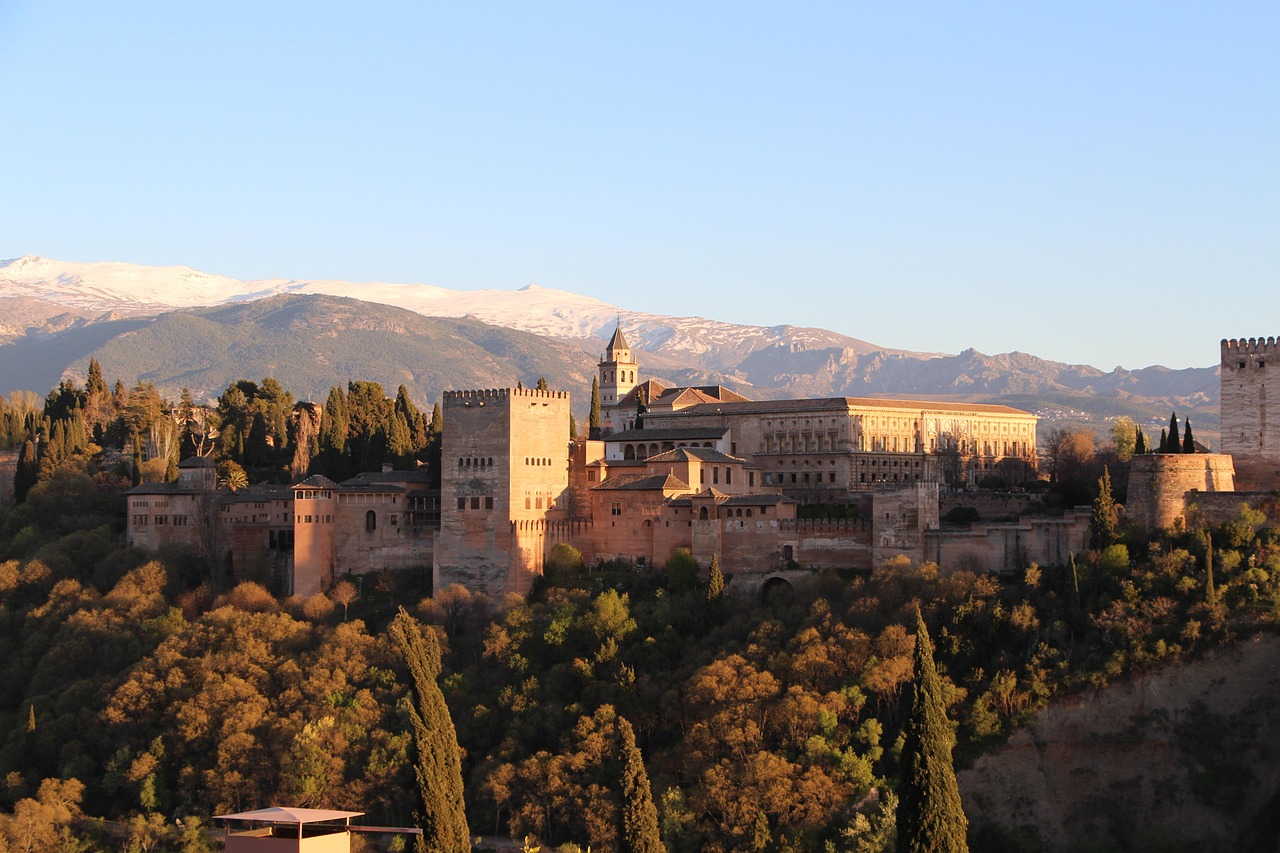
The Vibe: Solitude. You are walking in the semi-darkness, guided by streetlamps and the pale pre-dawn light. The city is asleep. The air is crisp and smells of woodsmoke from the first fireplaces lighting up. By the time you reach the Alhambra gates, the sun is cresting over the Sierra Nevada mountains, hitting the red walls of the Palaces and turning them a brilliant, blushing pink.
The View: From the Alhambra esplanade, you look back down at the Albayzín. The white houses are still in shadow, but the domes of the mosques and the churches sparkle. The Alhambra feels like yours.
Logistics: It’s safe. The streets are empty of crowds, though you may encounter the odd street sweeper or local dog walker. It is cooler and requires a headlamp or a phone torch for the darkest stretches of Calle del Agua.
Option B: The Sunset Walk (The Cinematic Drama)
The Vibe: Festive and sensory. The Albayzín is buzzing. You are walking up as the day cools down. The smell of frying fish and tortilla drifts from the bars. The sounds of laughter and music spill from the Carmens (houses with gardens).
The View: You are walking into the sunset. The sun drops behind the Alhambra, silhouetting the Torre de la Vela. The sky turns violet and orange. If you time it right, you reach the Mirador de los Carvajales or the Alhambra itself just as the lights of the city begin to twinkle on in the valley below.
Logistics: It is crowded. The path up from Plaza Larga will be packed. The Puerta de la Justicia will have a queue. If you are walking up for sunset, aim to be at the top an hour before sunset to secure a spot.
The "Hard Way": Cuesta de los Chiqueros vs. The "Secret Way"
While the Cuesta de los Chiqueros is the standard route, there are variations for the adventurous.
- The Standard (Cuesta de los Chiqueros): Paved, wide, steady incline. Easiest for navigation.
- The Back Way (Via de las Tomas): For a more rugged experience, you can approach from the back of the Alhambra. This involves walking up through the Realejo (the old Jewish quarter), past the Campo del Principe, and climbing the steep stairs that wind up the back of the hill. This route is steeper, narrower, and feels more "local."
Accessibility and Luggage: The 2026 Reality
Let’s be real: Granada is hilly. If you have mobility issues or heavy luggage, do not attempt the walk with bags on your back.
- Luggage Assistance: The cobblestones are the enemy of rolling suitcases. In 2026, there are services like Gorillas or local couriers that can transport bags, but the most reliable method is the Bus 34 (Vista Alegre - Alhambra). You can catch this bus at the top of the Albayzín (near Plaza Larga).
- Taxis: Taxis can drive up to the Alhambra, but they cannot enter the strictly pedestrian zones of the Nasrid Palaces complex. They will drop you at the main road near the ticket offices.
Parking and Transport Tips
If you are driving into Granada in 2026, you cannot drive to the Alhambra. The authorities have closed the road to private vehicles to reduce pollution and congestion. You must park in the city and walk or take the bus.
- Parking: The best lots are Parking Plaza Nueva (right in the center) or Parking Avenida de la Constitución.
- The Bus System: The Bus 34 is your lifeline. It runs frequently. There is also a Bus C30 (City Tour) that goes up. If you are staying in the Albayzín, you can walk up, but take the bus down to save your knees.
Safety in 2026: Night Walking
The question of safety is valid. The Albayzín is a safe neighborhood, but like any historic district with narrow, winding alleys, it requires common sense.
- Solo Travelers: I have walked the route solo at 5:00 AM and 11:00 PM. I have never felt threatened, only awed. However, stick to the main lit roads (Cuesta de los Chiqueros) at night. Avoid the dark, dead-end alleys that branch off into the hillside.
- Pickpockets: The area around the Mirador de San Nicolás is a hotspot for pickpockets. Keep your phone in your front pocket and your bag zipped.
- The Route at Night: Walking from the Alhambra to the Albayzín at night is easier than the reverse. It is all downhill. You can follow the lit path along the Cuesta de los Chiqueros.
A Sensory Stop: The Carmen de las Tomas
If you need a breather during the ascent, there is a spot that captures the essence of Granada. Near the top of the Cuesta de los Chiqueros, there is a viewing area that looks over the Carmen de las Tomas. This is a traditional garden-house with a high tower. You don't need to go inside (though it is lovely), but stand at the railing here. You will smell the rosemary growing wild on the banks. You will hear the wind rushing through the pines. You will see the Alhambra looming directly above you, close enough to touch. It is the perfect place to take a breath, sip your water, and prepare for the final push.
The Arrival: Entering the Complex
You have passed the Puerta de la Justicia. You are inside the walls. The world changes. The noise of the city vanishes. You are on the Calle Real. To your left is the Parador de Granada (the old convent, now a luxury hotel—try their tarta de Santiago if you stop for coffee). To your right, the forest thickens.
Follow the signs for the Ticket Office (they are well-marked in 2026). Do not get distracted by the views yet; you have to get through security. In 2026, security is tight. You will go through a scanner. Your bags will be checked. Have your passport and ticket ready.
Once through, you enter the Nasrid Palaces. But that is a different story. The story of the walk is ending here.
Reflections on the Path
Why do we do it? Why do we leave a perfectly good bed to walk up a hill in the dark?
Because the Alhambra is not a museum. It is a feeling. And the feeling begins with the walk. The sweat on your brow, the thumping of your heart, the grit of the stone under your boots—that is the price of admission. It is the offering you make to the city.
In 2026, Granada will be busy. But the path remains. It is the same stones, the same gradient, the same view that stunned Washington Irving two centuries ago.
So, set your alarm. Lace up your boots. Walk up from the Albayzín. And when you finally stand before the Court of the Lions, remember the dark street, the scent of jasmine, and the hill that brought you there. It is the best view in Spain, not because of what you see, but because of how you arrived.
Frequently Asked Questions (2026 Update)
Can I walk the route with a stroller?
Yes, but a rugged all-terrain stroller is required. The cobblestones are uneven. Many parents opt for a baby carrier instead.
Is the path lit at night?
The Cuesta de los Chiqueros is fully lit. The smaller streets like Calle del Agua have streetlamps but are dimmer. A headlamp is recommended for the sunrise walk.
Are there bathrooms on the route?
There are public restrooms in Plaza Larga (Albayzín) and inside the Alhambra complex (near the ticket office). There are no public facilities on the trail itself.
How much time should I budget for the walk?
Allow 45 to 60 minutes for a leisurely pace with photo stops. If you are rushing to a specific Nasrid Palace ticket time, allow 30 minutes of brisk walking.
What is the "elevation gain" details?
You will climb approximately 150 to 180 meters (500-600 feet) over a distance of roughly 1.5 to 2 kilometers, depending on your starting point in the Albayzín. It is a consistent, moderate grade.
Where is the absolute best view on the path itself?
About halfway up the Cuesta de los Chiqueros, look for the gaps in the wall on the left-hand side. There is a specific spot where the trees part, and you get a framed view of the Alhambra with the city below. It is often less crowded than the official viewpoints.
Can I buy water/snacks?
Yes. There are small shops (teterías) in the Albayzín near Plaza Larga. There is also a small kiosk near the Puerta de la Justicia, and the Parador restaurant inside the complex.
Is it wheelchair accessible?
The main Cuesta de los Chiqueros is paved, but the incline is significant and requires a strong pusher or an electric wheelchair. The final approach to the ticket office is flat. However, the Albayzín itself is not wheelchair friendly due to the stairs.
What about the return walk?
The walk down takes about 25 minutes. It is steep. Watch your knees. Many people take the bus down (Bus 34) to save wear and tear on their joints.
Are dogs allowed?
Dogs on a leash are allowed on the walking path up to the Alhambra complex. However, they are strictly forbidden inside the Nasrid Palaces and the Generalife Gardens.