There is a specific hum to the Spanish countryside in the early morning, a sound that cyclists learn to cherish above all others. It is the sound of silence, punctuated only by the rhythmic whir of your chain, the heavy breathing of your riding partner, and the distant bleating of sheep echoing off limestone cliffs. It’s a feeling that hits you somewhere deep in the chest—a mix of adrenaline, awe, and the distinct realization that you are small against the backdrop of something ancient and enduring.
I remember my first real ride in Spain. I had expected sun, paella, and maybe a few flat coastal roads. Instead, I found myself staring up at a wall of tarmac that seemed to disappear into the clouds near the French border. The air smelled of ozone and wild rosemary. That day, I learned that Spain is not just a summer destination for beachgoers; it is a year-round sanctuary for those who seek the burn of the climb and the reward of the descent.
As we look toward 2026, the allure of the Iberian Peninsula is stronger than ever. The infrastructure is better, the local food scenes are exploding, and there is a growing network of routes designed specifically to keep you away from the chaos of the tour buses. If you are planning your pilgrimage to the land of torrefacto coffee and endless blue skies, here are the ten epic routes—ranging from the brutal to the blissful—that should define your 2026 cycling calendar.
1. The King’s Road: Sierra de Guadarrama (Madrid)
The Vibe: Royal forests and high-altitude suffering.
The Stats: ~80km loop | 1,600m elevation gain | Intermediate/Advanced.
If you start your journey in the capital, do not just ride the flat plains of the Casa de Campo. Head north to the Sierra de Guadarrama National Park. This is the "King’s Road," a route that has tested the legs of Spanish pros and weekend warriors for decades. The climb out of Manzanares el Real is deceptive; it begins with a false flat that lulls you into a false sense of security before the switchbacks kick in. The road winds through the pine forests of Puerto de Cotos, often hitting altitudes where the air feels noticeably thinner.
📍 Location: Start at the base of the Puerto de Cotos, Manzanares el Real, Madrid.
💡 Pro Tip: The weather here is fickle. Even in summer, a rain jacket is mandatory for the summit.
2. The Inferno: The Angliru (Asturias)
The Vibe: Pain, glory, and cycling mythology.
The Stats: 12.5km climb | 23.5% average gradient (max 32%) | Expert only.
Let’s get the brutal truth out of the way early. The Angliru isn't just a climb; it is a physical manifestation of a nightmare. Known as Alto del Angliru, this beast was deemed too dangerous for the Tour de France but is a staple of the Vuelta a España. In 2026, this remains the ultimate badge of honor for any serious rider. The road surface is rough, the width shrinks as you ascend, and the gradient signs tell you exactly what you are in for: 20%... 22%... 30%... It’s a lung-busting, leg-searing grind.
📍 Location: La Vega-Riosa, Asturias (Start in La Vega).
💡 Pro Tip: Bring a compact crankset (50/34) and a cassette with a 32 or 34-tooth cog. Your knees will thank you.
3. The Volcanic Ring: Tenerife’s Anaga Rural Park (Canary Islands)
The Vibe: Prehistoric jungles and lunar landscapes.
The Stats: ~60km out-and-back | 1,200m elevation | Intermediate.
Tenerife is often associated with package holidays, but for cyclists, it is a geological wonderland. The Anaga Rural Park is a UNESCO Biosphere Reserve that feels like stepping into Jurassic Park. The route takes you through the Tagoror (ancient meeting places) and down into deep ravines where the vegetation is lush, misty, and alien. The climbing here is rolling rather than one massive sustained effort, but the gradients can spike unexpectedly. The highlight is the descent from Chamorga; it’s a twisting ribbon of road with sheer drops on one side.
📍 Location: Start from Taganana, Tenerife, Canary Islands.
💡 Pro Tip: Pack lights. The tunnels in Anaga are unlit, and the sudden drops in temperature near the coast can be shocking.
4. The Black Coast: Mallorca’s Sa Colobra (Balearic Islands)
The Vibe: James Bond scenery and perfect tarmac.
The Stats: ~20km climb | 450m elevation | Intermediate.
Mallorca is the cycling capital of the world for a reason, and Sa Colobra is its crown jewel. This route is pure cinematic magic. You start in the port of Andratx and hug the coast, winding through tunnels blasted out of the black cliffs and crossing bridges that span turquoise coves. It is so spectacular that it is almost distracting—watch the road! The climb itself is a masterpiece of civil engineering. It isn't overly steep, rarely exceeding 6%, but it is relentless. The switchbacks offer ever-changing views of the Mediterranean below.
📍 Location: Andratx to Sa Colobra, Mallorca, Balearic Islands.
💡 Pro Tip: Go in the shoulder season (April or October) to avoid the influx of training camps. The road has two-way traffic, so stay in your lane on blind corners.
5. The Desert Oasis: The Calar Alto (Almería)
The Vibe: Sci-fi isolation and endless horizons.
The Stats: ~30km climb | 1,400m elevation | Advanced.
If you want to know what Mars feels like, ride the Calar Alto. Located in the Tabernas Desert (the only desert in mainland Europe), this route takes you from the dry, dusty badlands up to the highest peak in the province. The landscape here is stark and brutal, made famous by the "Spaghetti Westerns" filmed in the 1960s. The road to the observatory at the summit is wide and smooth, but the gradient is punishing because there is no respite. The isolation is profound. You will hear the wind long before you see the turn.
📍 Location: Start in Aduar, Almería.
💡 Pro Tip: This is a water desert. Carry at least two large bottles, preferably with electrolytes. The heat radiates from the ground even in spring.
6. The Green Hell: Sierra de Demanda (Burgos)
The Vibe: Tough farming country and medieval villages.
The Stats: ~100km loop | 1,800m elevation | Advanced.
While the Pyrenees get the glory, the Sierra de Demanda in Castilla y León offers a grittier, more authentic experience. This is the terrain of the "Farmer’s Legs"—short, sharp, leg-breaking hills that repeat endlessly. The route winds through the heart of the Castilian plateau, passing stone villages that seem untouched by time. The air is crisp and smells of pine and woodsmoke. It’s a place where you might ride for hours and see more deer than cars.
📍 Location: Start in Burgos city center, loop into the Sierra de Demanda.
💡 Pro Tip: The wind here can be fierce. It’s a crosswind paradise (or nightmare). Practice your echelon formation if riding in a group.
7. The Transpirenaica: Bielsa to Aínsa (Huesca)
The Vibe: High mountain majesty and deep history.
The Stats: ~70km | 1,400m elevation | Intermediate/Advanced.
This section of the famous Transpyrenees route is arguably the most beautiful. Starting in Bielsa (France side) and crossing into Spain via the Portalet or the Somport pass, you enter a different world. The road drops into the Aínsa valley, a medieval gem sitting under the shadow of the Ordesa National Park. The scenery is vertical—sheer limestone walls rise thousands of feet on either side of you. It’s the kind of place where eagles soar lower than you are climbing.
📍 Location: Bielsa (France) to Aínsa, Huesca.
💡 Pro Tip: Check the status of the mountain passes before you go. They can close due to snow well into May or even June.
8. The Atlantic Edge: The Costa da Morte (Galicia)
The Vibe: Wild, windswept, and mystical.
The Stats: ~50km coastal loop | 800m elevation | Intermediate.
The "Coast of Death" sounds ominous, and the riding here matches the name. Located in Galicia, the northwest corner of Spain, this route is defined by the Atlantic Ocean. It is rarely hot, often misty, and constantly windy. But it is soul-stirringly wild. You ride past lighthouses that mark the end of the world (literally, Cape Finisterre was thought to be the edge of the known world by Romans). The road clings to cliffsides, diving into small fishing villages before launching you back up towards the heather-covered headlands.
📍 Location: Start in Cee, loop to Muxía and Cape Finisterre, Galicia.
💡 Pro Tip: Galicia is famous for its rain. Fenders (mudguards) are not just for commuters here; they are a survival tool.
9. The Route of the Caliph: Granada to Córdoba (Andalucía)
The Vibe: Moorish history and rolling olive groves.
The Stats: ~200km (usually done in 2 days) | 2,500m elevation | Advanced.
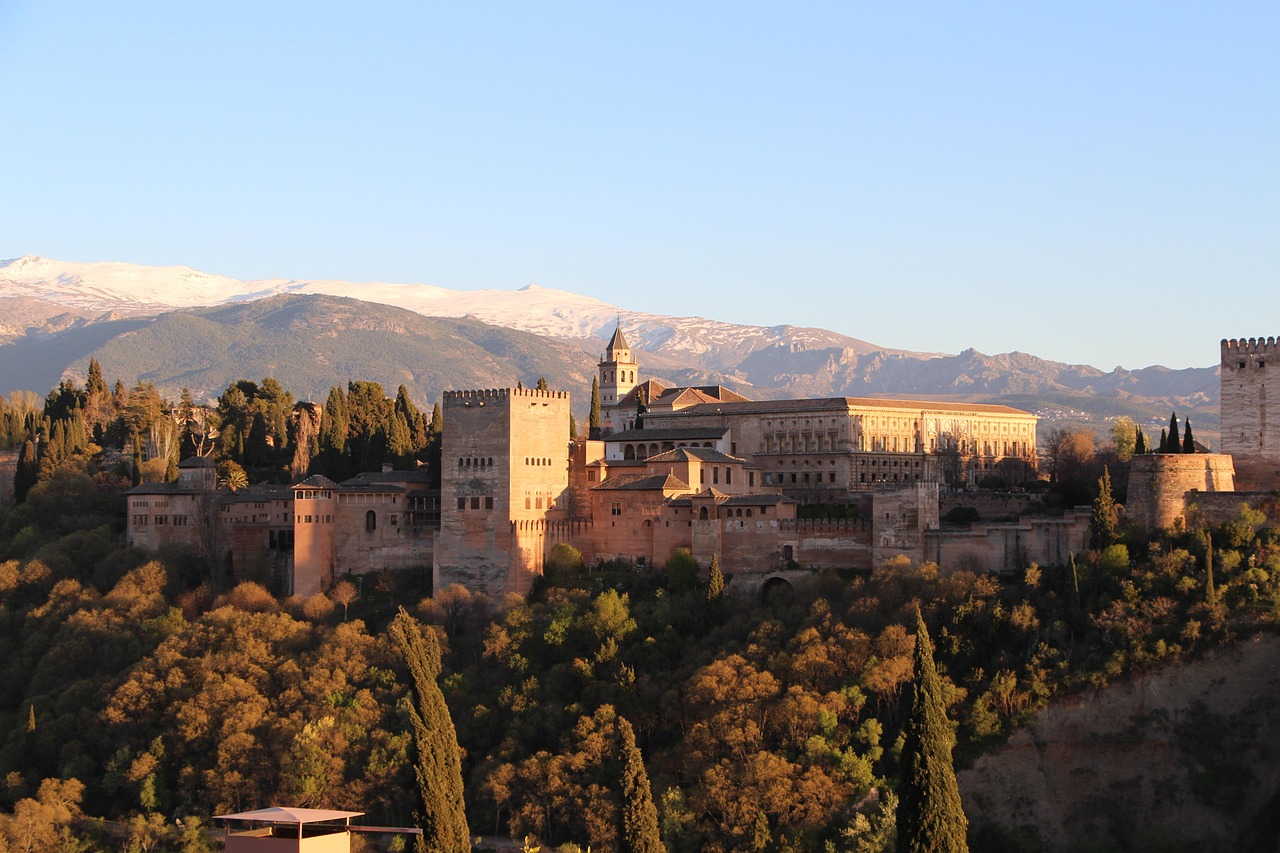
This is a journey through history, tracing the old Roman road that connected the two great capitals of Al-Andalus. It’s a route of contrasts: you start beneath the snow-capped Sierra Nevada in Granada and finish under the heat of the Andalusian sun in Córdoba. The riding is not mountainous in the technical sense, but it is constant. The road winds through an endless sea of olive trees—silver and green as far as the eye can see. The scent of olive blossom in spring is intoxicating.
📍 Location: Granada city center to Córdoba city center.
💡 Pro Tip: In summer, this route is an oven. Plan to ride at dawn and finish by noon, or stick to spring/autumn. The olive shade offers little relief from the heat.
10. The Culinary Loop: San Sebastián to Hondarribia (Basque Country)
The Vibe: Michelin stars and green pastures.
The Stats: ~40km loop | 600m elevation | Beginner/Intermediate.
We end with a route that satisfies the soul in a different way. The Basque Country is arguably the culinary capital of the world, and the riding here is the perfect appetizer. Start in San Sebastián, a beach town with a bay shaped like a seashell. Ride along the coast toward the French border, then head inland into the rolling hills of Gipuzkoa. This is a lush, verdant landscape, home to the Idiazabal cheese and the cider houses (sagardotegis). The goal of this ride isn't to crush yourself; it’s to work up an appetite.
📍 Location: San Sebastián, Hondarribia, and the surrounding hills.
💡 Pro Tip: Learn a few words of Basque (Euskara). A simple "Kaixo" (Hello) or "Eskerrik asko" (Thank you) will earn you big smiles.
The Logistics of the 2026 Spanish Adventure
Planning a trip to Spain in 2026 requires a bit of strategy. The country is diverse, and the distance between these routes can be significant. Here is how to approach it:
When to Go
- Spring (April-June): The absolute best time. The wildflowers are blooming, the temperatures are mild (20-25°C), and the mountains are still snow-capped but accessible.
- Autumn (September-October): The second window. The summer heat breaks, the crowds thin, and the harvest season brings incredible food to the table.
- Summer: Avoid the interior (Madrid, Andalucía, Extremadura) unless you are a heat-seeking missile. Stick to the north (Asturias, Basque Country) or the high mountains (Sierra Nevada).
- Winter: Great for the Canary Islands and southern Andalucía.
Getting Around
Spain has an excellent high-speed train network (AVE), but bikes can be tricky. The best option for a serious trip is to rent a car with a bike rack or a large van. This gives you the freedom to chase the good weather and explore the back roads where the trains don't go.
The Bike
- Road Bike: Essential. A climbing bike is great for the mountains, but an all-rounder is best for the mixed terrain.
- Gearing: Do not be a hero. Go for a compact crankset (50/34) and a wide cassette (11-32 or 11-34). The Spanish climbs are often longer and steeper than they look on the profile.
- Tires: 25mm or 28mm tires at lower pressure will save your hands and back on the sometimes rougher rural tarmac.