
There is a specific kind of electricity that hums beneath the surface of Spain. It isn’t just the frantic pace of Madrid, nor the golden stillness of Seville, nor even the modernist howl of Barcelona. It is a feeling of life lived loudly, generously, and with absolute conviction. For a first-timer, the prospect of condensing this vibrant, sprawling nation into a mere ten days feels like trying to catch the ocean in a teacup. You want the tapas and the flamenco, the Gaudí and the Gothic, the quiet moments and the wild nights. You want it all, and frankly, you deserve it.
I have walked these streets more times than I can count, through scorching August heat and the crisp, lemony light of a January morning. I have argued about the best ham in a smoky bar in Seville and danced until 5 a.m. in a Barcelona club that felt like it was breathing. This itinerary is not just a schedule; it is a narrative, a story of a love affair with a country that refuses to be anything but itself. It is designed for the first-timer, the over-caffeinated dreamer, and the budget-conscious adventurer. It balances the heavy hitters with a few breathers, and it assumes you might want to eat your weight in cured meat. Let’s go.
Day 1 & 2: Madrid – The High-Altitude Heartbeat
Arrival and The Art of Wandering
You will likely land at Adolfo Suárez Madrid-Barajas Airport (MAD). The journey to the city center is best done by Metro (Line 8) or a taxi if you have heavy luggage. As you surface from the underground, the first thing that hits you is the air. It is thin, dry, and carries a distinct aroma of roasted chestnuts and diesel.
Madrid sits at 667 meters (2,188 ft) above sea level, earning it the nickname La Capital de los Cielos (The Capital of the Heavens). The light here is different—harsh, brilliant, and unforgiving to the hangover. Your first afternoon should be spent surrendering to the rhythm of the city. Head straight to the Museo del Prado. Do not try to see everything. That is madness. Instead, walk purposefully to see Velázquez’s Las Meninas. Stand before it. Notice the play of light, the mirror, the dog. It is a painting that breathes.
Address: Calle de Ruiz de Alarcón, 23, 28014 Madrid, Spain
Hours: Mon–Sat 10:00–20:00; Sun & Holidays 10:00–19:00. (Closed Jan 1, May 1, Dec 25).
The Vibe: A temple of art that feels heavy with history. The silence in the rooms is profound, broken only by the shuffle of shoes on marble. It is intimidating and necessary.
The Tapas Crawl of Your Dreams
Evening in Madrid is a ritual. It starts late. Around 8:00 PM, the streets of the La Latina and Cava Baja neighborhoods fill with a low roar of conversation. This is where you learn the art of ir de tapas. You don't sit down for a meal; you hop from bar to bar, standing shoulder-to-shoulder, ordering a caña (small beer) or a glass of wine, and grabbing a bite.
Head to Casa Lucio. It is an institution. The walls are covered in photos of celebrities and politicians, but you are there for one thing: huevos rotos. These are fried eggs served over a bed of hand-cut fried potatoes, usually with a side of chorizo or jamón. You break the yolk with your fork and let it run golden over the crispy potatoes. It is messy, salty, and life-affirming.
Address: Calle de Cava Baja, 35, 28005 Madrid, Spain
Hours: Daily 13:00–16:00 and 20:00–23:30 (kitchen usually closes around 23:00).
The Vibe: Bustling, loud, and chaotic in the best way. You will likely be elbow-to-elbow with locals. Don't be shy; ask for recommendations in English or Spanish—they are used to it.
Day 3: Toledo – The City of Three Cultures
A High-Speed Jump Back in Time
To escape the modern bustle of Madrid, take the high-speed AVE train to Toledo. It takes only 30 minutes, but it transports you centuries back. Toledo is a labyrinth of steep, winding cobblestone streets, a UNESCO World Heritage site where Christian, Muslim, and Jewish cultures coexisted for centuries.
The highlight here is the Catedral Primada Santa María. It is the primada (primate) of Spain’s cathedrals, and it is a Gothic monster of staggering beauty. The light filtering through the stained glass creates a kaleidoscope on the stone floor. Do not skip the sacristy; it is often called the "Sistine Chapel of Toledo" for its ceiling paintings.
Address: Calle Cardenal Cisneros, 1, 45002 Toledo, Spain
Hours: Mon–Sat 10:00–18:45; Sun 14:00–18:45 (hours vary slightly by season).
The Vibe: Overwhelmingly grand. The sheer scale of the altarpiece is dizzying. It feels cold and imposing, yet the quiet reverence of the visitors creates a warm pocket of spirituality.
The Secret Sword of Toledo
Before heading back to Madrid, wander into a shop specializing in Damascenería (Damascene ware). Toledo is famous for this intricate inlay of gold and silver into dark steel. While you can buy a pretty jewelry box, look for the history. It’s a dying art kept alive by stubborn artisans. Grab a mazapán (marzipan) from a convent shop—it’s a local specialty that crumbles sweetly on the tongue.
Day 4 & 5: Seville – The Soul of Andalusia
The Train to the South
Take a morning high-speed train (Renfe AVE) from Madrid Puerta de Atocha to Seville (about 2.5 hours). As the landscape shifts from the arid central plateau to the rolling olive groves of Andalusia, you can feel the temperature rise. The air becomes thicker, scented with orange blossom and dust.
Seville is the emotional core of this itinerary. It is a city of intense heat, intense passion, and intense beauty. You will stay in the Barrio Santa Cruz, the old Jewish quarter. It is a tangle of impossibly narrow streets, white-washed houses, and hidden plazas that seem to trap the heat like a furnace.
The Alcázar and the Mudéjar Magic
Your first stop is the Real Alcázar de Sevilla. If you only see one palace in Spain, make it this one. While the Alhambra in Granada gets the glory, the Alcázar is the oldest royal palace still in use in Europe. King Felipe II married his bride here, and the current King Juan Carlos I uses it for state functions.
The architecture is a breathtaking fusion of Mudéjar (Moorish-style art created by Christians) and Renaissance styles. The Patio de las Doncellas is a study in geometric perfection, with its long reflecting pool and carved wooden ceiling. But the real magic is the garden. It is a riot of jasmine, myrtle, and palm trees, with peacocks strutting across the lawns.
Address: Patio de Banderas, s/n, 41004 Sevilla, Spain
Hours: Oct–Mar: Mon–Sun 09:30–17:00; Apr–Sept: Mon–Sun 09:30–19:00. CRITICAL TIP: You must book tickets online weeks in advance. The line for walk-ins is heartbreaking.
The Vibe: Transportive. It feels like walking through a dream of a desert garden. The sound of trickling water is everywhere, a desperate attempt to cool the air.
The Cathedral and the View from Above
After the Alcázar, walk next door to the Catedral de Santa María de la Sede. It is the largest Gothic cathedral in the world. It was built on the site of a mosque, and the Giralda tower (the minaret) is now the bell tower. You can climb it. There is no staircase, only 35 ramped ramps (originally designed for the muezzin to ride a horse to the top). The climb is hot and stuffy, but the view of Seville’s terracotta rooftops is worth every bead of sweat.
Address: Av. de la Constitución, s/n, 41004 Sevilla, Spain
Hours: Mon 11:00–15:30; Tue–Sat 11:00–17:00; Sun 14:30–18:00 (hours vary).
The Vibe: Cathedral of the Senses. The smell of incense is permanently embedded in the stone. The sheer size of the space makes you feel microscopic.
Flamenco: The Raw Nerve of Spain
You cannot leave Seville without seeing flamenco. Avoid the big tourist traps with dinner packages. You want a tablao that prioritizes the art. I recommend La Casa del Flamenco. It is intimate, with maybe 50 seats. There is no food (just drinks), which means the focus is entirely on the dancers, singers (cantaores), and guitarists.
When a flamenco dancer locks eyes with the singer and her feet begin to hammer the floor, the room stops breathing. It is not a performance; it is an exorcism of emotion. It is raw, sweaty, and often heartbreaking.
Address: Calle Ximénez de Enciso, 28, 41004 Sevilla, Spain
Hours: Shows usually at 18:00, 19:30, and 21:00 (check website for exact times and dates).
The Vibe: Electric. The walls seem to vibrate. You can feel the vibration of the footwork through the floorboards.
Day 6: Córdoba – The Patios of the Caliphate
A Day Trip via AVE
Take a morning train from Seville to Córdoba (45 minutes). This is a day trip that packs a massive punch. The main event is the Mezquita-Catedral (Mosque-Cathedral). It is a visual paradox that defines Spain’s history.
You walk through a forest of red-and-white striped arches, a hypnotic pattern that goes on for what feels like miles. This was the Great Mosque of the Caliphate. Then, right in the center, the Christians built a Renaissance cathedral. It looks like a stone ship crashed into a forest. It is jarring, controversial, and absolutely magnificent.
Address: Calle Cardenal Herrero, 1, 14003 Córdoba, Spain
Hours: Mon–Sat 10:00–19:00; Sun 08:30–11:30 and 15:00–19:00.
The Vibe: Disorienting and spiritual. The shadows cast by the arches create a hypnotic rhythm. It is cool inside, a respite from the heat of the Andalusian sun.
The Patios of Córdoba
If you are traveling in May (specifically the first two weeks), the Festival de los Patios is a must. Families open their private courtyards, bursting with geraniums and orange trees, for competition. If you aren't there in May, you can still visit the Palacio de Viana. It is a museum of 12 different courtyards. It is a study in how to turn stone and water into cool, green serenity.
Address: Plaza de Don Gome, 2, 14001 Córdoba, Spain
Hours: Daily 10:00–19:00 (last entry 18:00).
The Vibe: Aristocratic calm. The sound of water trickling from a Roman fountain is the only soundtrack you need.
Day 7 & 8: Barcelona – The Modernist Playground
The Flight North
From Seville, fly to Barcelona (BCN). Vueling or Iberia usually have frequent, affordable flights (approx. 1.5 hours). Do not take the train here; it eats up too much of your time.
Barcelona is a shock to the system after the historic weight of the south. It is coastal, Catalan, and fiercely modern. It feels like a city of the future and the past colliding.
The Gaudí Pilgrimage
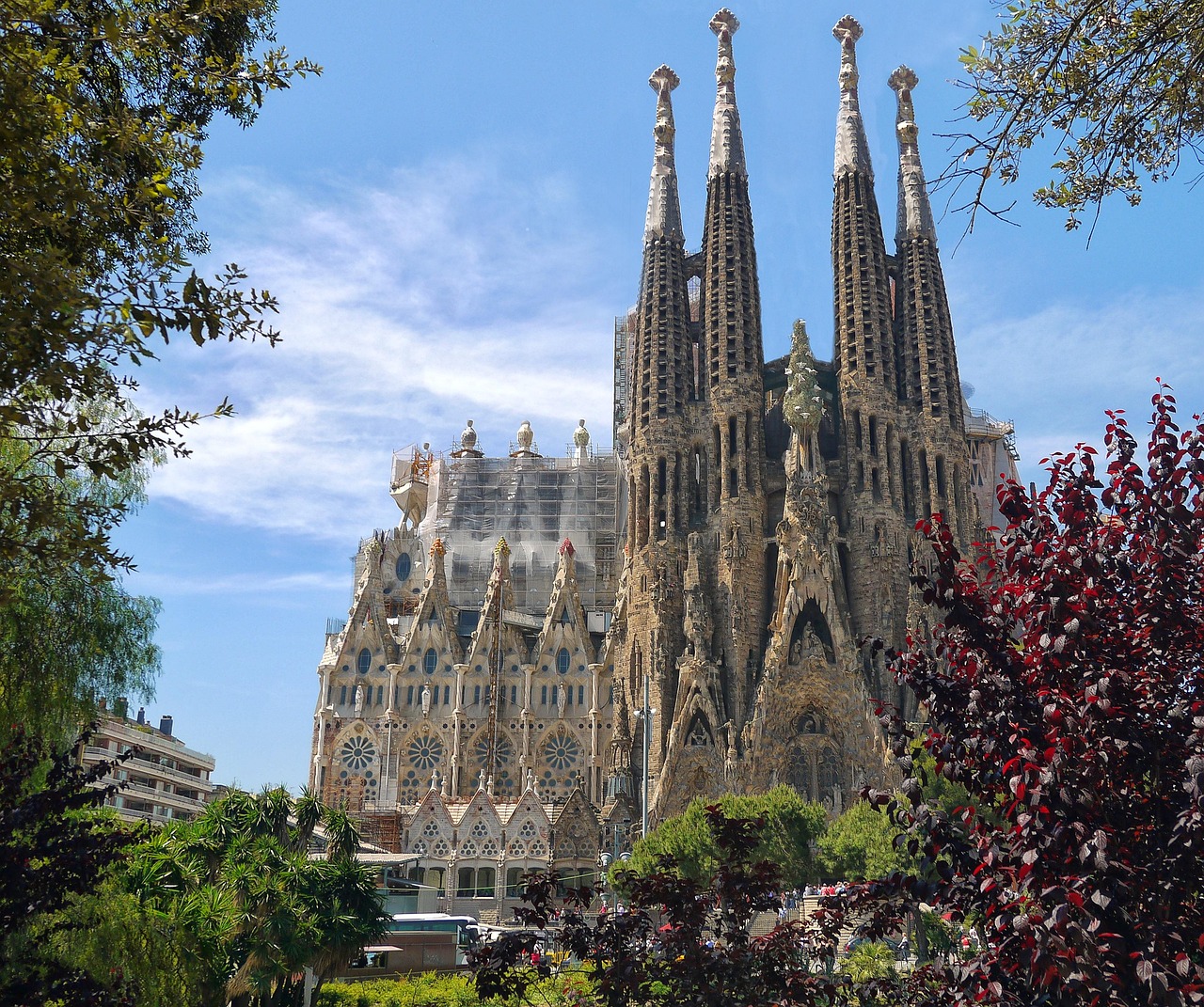
You cannot talk about Barcelona without talking about Antoni Gaudí. The Sagrada Família is the symbol of the city. It is a basilica that has been under construction since 1882. It looks like a sandcastle grown to epic proportions, or a forest of stone. Inside, the columns branch out like trees, and the stained glass bathes the nave in a rainbow of light.
Address: Carrer de Mallorca, 401, 08013 Barcelona, Spain
Hours: Daily 09:00–19:00 (Nov–Feb), 09:00–20:00 (Mar–Oct).
The Vibe: Awe. It is crowded, yes, but when you look up at the ceiling, the crowd fades away. It feels like being inside a living organism.
Park Güell and the Lizard
Head up to Park Güell. Originally intended as a housing estate, it is now a whimsical public park. You have to pay to enter the "Monumental Zone" to see the famous mosaic salamander and the serpentine bench. It is worth it for the view over the city and the sea. The mosaics, made of broken ceramic tiles (trencadís), glitter in the sun.
Address: Carrer d'Olot, 17, 08024 Barcelona, Spain
Hours: 09:30–19:00 (times vary by season).
The Vibe: Playful and surreal. It feels like a playground designed by a genius child.
The Gothic Quarter (Barri Gòtic)
Get lost here. This is the Roman heart of the city. It is a maze of dark, narrow streets that suddenly open into sunny squares. Find the Cathedral of Barcelona (La Seu). Its interior is quieter than the Sagrada Família, and the cloister is famous for the 13 white geese who live there (one for each year of martyr Saint Eulalia’s life).
Address: Plaça de la Seu, s/n, 08002 Barcelona, Spain
Hours: Mon 08:00–12:30 and 17:15–19:00; Tue–Fri 08:00–12:30 and 17:15–19:00; Sat 08:00–12:30 and 17:15–20:00; Sun 08:00–14:00.
The Vibe: Ancient and slightly spooky. The gargoyles here are grotesque and fascinating.
Day 9: The Costa Brava or Montserrat – The Breath of Fresh Air
Option A: The Mountains of Montserrat
If your legs are tired of city pavement, take a train from Plaça d'Espanya to Montserrat (approx. 1 hour). The mountain rises like a jagged saw blade from the earth. You can take a cable car or a rack railway up to the monastery. The views are spectacular, and you can hike the trails for as long as you like. The monastery houses the Black Madonna, a small, dark wooden statue revered by pilgrims.
Address: 08199 Montserrat, Barcelona, Spain
Hours: Monastery daily 07:00–20:45; Museums daily 10:00–17:45 (closed Mondays in winter).
The Vibe: Spiritual and rugged. The air is crisp and smells of pine.
Option B: The Coast of Sitges
If you want sea air and paella by the water, take the train to Sitges (approx. 40 mins). It is a charming, whitewashed town with a winding old town and a beautiful beach. It is very LGBTQ+ friendly and has a relaxed, resort vibe.
Address: Passeig Marítim, 08870 Sitges, Spain
Hours: The town never closes, but shops generally open 10:00–14:00 and 17:00–20:00.
The Vibe: Chic and breezy. A great place to eat suquet (fish stew) and watch the Mediterranean.
Day 10: Barcelona – The Last Supper and Departure
Mercat de la Boqueria
On your last morning, visit the Mercat de la Boqueria off La Rambla. It is a sensory assault. Stalls overflow with jamón ibérico, glistening fish, exotic fruits, and mountains of candy. Grab a fresh juice and a cone of jamón to eat while you walk. It is the perfect culinary souvenir.
Address: La Rambla, 91, 08001 Barcelona, Spain
Hours: Monday 08:00–18:00; Tuesday–Saturday 08:00–20:00; Sunday 08:00–15:00.
The Vibe: Controlled chaos. The shouting of vendors, the clinking of glasses at the tapas bars inside, the smell of frying oil and fresh herbs.
The Farewell Feast
For your final meal, book a table at Can Culleretes. It is the oldest restaurant in Barcelona (founded 1786). The food is traditional Catalan—think hearty stews, rabbit, and seafood. The waiters wear waistcoats, and the floor is worn wood. It feels like stepping into a painting.
Address: Carrer d'en Quintana, 5, 08002 Barcelona, Spain
Hours: Daily 13:00–16:00 and 20:00–23:30.
The Vibe: Historic and comforting. A quiet, dignified end to a frantic, beautiful trip.
Practicalities: Logistics for the Brave
Flights and Trains:
- International: Fly into Madrid (MAD), fly out of Barcelona (BCN). This is the most efficient "open-jaw" ticket.
- Internal: The high-speed train (Renfe AVE) is king for Madrid-Seville-Córdoba. Book in advance on Omio or Trainline for cheaper fares. For Seville to Barcelona, fly. It saves you 5+ hours of train travel.
Hotels:
- Madrid: Look near Sol or La Latina. Pestana Plaza Mayor is central and stylish. For budget, The Hat is a cool hostel with a rooftop bar.
- Seville: Stay in Santa Cruz. Hotel Casa 1800 has a stunning rooftop pool. For budget, Samay Hostel has a pool and a great vibe.
- Barcelona: Stay in the Eixample or El Born. Hotel Pulitzer is central and chic. For budget, Kabul Party Hostel is famous for its social atmosphere (if you can handle the noise).
Budgeting (First-Timer Reality):
- Budget: €80-€100/day. Hostels, supermarket picnics, metro transport, free walking tours. You will need to skip the fancy dinners and stick to tapas bars for lunch and dinner.
- Mid-Range: €150-€200/day. Private rooms in boutique hotels, sit-down dinners, museum entries, trains.
- Splurge: €300+/day. 5-star hotels, Michelin stars, private guides.
Accessibility:
Spain is getting better, but it is old. The Mezquita in Córdoba and the Gothic Quarter in Barcelona have uneven cobblestones. However, the high-speed trains (AVE) are very wheelchair accessible with advance notice. Major museums (Prado, Reina Sofia, Sagrada Família) have lifts and accessible routes. Seville’s Alcázar has a side entrance for wheelchairs to avoid stairs (ask the staff).
The "No Car" Strategy:
This itinerary is designed without a car. Driving in Madrid and Barcelona is a nightmare of traffic and expensive parking. The trains and metros are world-class. Use the BlaBlaCar app if you want to travel like a local between cities, though the AVE is faster.
Final Thoughts on the First Timer
Ten days is a blur, but it is a beautiful blur. You will leave Spain with a faint ringing in your ears and a longing for a specific kind of salty, garlicky flavor you can't quite name. You will have seen the heights of human artistic achievement and the depths of human passion. You will have learned that dinner at 9 PM is early, and that a 30-minute nap at 5 PM is not a luxury, it’s a survival tactic.
Spain does not give itself to you easily. It requires you to slow down, to look up, and to open your mouth and let the flavors in. It is a country that demands you participate in its life, rather than just observe it. So, buy the ticket, board the train, and let the rhythm of the Spanish heartbeat guide you.